Cabinet is Australia’s Operating System: Here’s How It Works — Glyn Davis & Terry Moran
A tour of the routines that run the country
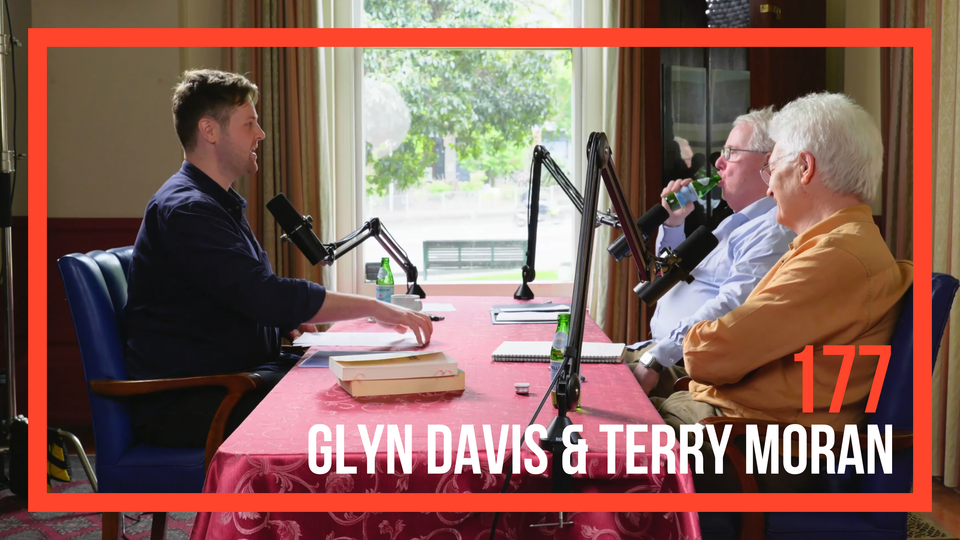
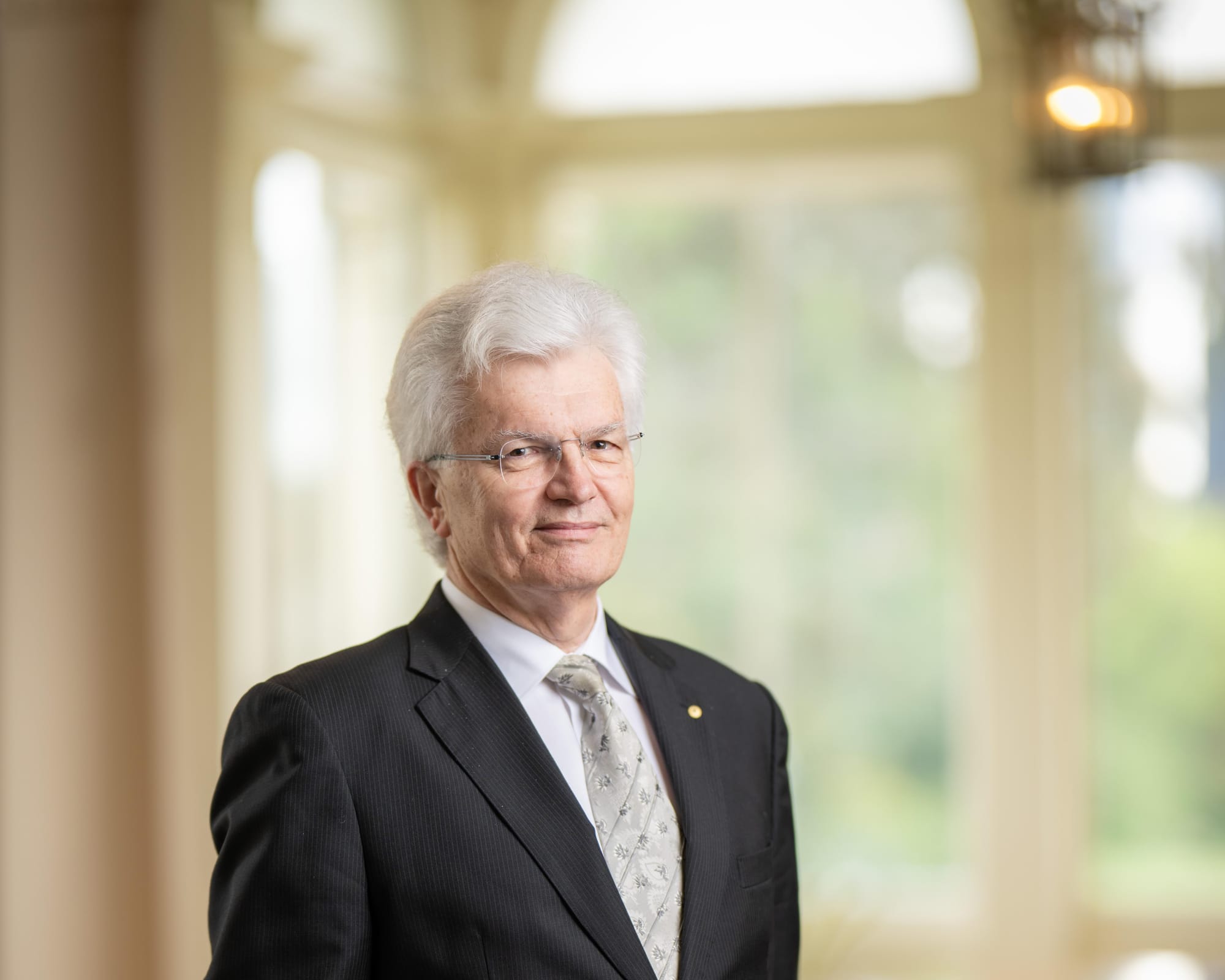
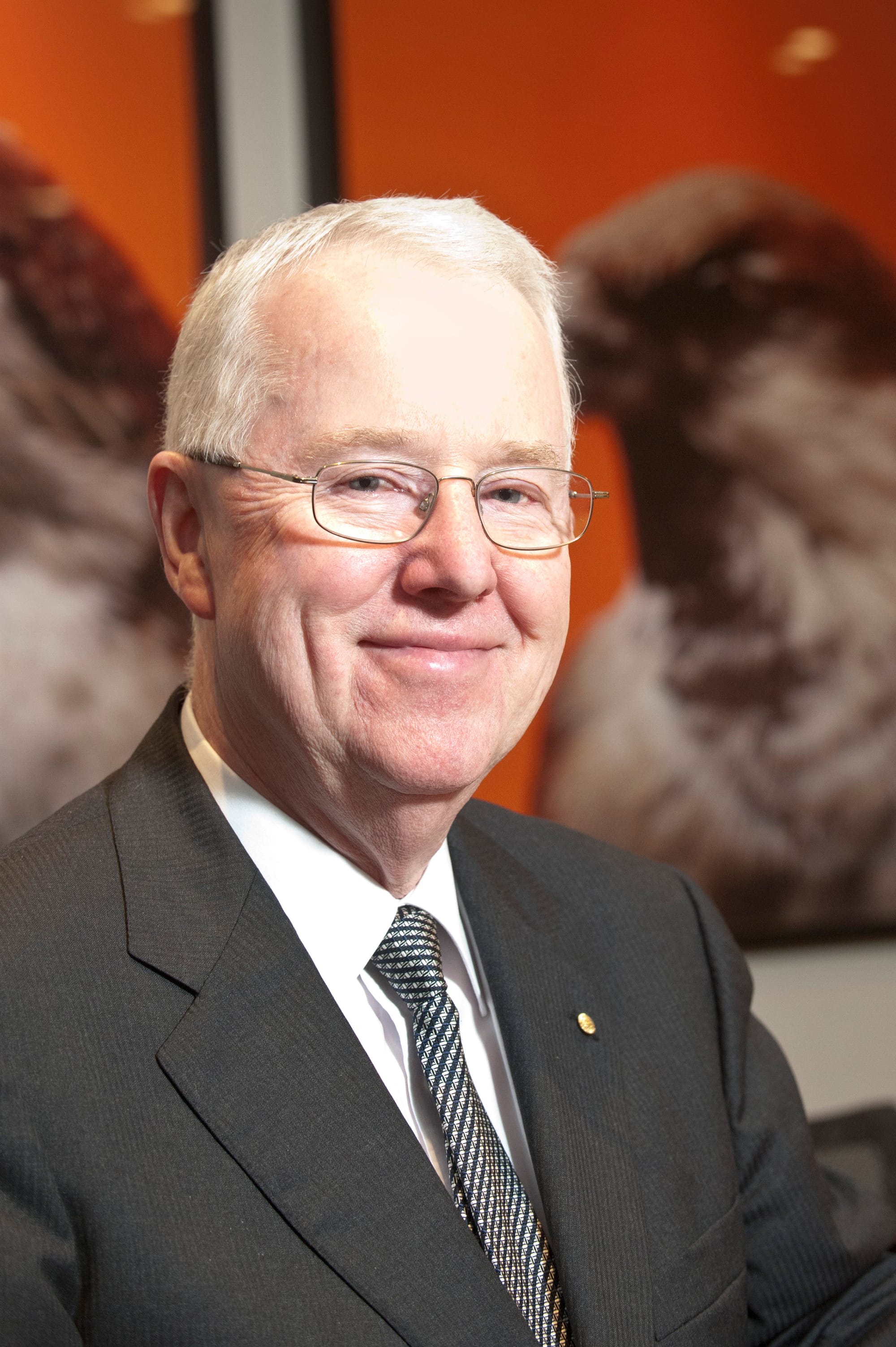
Glyn Davis and Terry Moran are two of the very small number of Australians who have literally sat in the Cabinet Room, week after week, watching the machinery of government operate from the inside.
Both served as Secretary of the Department of the Prime Minister and Cabinet (PM&C) — the most senior public servant in Australia. Terry held the role from 2008 to 2011 (including during the Global Financial Crisis). Glyn held it from 2022 to 2025, resigning only a few months ago.
Both have also held equivalent roles at the state level: Glyn as Director-General of the Office of the Cabinet in Queensland (1995–96), and Terry as Secretary of the Victorian Department of Premier and Cabinet (2000–08). Before PM&C, Glyn was Vice-Chancellor of the University of Melbourne for thirteen years, and later ran the Paul Ramsay Foundation (Australia’s largest philanthropic foundation). Terry’s career spanned senior roles across the Commonwealth and Victorian public services, including as CEO of Victoria’s Office of the State Training Board, inaugural CEO of the Australian National Training Authority, and Queensland’s Director-General of Education. He later served as Chancellor of Federation University.
In this episode, we trace the routines, conventions, and systems that shape power in Canberra. Where, exactly, does a prime minister’s power come from? What separates a good Cabinet submission from a bad one? What actually happens in the Cabinet room once the doors close? How does Australia’s Westminster model differ from the UK and Canada? And why is Australia so unusually good at bureaucracy?
(Episode recorded on 8 December 2025.)
Video
Sponsor
- Vanta: helps businesses automate security and compliance needs. For a limited time, get one thousand dollars off Vanta at vanta.com/joe. Use the discount code "JOE".
Transcript
JOSEPH WALKER: Today it's my great honour to be chatting with Terry Moran and Glyn Davis.
I'm not going to read out their full, impressive résumés, but most relevant to this conversation, they've both been secretaries of the Department of the Prime Minister and Cabinet, so the most senior public servant in Canberra. Terry was Secretary from 2008 to 2011, and Glyn was Secretary from 2022 to 2025.
Today we're going to chat about how government in Australia really works. And I'm going to play the role of an overly inquisitive, borderline annoying intern [visiting DPMC], and ask a bunch of naïve questions.
So welcome, Terry, and welcome, Glyn.
GLYN DAVIS: Thank you.
TERRY MORAN: Thank you.
WALKER: So, after my last episode with Hugh White, I had this feeling that it was sort of table stakes for political leaders and public intellectuals alike to understand the causes of the First and Second World War.
Having spent a week preparing to talk with you about how the government really works, I have a similar kind of sense; I feel like for people who want to contribute to the national conversation, it's sort of table stakes to understand how government in Australia works.
And the interesting thing is that neither the prime minister nor the Cabinet are mentioned in the [Australian] Constitution or in legislation. Their functions are defined and shaped by conventions. And reading the details about those functions and how Cabinet works, how government works, was quite interesting. Some of the details are quite strange. So I want to get into all of that with you two today.
But the first question is, what is the biggest thing that well-informed Australians, people like the members of my audience, get wrong or don't understand about how the federal government works at a day-to-day level?
DAVIS: Joe, thanks for that. The impossible question, of course. I'm going to actually throw it back to you.
You did a really interesting piece of work late last year, early into this year, around the quality of services in Australia and around the quality of Australian governance. That showed, perhaps to the surprise and even embarrassment of many Australians, that we turn out to be quite good at this; that by international standards governments are efficient, effective, non-corrupt — all the things that you would hope in a democracy but aren't always true — and that the quality of the services as delivered is high.
Which is not to say they're infallible and certainly not to say they couldn't be improved or that there aren't problems, but it is to say: in comparison, we do this really well.
Which takes you back to that interesting question about why. What is it about the combination of institutions and practices and cultures that have got us to this place? Australians have a “talent for bureaucracy”. That makes us cringe. How little we like that. But there is something in it. We are good at this, we do it well, and it shows up in the quality of our services.
I think if you put that as a proposition to many Australians, they would be bemused, if not outraged.
MORAN: I agree with that.
But I think it's also the case that there's a bit of a deficit in the general understanding of government and how it works. And particularly still, to my surprise, there's not much understanding of what the Commonwealth does versus what the states do.
And therefore, that undermines accountability for things that could work better, like hospitals, for example.
DAVIS: And on the federal divide, I remember talking to the local manager of a Services New South Wales office, and I asked him, "So what's the single most common inquiry in this office?" And he said it’s: “How do I put in for a Medicare refund?"
And he said, "Well, that's a Commonwealth matter, but I just happen to have a drawer here full of forms [laughs] and I'll just hand one over every time it comes up." Which is a nice piece of cooperation, I thought.
MORAN: Well, when Dr “Nugget” Coombs led the Royal Commission into Australian Government Administration, established by the Whitlam government, he came back with a conclusion that there was a need for the Commonwealth Government and the States to work much more closely in delivering services at the local level. And the States were probably up for it, but the Commonwealth never was.
And so it didn't happen. And that, to me, is one of the opportunities lost, because that would have made a quite significant contribution to improving the quality of what the government does in Australia. [Sirens sounding]
DAVIS: Sounds like they're coming to get us, Terry. [laughs]
MORAN: [laughs] Oh no, they've gone away now.
WALKER: [laughs] It's interesting on Nugget Coombs. In 1988, when we had the bicentenary celebrations, the person who won Australian of the Century was Nugget Coombs. I think that says something about the kind of talent for bureaucracy.
It wasn't an entrepreneur or a scientist; it was Nugget Coombs.
DAVIS: With very good reason, a remarkable Australian.
MORAN: Who did some terrific things.
WALKER: I have some questions about the role of the Prime Minister, and then what you might call the core executive. As I said, until about a week ago, I kind of thought I vaguely understood how government in Australia works. I quickly realised that I didn't.
One of the things I did was read some Cabinet diaries, just to try and build a visceral sense for the tenor of what happens in Cabinet. The two that were most interesting were Neal Blewett's A Cabinet Diary and then Gareth Evans' (Inside the Hawke-Keating Government: A Cabinet Diary). And Pat Weller, who was Glyn's thesis supervisor, said that Neal Blewett's diary, which focuses on the first term of the Keating government, can be read as a "constant search for the site of real power within government".
It's so interesting that even a figure like Blewett — this is a guy who was a Rhodes Scholar, a professor before going into parliament; he was Health Minister for seven years in the Hawke government and held a couple of other portfolios in the Keating government — even Blewett could never quite pinpoint the location of power in Canberra.
Maybe it's worth just reading out this quote, because I think it's so revealing. So this is from Blewett's Cabinet Diary on 6th August 1992. He goes into the PM's office to try and settle some issues. Quoting Blewett:
“Gathered in the PM's office were Willis and Dawkins, the PM and an array of key personal and public service officials...Many of these people have more influence than us ministers. ...My whole experience of ERC—” That’s the Expenditure Review Committee. “—confirms my belief that the closer one gets to what one thinks is power the more it seems to recede. I have always assumed the critical committee of government is the ERC; now it is obvious that members of the ERC, apart from the Treasurer and the Finance minister, are second-class citizens. None of these second-class participants knows the full extent of the outlays and revenue side, nor do they participate in all the numerous side deals made in the margins of the Committee…”
So, that's a long preface to the following question: Where is the locus of power in the Australian government today? In other words, if you could draw me a diagram, who or where is the core executive?
MORAN: Well, if I were doing it, I'd draw a big circular spot on the table, and I'd put a lot of little circles in the midst, all of which were important activities that had to find a relationship to all the others. But none of it was in the control of one person.
So the Expenditure Review Committee, policy committees of Cabinet on various things, and people who deal with foreign policy and defence — all of these things go to the heart of what the national government is on about, plus more.
To an extent, one of the things that's commendable about the Australian system of government is the people who have positions within that bigger circle talk to each other quite a lot. And occasionally they talk to the states as well.
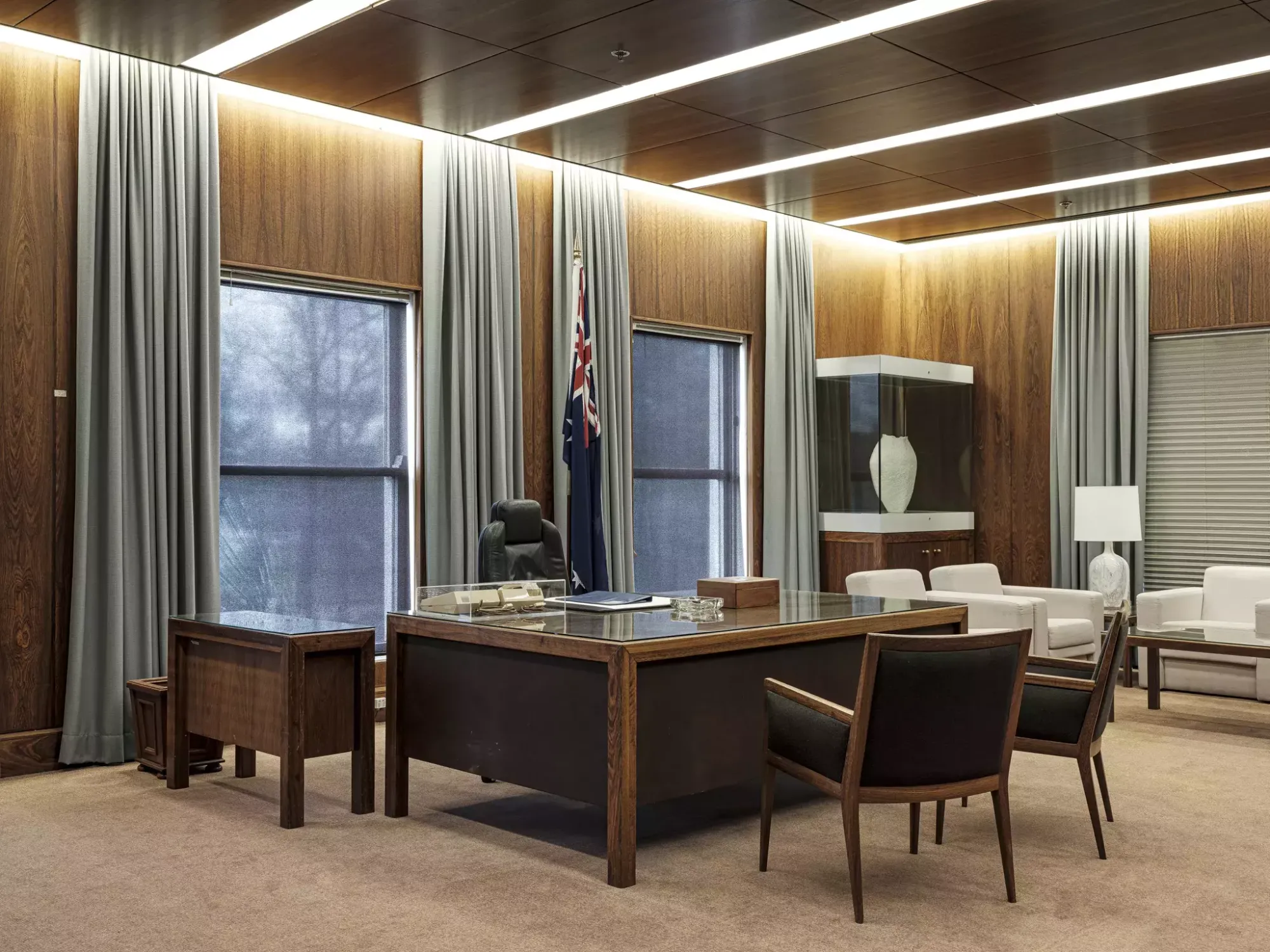
DAVIS: So interestingly, he's describing the Hawke government. He's describing Old Parliament House, because that's where that meeting would have happened, because 1988 is the year they moved up the hill, as it were.
Which you can walk through it now; you can go to Bob Hawke's office. It's been left set up exactly as it was on the night they all left and moved up the hill, so you can walk through the office that he's describing. And the first thing that will strike you is how small it is. All those people are in it; it's a very crowded space.
Which is true of that whole building: there were 2,000 people working in a building that wasn't meant for anything like that number. And he's rightly describing the fluidity of who comes in and out of the rooms.
I agree with Terry: there isn't an inner circle that controls everything, because everything is too fluid and too expansive for one group of people. It depends on the issue; it depends on the focus of interest. If, for the Prime Minister, it's a really important topic, yes, they'll buy in. That's a small percentage of everything that's going on in government.
A lot of things will be settled by ministers getting together in one or another of the ministerial suites. It'll be settled by a minister saying to a secretary, "Go and sort this out. I don't know what the answer is, but I want it to go away. Fix it." There isn't a single locus of power. Obviously, the Prime Minister is a key player, as is the Treasurer, but not on every issue. They haven't got time to focus on every issue.
So what you're seeing is just a constant reordering of the agenda, a constant flow in and out of people and suggestions and ideas, controlled through a set of routines expressed through the Cabinet Handbook and through the ERC rules, and what are called the BPORs, the Budget [Process] Operating Rules, and other processes. But those routines are to try and get a bit of a handle on so much that's going on and put them through recognisable channels so there's legitimacy to the decisions that are made.
Because two ministers talking by themselves in a room can decide something. It's still got to go through some sort of process so that it's recognised, recorded and acted on. And that's why these routines are very important, and these routines, in a sense, run everybody, including the Prime Minister, who is at the centre of them, but nonetheless not so much in control that they can just rely on a decision by her or him.
MORAN: And ministers can't spend money just because they'd like to spend money. They have to have it approved through either consideration of an issue by the Treasurer or the Finance Minister, or more commonly considered by the Expenditure Review Committee.
Similarly, many things can't go far unless somewhere in the bureaucracy somebody has given some thought to, "Well, how would we do this and would it work?" And if they do that and then usually feed it into the Prime Minister's Department, if the answer is, "This will be a disaster," that stops it.
WALKER: Right.
DAVIS: And there's the famous apocryphal piece of advice: "If you are going to do this damn silly thing, Minister, don't do it in this damn silly way." [laughs]
MORAN: [laughs] Yes.
WALKER: [laughs] So we might come back to some of—
MORAN: Oh, by the way, going back to Nugget Coombs, Nugget Coombs was brilliant at charming ministers all the way up to the Prime Minister. I worked for the Whitlam government when Nugget was doing stuff there, and he had quite an impact on Gough and the senior ministers.
So Jim McClelland listened to what Nugget was trying to say, and occasionally there are senior public servants who have experience that are like that.
WALKER: I remember reading in this Pat Weller book [Cabinet Government in Australia, 1901-2006] about how, I think, Roland Wilson used to come into cabinet meetings and give ministers his opinion on economic issues, and that they really took his opinion seriously.
DAVIS: Every now and again, you get an individual so respected and powerful in their own right that they can't be ignored. The case I most cherish is from Victoria, not the Commonwealth.
After the First World War — the fire that lit the fuse and all of that that caused the war — after Sir John Monash came home, he was put in charge of building the electricity network that still serves Victoria. He did a stunning job of basically building electricity infrastructure in a state that didn't have any, or not enough.
There was a time, which is recorded by Sir Robert Menzies when he was a state politician before he went federal, where the Cabinet met to discuss the SEC's next budget proposal and rejected it because they just didn't have that sort of money. The next week, when they met, a sort of embarrassed attendant came in while they were mid-meeting to say, "Premier, Sir John Monash is waiting outside to see the Cabinet," not that he'd been invited or anything.
They didn't know what to do, so they asked him in. They all stood up, because that's what you did when Sir John Monash came into the room. He went to the front end of the table, sat down, and said, "Gentlemen, I understand that last week you rejected my proposal for further funding for the SEC. That's obviously because you didn't understand it. I'm now going to take you through it." [laughs]
WALKER: Wow.
DAVIS: He took them through it, and at the end he said, "I take it we are all agreed," and got up and walked out. Now, there are not many people who could pull that off but it’s spectacular.
MORAN: In the Cain years, the John Cain administration, ministers would have to go and try and see individual departmental heads about issues that they wanted to fix. Normally it should have been the other way around — that the ministers would have called in senior public servants.
But what the Cain government inherited from the previous Liberal government was a significant level of respect for the most senior public servants, which went to the point of senior public servants feeling that if they had an important issue, they should be the ones who called on a minister — sorry, the minister should call on them rather than the other way around. But that's all gone now, too.
DAVIS: [laughs] Distant but fond memory.
WALKER: Have prime ministers been getting more powerful in Australia?
DAVIS: There's a very interesting Canadian study by Professor [Peter] Aucoin, 30 years old now, but it basically says the core executive — the centre of government — reconfigures around each prime minister.
That the prime minister is such an important part of the system that the system actually adjusts around them. So some prime ministers are more dominant than others; some are more interventionist than others. But in a sense, their preferred style comes to dominate the process.
That's a really interesting observation. It tells you that the core institutions are relatively malleable; that is, they can change quite quickly in response to personalities. But it also probably tells you that you can't leave a lasting mark — that you can change the dynamics while you're the prime minister, but when you go, the system will reconfigure around the next person.
So some prime ministers are more powerful than others. I can't see a trend.
MORAN: Yes. If a prime minister doesn't worry about consulting with his or her ministers and goes freelancing, they're going to face a bit of a rebellion from amongst the ministers that could end up being a little bit tricky for the prime minister.
And so, most prime ministers expect that if there's an important issue, they'll hear about it from the minister concerned and they shouldn't be facing any surprises at any point. Usually ministers understand that, but there are occasions when they don't or don't want to understand it.
DAVIS: And we have seen some prime ministers come to grief.
MORAN: Yes, yes. In fairly recent times.
DAVIS: That's right. So that's a constraint on the power. As you say, it's not in the Constitution. You're not elected to prime minister; you're elected by your party and not by the people. So you're only there as long as the party is willing to tolerate you, whoever the party is at the time.
And as we've seen, prime ministers who fail to carry their ministry or just don't look like they're coping with the job get rolled.
MORAN: So the very strength of the Australian system is in the collegiality of decisions at the top being made on important issues, so that the prime minister, the treasurer, perhaps the attorney-general and other ministers are all involved, both for technical reasons and for political reasons.
And by and large, our system continues to work really well on that front.
DAVIS: You see prime ministers [being] very careful about how they get on with their ministers and not wishing ever to humiliate them. A lot of care goes into this.
WALKER: This seems to be an interesting thing that distinguishes Australia. You often hear claims that cabinet government is dead in Canada and the United Kingdom, and it's been replaced by a prime ministerial government, or at least by a core executive that's not the full cabinet. Whereas in Australia, that doesn't seem to have happened to the same extent.
Maybe that's because political leaders in Canada and the UK are elected by a broader group than just the parliamentary party, whereas by contrast, Australian prime ministers are more vulnerable to their colleagues. Does that seem to be the reason we haven't gone down the Canada and United Kingdom route?
MORAN: I think it's part of it, but the other reason is that our system seems to work okay from everybody's point of view.
DAVIS: Yes, and I'm wondering whether the UK would still think they have prime ministerial government after the sequence that took out all of those Conservative leaders in a row so quickly. That's a bit of a reminder that the prime minister is not as powerful as the party that chooses them.
And for a government in power, you can't go through that process of consulting widely — the population and the members of your party — because you've got to make a decision quickly.
MORAN: And in Australia at the federal level, prime ministers looking to make a significant decision have to be wary of different views coming from different factions amongst the ministers, both supportive and otherwise. A sensible prime minister, therefore, has got to find a way to settle everybody down and bring them on side.
WALKER: So, true or false: Anthony Albanese is more powerful within Australia than Donald Trump is within the US?
MORAN: Well, he can't send off the bombers with nuclear weapons and destroy a country.
WALKER: [laughs] But just domestically.
DAVIS: He can't unilaterally impose tariffs. He can't arrest his people and have them sent offshore. He probably doesn't authorise the blowing up of so-called drug boats. I don't think it's a reasonable comparison.
I think the Australian prime minister is much more enmeshed in the parliamentary and executive system than a US president, who is, after all, elected to be a sort of elected king in a way that our prime minister is not.
MORAN: An important part of how the Prime Minister operates is in the central agencies — not just the Department of the Prime Minister and Cabinet, but also Treasury and Finance. No matter how good the political advisers are, they'll never be as much on top of the detail that those departments have got to handle for big decisions.
And therefore, they and the Prime Minister have no choice but to listen to what the official advice would be.
DAVIS: So often you get an interesting dance, in a sense. A prime minister or a treasurer or a senior minister might have a view about what they want to do, but they then have to turn to the bureaucracy and say, "There's a global pandemic on. We need to find financial support for people who can't work. How do we do this?" Then you rely on Treasury and/or PM&C and all sorts of people to put together the proposal.
So you know roughly where you want to go, but if you said to a minister, "Go and design me the technical specifications for JobKeeper," it would be pointless. They don't have the expertise or the skill.
So it is a partnership, because you could imagine a department coming back and saying, "We can't make that work. There's just no way that works."
Now, you might then get an interesting situation where the government said, "Well, you've just got to make it work," and then you get disasters — and those are not unknown.
But in general, what you're seeing — "partnership" is the wrong word — it's not ever in doubt who's in charge: it's the ministers, it's the government. But it is the idea that ministers, particularly for complex technical questions, need expert advice, and they look to the public service to get that.
That's, in a sense, when we talk about stewardship in the public service, we are in part talking about the public service maintaining the expertise to be able to respond to unpredictable circumstances. Sometimes you have expertise in the public sector that you're not calling on all that often. That's not really the point; the point is you need it there.
WALKER: Last week, in preparation for our chat, I read through the 15th Edition of the Cabinet Handbook.
DAVIS: Oh, you're a brave man. [laughs]
WALKER: For people as tragically nerdy as me, I recommend it. You can get it on the Department of the Prime Minister and Cabinet website. It's only about 50 pages long. I think the new edition's due out soon.
DAVIS: It is. We're all excited.
WALKER: [laughs] Reading the Cabinet Handbook, the impression I got about the institutional source of the PM's power is that it largely seems to flow from the PM's ability to set the agenda for cabinet. Because obviously, if matters can't be put on the agenda, then they usually can't be decided upon — important matters at least.
And perhaps secondarily, the PM's power seems to flow from their ability to determine the existence, membership and terms of reference of cabinet committees. Am I understanding that correctly?
MORAN: Yes, but there are other elements in it as well. The PM has got to have a sense of where the whole show is supposed to be going, and also have a sense of what people out in the community will make of whatever is proposed to be done.
Part of the prime minister's strength — and premiers' too — is usually access to good quality attitudes research on where the community is at. That's for a long, long time been very important in the Victorian government, for example. That gives the head of government, the prime minister or the premier, a bit of an advantage in dealing with his colleagues.
But it also shows that the prime minister has got to make sure that if something's to be done, it's not going to be something which blows up in the public's collective mind.
DAVIS: I think you're entirely right to say, though, that control of the agenda is a really important power. It's not the only consideration, as Terry rightly points out, but it allows you to sequence when things are going to come to Cabinet. It also allows you to defer things that you really don't want to have discussed for a while—or forever. And as Harold Wilson said, "A decision deferred is a decision made." And so it does give you authority.
The committees are important as well because they report back, but the most important of those committees — the Expenditure Review Committee — although in some cases the PM is technically the chair, in practice the Treasurer is the driving force in that committee and will decide the agenda.
The other thing to say about an ERC is that because it's doing the budget process, we're talking about hundreds and hundreds of agenda items. This is not a small committee.
Whereas a cabinet meeting might have 10 or fewer matters, and they're all important and they're all mature — that is, they've done the work and what's coming up is the end of a long process, rather than just something that's been dreamt up the week before.
In that sense, they're more routine because… the recommendations are normally accepted, because they've all been tested and workshopped and co-ordinated — not always, but that's the normal pattern.
Whereas committee work is often about, earlier in the stage, trying to think through the problem and test the options before you go to Cabinet, because most committees can't make binding decisions.
There's some exceptions — the National Security Committee is an exception — but in most places, the committee work is more about trying to get on top of the issue. Cabinet is about making the legitimate, defining, authoritative decision.
WALKER: So when the PM wakes up in the morning, there's a multiplicity of different types of information that he or she could read. There are overnight intelligence updates from the Office of National Intelligence, media summaries, draft cabinet submissions, forward schedules for travel, etcetera etcetera.
If you were PM, what would be the first thing that you would read on a typical morning?
DAVIS: [laughs] That's an impossible question.
WALKER: [laughs]
DAVIS: As you say, there's a huge amount of material, but the moment you get to work, there's also a queue of people outside your office wanting to get in and talk to you. You're much more likely to spend time in meetings being briefed than you are being able to read this material in the sort of detail that it warrants.
But you rely on your staff to read it and to highlight things that you need to know about, so you get summaries of summaries of summaries coming through.
MORAN: And you'd particularly want to know, before you walked out the front door of the Lodge, whether there are any really big issues breaking in the media that morning. Because you probably won't be able to get into Parliament House or anywhere else without being confronted by journalists asking questions about that matter, whatever it might be.
So it's not all about the policy papers; it's also about the public presentation of them and what the public thinks.
DAVIS: Absolutely.
MORAN: One case in point from my time at the state level and at the federal level — I worked for two state governments as well as the Commonwealth more than once — [is that] the Commonwealth is short of quality attitudes research in a way that is not a problem in the states.
In Victoria, when Jeff Kennett was Premier, by agreement he set up a system of regularly testing community attitudes to the services delivered by the state government. That meant that he had a sense of what was going wrong, he had a sense of what the opportunities for new things were, and subsequent ministers stuck with it meticulously.
It really had a big impact on the quality of decision-making within government.
DAVIS: Less so at the Commonwealth level, as you rightly say; it's not as much part of the machinery, although—
MORAN: At the state level in Victoria, both sides of politics agreed that it would be a good thing to have market research done on the delivery of government services.
WALKER: And just very briefly, paint me a picture of what the PM's diary would look like. Are they just staggering from meeting to meeting, or what does a typical day look like in Canberra?
DAVIS: Well, it depends greatly on whether Parliament is sitting, because it's a completely different world when Parliament is sitting. So let's start there.
When Parliament is sitting, the tactics meetings will start very early.
WALKER: Like 7:00 am?
DAVIS: 7:00 am or earlier. The PM may or may not float in and out of that meeting. It's normally led by the Leader of the House rather than the PM, but nonetheless the PM's staff will be there because you're deciding tactics for the day. But you're also deciding what legislation you're bringing forward and priorities, and trying to game the way the day's likely to play out, with an eye to the media and an eye to your programme.
Meanwhile, the PM will start the day either there or in meetings with her or his own office, where they do some of that briefing we've just talked about — what's going on, what's important, what are we going to get across today. There'll be a tricky negotiation with the secretaries who manage the diary about who's going to get in and who's not and how we're going to do that. The number of people wanting to get in is always vastly over the [capacity].
WALKER: Can the PM see their own diary? I mean, I assume they're not using Google Calendar or something. Does Parliament have its own software?
DAVIS: The PM can see it, yes, and will have on their table a little plastic folder with the printout in it. But it’ll move.
WALKER: Can they check it on their phone?
DAVIS: Yes, absolutely.
WALKER: Is it proprietary software or something?
DAVIS: No, I don't think so. Actually, it's a good question to which I don't have the answer, but I doubt it's proprietary. I suspect it's the same system the rest of government uses, which is the same systems the rest of the world uses.
WALKER: Things like Microsoft or Google.
DAVIS: [Nods] But don't hold me to that. I actually don't know on the Prime Minister's office side, because I worked in the public service, not there.
WALKER: But sorry, keep going.
DAVIS: So, you know, we're only up to 8:00 or something, and already you've got a plethora of meetings. There'll be a series of ministers hanging around outside hoping to get five minutes. There'll be the media adviser who just wants one minute to discuss an issue, and there'll be lots of those. Then there'll be formal meetings through the day — diplomats and other significant people.
If Parliament's sitting, that's when all the big delegations turn up: the business councils, the unions, the people who want attention from the government. So you've got to deal with all of those; they all sit in your diary.
Meanwhile, all the cabinet meetings still happen. Committee meetings in particular still happen, particularly if you're in the middle of a budget process. So it's not uncommon for the bells to ring in the middle of a committee meeting, and if it’s the Reps — all the members [of the House of Representatives] having to stand up and walk out of the meeting, including the Prime Minister, to go and vote on a resolution, and then come back and pick up the meeting.
MORAN: Oh, the poultry.
DAVIS: [laughs] Yes. And so everybody's watching the clock, which has the red and the green lights on it, because inside the Cabinet Room it's silent; you can't hear the bells, but you can see the lights.
MORAN: So here lies one of the differences between the American system and the Australian system.
In the Australian system, when the ministers are in Canberra, as they often are, they're all clustered in Parliament House. And the public servants they deal with are near at hand and readily accessible. So there's a constant flow of information into the centre of government located in Parliament House, in a way that isn't achieved in the American system.
DAVIS: That's true. Although there's a fascinating difference between State and Commonwealth here, as you know from Victoria and also from Queensland. Although when Parliament sits, that's where everybody is, but for most of the time Parliament is not sitting, ministers work in their departments, premiers included.
So they're much more often sitting with their public servants. They spend much more time with their public servants than they do in Canberra. It's easy to go to a meeting and hear directly from people you need to hear from. Whereas in Canberra, if you're a public servant, you have to go up to Capital Hill in order to have your meeting. There's a lot of sitting around in corridors waiting to get in. It's not the intimate relationship you get at state level; that's quite a different dynamic in Canberra.
But just to finish, that pattern of rushing into the House — and then, of course, you have to be briefed for question time. You then have to do question time if you're the prime minister, which is a very significant commitment. All the time there are people trying to get in to see you.
It's hard to convey just how demanding it is, whoever you are, if you're the prime minister — and how someone like John Howard did the job for [11.5] years without falling over is a singular achievement, I have to say. You can see the exhaustion on their faces quite quickly. It is the most demanding of roles, and not just for the prime minister, for the treasurer and lots of senior ministers as well.
Parliament House reinforces this because it's never-ending; there's no escape, in a sense. If you're the prime minister, you are the centre of attention the whole time, wherever you go. And, you know, just how do you get any off time? How do you get [inaudible]? Which is why The Lodge makes sense as a place that you can escape to behind a wall.
MORAN: And there are some differences between, say, Victoria and the Commonwealth in Canberra. In Victoria, years ago, when the colonial administration was being set up before the Commonwealth was formed, it was influenced by the Northcote–Trevelyan Report and the expectations that it created for politicians of a competent public service.
In Victoria, from time to time, people would question whether the public servants are any good, and that would be an opening for the advisers to jump in and join the dots if it wasn't immediately apparent what should be done.
We now see debates about the ability of the public service to properly serve government. Some of those positions, which are critical, are well placed, in part because these days Commonwealth and state bureaucracies are over-influenced by the enthusiasm of microeconomists and macroeconomists who, in their enthusiasm, can bedazzle heads of government, whether it's at the state or Commonwealth level.
So there's a bit of a problem in our system, which is that we've allowed it to be too weighted in favour of economic enthusiasms, without putting beside that a really good understanding of what's going on in the community and how they feel about hospitals and schools and migration and all that sort of stuff. And unless premiers try and take account of that, they get into trouble.
WALKER: Is there anything else interesting to say on what an average non-sitting day looks like? Or is it just kind of much the same but without—
DAVIS: Just the same without having to go into Parliament, into the chamber, to vote. They're full days. But of course, prime ministers also travel a lot domestically.
So a prime minister, when Parliament's not sitting, would be much more likely to schedule meetings interstate to go and do openings and do all of those things, many of which are programmed a long way out, so you're sort of committed to the programme.
It gets very difficult if something arises that changes the dynamics, which only intensifies the time pressure, because often you're under pressure to do it anyway, but you've had to divert to some other, more immediate issue. And so you're constantly trying to make up the lost time. It is demanding, exhausting, and it requires a degree of good grace from everyone involved to recognise what's being asked of an individual.
WALKER: Physical energy levels are not evenly distributed, and it makes sense that PMs tend to be individuals of unusual energy, because it does seem like such a wildly demanding role.
DAVIS: They also get good at working out what they can delegate and what they can't — what really matters and what doesn't. And they learn how to.
One of the reasons for some of the travel is that it just gives you thinking time. Sitting on a plane for two hours to Adelaide or Brisbane is two hours you can actually talk to people on the plane, think, work through issues. It actually matters, because otherwise there's very little reflection time.
WALKER: All right. I've got about four or five pages of questions about Cabinet, which I'm going to rapid fire at you. Some are more trivial than others, but I want to be like a fly on the wall in the Cabinet Room and also kind of understand the routines.
So just to begin with, to back up a little bit, could you give a three or four sentence summary of what the Department of the Prime Minister and Cabinet does, just for anyone lacking that context?
DAVIS: The Department of the Prime Minister and Cabinet is the central agency so it runs the cabinet process — physically runs it. It organises the agendas, makes sure there's tea and coffee, records the decisions, transmits them to agencies.
But more than that, it provides advice to the Prime Minister on every matter before Cabinet, and detailed expert advice, which means it needs to have what's called shadow functions which look at every part of government and are able to provide independent advice on those.
So a minister going into a cabinet meeting with a submission knows that there's been close conversation between their department and PM&C, but also knows the Prime Minister will have in front of her or him a briefing from the department that's meant to be as thorough and, if needed, as critical as possible. It's without-fear-or-favour advice, and that's what PM&C does.
It also runs a whole suite of ancillary functions — the international protocol, visits. It provides support for Kirribilli House and the Lodge and so on. But its principal function is this core policy function: both understanding policy, helping set up collaborative policymaking across the whole of government, and then providing advice to the Prime Minister as that process — often a committee process, often lots of interdepartmental committees coming together — eventually has to be distilled, through the Cabinet Handbook, into a submission which is strictly ordered because it has to cover a whole set of fields, and by the time it gets to Cabinet, government should be confident that every piece of information they need to make a decision has been thoroughly tested and is before them, and that everything they're being told is accurate.
WALKER: Mm. The facts are not being contested at that point.
DAVIS: Exactly. It's a judgment question for Cabinet, not a facts question.
WALKER: As Secretary of PM&C, did either of you ever actually sit in on meetings of the full Cabinet?
MORAN: Yeah, every week.
DAVIS: Yeah, in Canberra every week.
WALKER: In the full cabinet meeting?
DAVIS: Yes.
WALKER: Ah, see, this is so interesting.
DAVIS: Committee meetings, including National Security and ERC.
MORAN: Yes, and the same at the state level.
WALKER: Okay. Because of course you were Secretaries of the Department of the Premier and Cabinet.
DAVIS: Not in Queensland, curiously. In Queensland there was a separate Cabinet Secretary. It was a full-time role.
MORAN: There was a separate Cabinet Secretary in Victoria. But nonetheless, the Secretary of the Premier's Department sat in the Cabinet Room.
WALKER: So you guys saw everything in the cabinet process?
DAVIS: Certainly in the Commonwealth, yes.
WALKER: Okay, fantastic. Well, this is good because now I can ask all of my questions.
Okay, so I'm just going to rapid fire these at you. Firstly, when the doors close, how many non-cabinet ministers are present and who are they? So I think at the federal level, which is mainly what I'm interested in, you've got the three note-takers, you've got some Cabinet Room attendants who are passing things back and forth from staffers to ministers, and then you as the Secretary of PM&C. Anyone else?
DAVIS: No. And no assistant ministers. You would get called in if you were part of a submission, for your submission.
MORAN: That's it. And then you go.
DAVIS: When the door closes, it's the Cabinet and only the Cabinet. And the officials are silent. You're not to say a thing; you're never called into the debate.
WALKER: From reading the Cabinet Handbook, the figure who emerges as the most mysterious and potentially very powerful is the Cabinet Secretary. [laughs] They're kind of like the PM's consigliere. At the moment it's a minister, Andrew Charlton. In the past I think it's sometimes been a political staffer.
DAVIS: Yes, I think the practice has changed quite a lot, depending on the government in power and even the prime minister in power.
MORAN: In Victoria, unless it's changed, it was always a parliamentarian.
WALKER: So at the moment at the federal level it's a parliamentarian.
DAVIS: Yes.
WALKER: How powerful is that person as Cabinet Secretary?
DAVIS: Well, they don't decide the agenda, and in that sense they're not powerful.
The Prime Minister is the chair of the Cabinet committee, and therefore the Prime Minister settles the agenda. But the Cabinet Secretary — who was previously Mark Dreyfus, as the Attorney-General — I mean, it is a very significant role.
You do play a key role in advising the PM about what is urgent and what is not, what can wait and what needs to be settled now. You also write down the decisions of the Cabinet.
WALKER: So those decisions are technically known as the minutes, which is a little bit confusing. But in this context, “Cabinet minutes” refers to the outcomes of the Cabinet meeting, the decisions taken.
One of the interesting things I learned just while reading about how Cabinet works, reading some of Pat Weller's work, is that sometimes there need to be decisions about what the decisions were. It's not always obvious what Cabinet agreed, and so there might be discussions after Cabinet about what are the actual minutes.
Obviously the people in the first instance responsible for recording those decisions are the note-takers, and so you've got three note-takers in the room. I don't know if you have this information at hand — but what tends to be the professional background of those note-takers?
Because I imagine they can't just be scribes, because there's a level of interpretation that needs to happen, they need some policy context. So who do those individuals typically tend to be?
DAVIS: So we talked about the shadow functions inside PM&C that are expert groups around each area. Whoever leads that particular shadow function comes into the Cabinet Room as the note-taker for the item. They know the policy as well as anyone in the room.
And you mentioned disagreements about what was decided. They are, in my experience, incredibly rare. Because the recommendations have been worked through, people know exactly what's on the table. Sometimes, if there are amendments on the fly — and that happens — you might get ambiguity.
It's normally sorted out by the Cabinet Secretary with the PM. It doesn't go back to Cabinet unless it's a substantial issue. But I can remember at best not even a handful of times when that [happened].
It is a little more common with ERC only because of the sheer volume of what's coming through. But even then, it's a rarity. It's a very structured process.
MORAN: And the note-takers have got an important role to play in making sure that individual departments understand what the final result as a Cabinet decision on a particular matter was.
WALKER: So, random logistical question. Cabinet meets most weeks of the year, right? But Parliament, at least for the House of Reps, only sits about 20 weeks a year.
Does that mean, for the weeks in which Parliament isn't sitting, Cabinet ministers all have to fly back to Canberra for the Cabinet meeting?
DAVIS: Yep. Because there's no video attendance. You are in the room or you're not there.
WALKER: Has to be a physical meeting.
DAVIS: Yes.
WALKER: That’s tough for any ministers from WA. [laughs]
DAVIS: Absolutely. And in airports all around the country on a Sunday night, you can see Cabinet ministers waiting for their plane.
WALKER: Oh, interesting. Okay.
I'm interested in what doesn't make it to Cabinet. That's too broad a question, but I'm going to narrow it down. What's an example of a borderline issue where you'd need to have a conversation about whether or not that's an item that should make it to the Cabinet table?
MORAN: Well, you might have an issue that's immensely sensitive politically, perhaps in the national security space. And normally that wouldn't go through unless there was some reason the Prime Minister wanted his colleagues to know about it.
DAVIS: Yes, and the way [it works] — and it varies from government to government — but in recent years, the Cabinet will meet and, at the start of its meeting, it'll just be Cabinet ministers. All officials will leave the room, and they will discuss anything political — or frankly, who knows what they discuss.
But they'll have the conversation, so if there's a sensitive matter they want to raise, it'll be raised. There are no note-takers. There are no decisions recorded. It's not a decision session. It's a Prime Minister briefing the Cabinet on the issues of the day, and then the officials get called in, and they turn to the agenda and work their way through the agenda.
That provides a chance to do short briefs on current issues, and sometimes signal that, “We'll be coming back to this in a more structured way as a Cabinet.”
WALKER: I see.
MORAN: And in the case of the Victorian system, when I was there — it might have changed, I don't know — at the very beginning of the Cabinet meeting only ministers would be in the room, and they could raise anything of political concern about a submission that they wished.
Then that wouldn't necessarily be placed before the Secretary of the Premier's Department when he came in to sit in on the meeting. So there's an opportunity for a political discourse, which is really valuable for everybody concerned.
WALKER: I'll come back to that, because that's one of the things that surprised me about how Cabinet works: the kind of political strategising is mixed in with the actual executive decision-making.
And I think it was for the federal Cabinet that that practice of starting the meeting with the political stuff started under Howard, I think.
MORAN: And that was the practice in Victoria under Bracks and Brumby.
WALKER: Okay. Interesting.
DAVIS: It's not uncommon, but there are variations on where in the meeting and all that stuff.
WALKER: And even in the Keating government, they still had those conversations, but it just wasn't routinely at the start necessarily.
DAVIS: The logic of Cabinet ministers wanting to have a political discussion with no one else in the room makes perfect sense, and that's a standard feature of all governments.
WALKER: I've got some questions about submissions. Again, I'll just sort of rapid fire these at you.
My interest here is just that if there's a template that's good enough for the Federal Government, that's kind of evolved over the decades, it's served Australia through wars and all sorts of crises, maybe there's some lessons we could learn from that.
But the first question is: either in terms of pages or words, what's the maximum length of a Cabinet policy submission?
DAVIS: So it's done in terms of pages, but there’s multiple parts to a submission.
You have a two-page summary at the front end that goes through all of the core things and lists the recommendations. You'll then have an explication area that runs through some of them.
You'll then have a second section that goes through what are called coordination comments, where each agency provides its view. And that's important, because if you're a minister, you can read not just what the proposal says but what the rest of government thinks of it.
The intention there is, again, frank and fearless advice. If you think it's a dumb idea, you say it's a dumb idea. You say it nicely, but you say, “This would not be a wise use of public resources,” or whatever it is you want to say.
And then there are attachments at the back where you need to lay out, particularly, implementation plans and evaluation strategies.
So they're thick documents, but in a sense, once you get used to reading them, it's easy to go to the level of detail that you want to get into as a minister.
MORAN: And with so many different sections, those papers can't be written with a love of exhaustive detail.
Because if you do that, they don't get read and you have mistakes made.
When I went to be Chancellor of [Federation University], I was a bit surprised at the quality of the papers coming forward to the university council for decision. And I said, “Well, look, in government this just wouldn't be acceptable.”
So I persuaded a very good person out of the state government to come and do a template and some instructions as to how to use it.
Transformed everything overnight.
DAVIS: [laughs] Because it does provide discipline.
That's why I talk about it as a routine. It means, for example, you can't put in a submission until you've answered all the questions in the Cabinet Handbook. That's really important.
You can't rush something in and try and—
MORAN: Sneak through the cost without the comment— [laughs]
DAVIS: For example, because there's a section that, if it's not filled in, the Cabinet Secretariat will not let it go onto the Cabinet papers, because it's an incomplete paper.
It is a significant discipline on…
WALKER: Did you, in your time, notice any commonalities in the poorly drafted Cabinet submissions? Or is the template in CabNet so rigid that it doesn't really permit or allow much margin for error?
(CabNet is the government's software that facilitates the kind of end-to-end Cabinet process; that's where Cabinet submissions are lodged and tracked.)
DAVIS: Well there is a coordination process that PM&C is central to.
When a draft is put forward, there's then a consultation between PM&C and the agency. And if it's a poorly drafted policy, part of PM&C's responsibility is to say, “This isn't up to standards,” and work through what that means.
Now, there can be a bit of tension coming out of that, to put it mildly. Nobody likes being told that their submission is not of the standard that it should be. But PM&C will be blamed if a submission does come forward [that isn’t up to standard].
MORAN: And in the case of the Victorian government, when I was Secretary of the Premier's Department, if such a submission came forward and it was seriously deficient, I'd just simply say, “Go away and try again.”
Because I knew that it'd blow up in the Cabinet Room.
Sometimes I wouldn't have minded too much if the particular secretary were going to cop it because of that, but that's not really being fair to your colleagues. [laughs]
WALKER: [laughs] Yeah. So, okay. So by the time it gets to the Cabinet Room, there are rarely, if ever, any deficiencies in the submissions?
DAVIS: Well, we have to be a bit careful, though. I mean, yes, there are possibly mistakes.
Not everything is well written. Not everyone releases their inner Hemingway when they get to write the submission. I wouldn't want to get carried away. They're not perfect gems of documents.
They're still human. They still have errors, and they still sometimes elide key points that need to be made. And sometimes there are people who try to push things through that they know they're going to struggle with, so they frame it in as positive a way as they can.
So, no, it has all the foibles of anything that people are involved in. But the system is designed to minimise those, standardise the process, and provide the same scrutiny on every submission.
And that's the key discipline in my view. It's what happens before it gets into the Cabinet Room that decides the quality.
WALKER: So as Secretary, when you're rejecting submissions —exposure drafts coming from the departments — can you generalise what are the common shortcomings in the ones where you say, “No, that's not good enough. Try again”? Is it a lack of detail or…
MORAN: Seldom a lack of detail.
It's a lack of suitable analysis of the problem.
DAVIS: A tendency to jump straight to the preferred solution and not argue why, and not argue the alternatives. And/or a failure to say, "If we did this, these are the implementation challenges we face." And part of every submission, as you know from the Handbook, is you've actually got to say, "If this is adopted, here is how we are going to go about implementing it.” and “Here's the evaluation strategy: whether we'll know if it worked or not.”
That's actually a tough discipline because you're being asked to set out what the thresholds are for this thing actually to be considered a success.
WALKER: Say I'm a minister who wants to come fully informed to Cabinet meetings and contribute to the collective debate, even on a line portfolio that doesn't directly impinge on my own — and I know not every minister is like this, and not every minister has time to read every Cabinet submission, but hypothetically I'm a minister who does. On average, how many hours would I spend reading Cabinet submissions? (And assume I don't read the attachments.)
MORAN: Oh, well, paper’s that thick or thicker [gestures].
DAVIS: So once you get disciplined about doing it, you know how to do it and you know what you're looking for. In a sense, you're reading the material in the early pages of the submission.
WALKER: The executive summary.
DAVIS: To see if it raises concerns. There might be a point at which you say, "I'm pretty comfortable with this; it makes sense," and move on. I still think you're up for a couple of hours of solid reading.
WALKER: And that's just picking and choosing.
DAVIS: And that's just not diving deeper than you need to. If you want to read everything, including all the attachments, you'd better put a day aside, or whatever it is.
MORAN: Glyn's right. Well-crafted Cabinet submissions at the Commonwealth level and at the state level are very brief at the beginning part, but able to cover all the relevant points. Therefore, a minister might want to go further if they had a particular interest in a particular point, or they were the Treasurer or Finance Minister and were really worried about the proposal to spend a lot of extra money; they needed to find some way to either justify or block it. And so it all depends where you're coming from.
DAVIS: The Secretary of PM&C would spend several hours every week going through Cabinet submissions, not just this week's and next week's, but pipeline things. They would have multiple meetings with those shadow teams during the week just to review where we're up to on submissions, including a significant one a couple of days out from the Cabinet papers being distributed to ministers, to finalise how we're going to brief on a submission. So for us, that would take a whole day’s of work in that.
So a minister who wants to be completely thorough is looking at a fairly similar time commitment.
MORAN: In the two Secretary roles that I had, I tried to make sure that there was at least one Deputy Secretary who was really on top of the range of policy issues of concern to the government. It was his or her job to really go through it.
And if they missed anything, they copped it. [laughs] But they tended not to, so that's just a sign that, yes, there's a sieving process.
DAVIS: When I worked in Queensland, Premier Goss would make us sit in front of him for an hour before the Cabinet meeting, and he would practise by interrogating us on the Cabinet agenda. He would always find the paragraph you hadn't read and ask you the probing question, and you just dreaded that sort of thing. [laughs] So we'd spend much of the weekend reading the Cabinet books and hope to get through this meeting on Monday morning.
We enjoyed it when he travelled. [laughs]
MORAN: Well, I worked for three premiers in Victoria and two prime ministers, and none of them did that to me.
DAVIS: [laughs] You're very fortunate.
WALKER: So what's the median length of time for drafting a Cabinet submission for the Department of Defence? Because I've heard some can be worked on for years before they reach Cabinet, but I assume those are outliers. Roughly, what do you think the median might be?
DAVIS: Very hard to say, and for this reason. A lot of the Defence submissions are around acquisitions. They're around defence procurement, and they are often hundreds of millions, if not billions of dollars. And yes, they take a long time because the scale of the decision is so big and the thoroughness required, so extreme.
They're also the largest submissions you're ever going to see, because you're trying to work out how you would acquire a frigate or aircraft or whatever it is you're buying for the next 20 years. And so the level of detail is extraordinary, and years seems to be an exaggeration, but those are the ones that take enormous time, and they get workshopped through a whole set of committees long before they get to the National Security Committee.
But many Defence ones won't be much different in calibre from those from other agencies. You're dealing with a problem, you're trying to outline how you're going to manage it, what your response is. From the time you decide there's going to need to be a Cabinet discussion of this matter through to it actually getting in front of Cabinet is typically a number of months, and there are processes long before Cabinet buys in. So if you're a minister, you see things at the end of the chain, not along the way.
WALKER: Just quickly, you've mentioned the kind of standard template. It's the executive summary, the recommendations, the analysis; it might have some attachments including the coordination comments from different departments.
I assume the actual template in CabNet is more granular than that in terms of the rubrics or the sections, and it would vary depending on the type of submission?
DAVIS: You mean the presentation the minister would make, or you mean the nature of the submission itself?
WALKER: The nature of the submission itself.
DAVIS: Well, I would have thought closer to standard than not.
WALKER: Oh, really? So it's not incredibly prescriptive in terms of subsections and whatnot?
DAVIS: No, it is. That's what I mean. It is quite prescriptive. I wouldn't say incredibly, but it's a set of headings, and you have to answer each of the headings. And the headings are designed to make you outline each relevant consideration for making a decision.
They're the policy cycle explained. What's the problem? What are the alternative approaches we've considered? Why have we chosen this particular instrument? Who have we consulted? What was the advice back from the coordination comments? And then, why these recommendations? I mean, that's basically it. And then you start again.
WALKER: So I want to talk about the kind of vibe or tenor of Cabinet meetings now. Can you paint me a picture of what the discussion in the Cabinet Room is like? How informal can Cabinet meetings be? How heated do they get? How structured is the debate? If we're a fly on the wall, what would we witness?
MORAN: In my experience, they weren't heated. Ministers who had read the submissions and had something to say would invariably be heard, and that might provoke a bit of a conversation around the table.
But by and large, I think the ministers were depending upon submissions and attachments being comprehensive and capable of supporting whatever the decision was that needed to be taken. You'd sometimes find that a minister with a particular interest, perhaps the Attorney-General or perhaps a minister who was chairing the Cabinet committee that dealt with social policy issues, would come in and have something additional to say.
But by and large, the ministers bringing forward submissions proceeded on the basis that they and their department had got everything on paper that needed to be there, and therefore there could be a reasonable discussion about the merits or otherwise before a decision was taken, and it seems to work.
DAVIS: I agree with all of that. Collegial, focused on the submissions. If there were factional or other tensions, they didn't surface in the Cabinet Room; it would be inappropriate for that.
MORAN: The point we didn't make at the very beginning is that Cabinet is the forum for the government sinking or swimming on a variety of issues. So the ministers know that any Cabinet submission can have some deficiencies, and it's best if they're found and sorted out.
But also, the Cabinet submissions are really dealing with sensitive issues that everybody in the government has to get right.
DAVIS: Exactly so.
So they're collegial. They can be funny at times, and people need sort of light relief.
I remember a Cabinet meeting in which one of the Cabinet members had just turned 50. It was his 50th birthday, and Cabinet sang him happy birthday. Then someone said at the end, "It's a bit rough to have to spend your 50th birthday in Cabinet." And he said, "It could be worse. It could be shadow cabinet." [laughs]
WALKER: When I was reading cabinet diaries, the Blewett and Evans ones, three things stood out to me in my naivety. Let me summarise what they were, and you can react to them or not.
The first one was, as we mentioned earlier, the political strategising mixed in with the executive decision-making. In Neal Blewett's diary, he talks about the kind of “general waffles” that they had, with Keating giving a broad, sweeping state-of-the-nation-type address to the Cabinet.
The second was…and maybe this was not so much a feature of your experiences in the Rudd, Gillard and then Albanese Cabinets, but it's funny to contrast the formality of British Cabinets, which you get in accounts like Richard Crossman's account of the Harold Wilson government, with the occasional informality of Australian Cabinets [laughs]. There are so many anecdotes. A couple of days ago in a bookshop, I just happened to pick up the new Troy Bramston biography of Gough Whitlam and just turned to the page where he's describing the Whitlam Cabinet, and there's Whitlam swearing at his ministers and throwing his papers across the Cabinet Room and all sorts of things like this. [laughs]
MORAN: Sounds right. [laughs]
WALKER: It was obviously an infamously rowdy Cabinet, maybe an outlier. But even in — was it in Gareth or Blewett's Cabinet diary? — that there's a story of Keating opening Cabinet by saying not to listen to the ABC in the morning because you can't have “fuckers filling your mind up with shit at 8:00 am.” [laughs] So it's funny how the Australian style is a little bit different.
And then the third thing, which I think we should talk about, is how much latitude the PM has to chair the meeting well or poorly — and the PM's skill as a chairperson seems to be unusually important to the quality of the decision-making. Which is interesting because it's not something most people might think about when you think about what skills are needed to be a good PM: the ability to chair a meeting well.
We've had PMs with different styles of chairing over the years. I think Menzies was famously very good at synthesising the debate and summarising it as an outcome which was pleasing to everyone, even people who probably didn't agree with the outcome. Whitlam's Cabinet was very rowdy, as we've said. Fraser was very domineering but he pushed people because he wanted to test ideas. Hawke was the kind of relaxed consensus-builder, he didn’t state his views too early but — and this is a quote from Gareth Evans' diary — he could let debates turn into “Esalen sessions” which dragged on too long and sucked up ministers' time. Howard was very punctual and businesslike. There are varying accounts of the Rudd Cabinet, but pretty negative ones in Paul Kelly's book Triumph and Demise. Chris Barrett, who was Wayne Swan's Chief of Staff, talks about the meetings being run inefficiently, and sometimes Rudd would use them as personal briefing sessions. Terry, I'm not sure if that checks out with your experience.
But the general point is that there's this range of different styles which seem to matter to the outcomes and to just how well the government runs. I mean, the pace of decision-making could sort of grind to a snail's pace, or it could be too fast, depending on how the PM chairs the Cabinet.
So could you step me through some of the, I guess, on the one hand, hallmarks of a good chair, and then, on the other, are there any habits of chairing a Cabinet that reliably produce worse outcomes for government?
DAVIS: [laughs] I think you touched on a number of the hallmarks of really good chairing. The ability to let people speak and not dominate by saying what you want out of this discussion early on, as a chair, is crucial. If you start the meeting by saying, "I'm looking for us to do this and this," you've killed the debate before it has started and people will resent you for it.
If they have a chance to speak and to hear the same evidence that you're hearing, and then you can sum it up well and provide a pathway that most people in the room can nod and say, "That makes sense," that's an excellent outcome.
And the chairing matters for the reason we discussed before. A PM who's seen not to be able to manage Cabinet would quickly lose the confidence of the senior ministry, and then the broader backbench. It's such a core skill to the job. If you couldn't do it at least passably well, then it really matters.
The timeliness thing matters. You mentioned John Howard and timeliness; it is hugely important. There's always such a backlog of things waiting to get to Cabinet. There's so much material running around that if you can't efficiently move it through, then the whole of government becomes...
Toward the end of the Hawke years, there's a famous case about a mining lease that the government just couldn't make a decision on, and they kept coming back and back. Gareth Evans' diaries talk about that as a sort of signal to the Cabinet that the Prime Minister was, in their view, losing the grip on the role, and it was important in their thinking about, "It's time for change."
So the ability to keep government moving, to be responsive to your colleagues but to give clear direction at the end, [matters]. You want, for better or worse: "We've dealt with this matter. It's finished. It's over. It's a clear and unambiguous decision. Now we get on with it and we move on." Those are the skills you look for in a great Cabinet chair. Styles matter because people are different, and there are times when you do expect people to sit back and you just need a bit of venting and you let people do that.
But overall, you need things to keep moving. Above all, you need them to keep moving. You've only got two hours max to get through 10 of the most significant policy items in front of the nation every week. And if you can't do that efficiently, then sooner or later people are going to get very angry that their issues are not getting dealt with.
MORAN: I've worked for two prime ministers and two premiers. One prime minister got into a spot of bother, but I don't think it was driven entirely by the Cabinet process. Although the anxieties of some Cabinet members were apparent at Cabinet meetings, their anxieties were dependent upon a whole lot of things outside the Cabinet Room itself.
And so, one could have a very interesting discussion about what can bring down a prime minister or a premier, but there'll be such a variety of possibilities that it won't take you very far.
WALKER: Alright, so I’ve got some general questions about Cabinet and then how—
DAVIS: You've done an extraordinary amount of work for this discussion. Well done.
WALKER: [laughs] Thanks. Well, we'll see what you think of these next ones. Obviously, one thing I learned is that big decisions don't always happen in the full Cabinet. They can be stitched up in the PMO, in ERC or some other committee, or in the corridor of Parliament House. From your vantage point, what fraction of important decisions are genuinely forged in Cabinet, and what fraction are settled elsewhere and then merely endorsed by Cabinet, roughly speaking?
MORAN: Well, I'd say most decisions are worked out before the meeting and go through.
DAVIS: Yes, but it would be a mistake to think of that as Cabinet not working, because what happens is there are negotiations, discussions—
MORAN: There's a process.
DAVIS: There's a process that gets you there. By the time it gets to Cabinet, you are broadly looking at an agreed set of recommendations.
Not that everyone in the room will necessarily agree, but you're not dealing with a...
WALKER: It's a feature, not a bug.
DAVIS: Yes, and so those sorts of more tense, emotional and angry discussions are not going to happen in the Cabinet Room. They're going to happen a long way back. They're not going to happen in public. They're probably not going to happen with public servants in the room. Or they're going to happen in committee meetings.
I have seen committee meetings get pretty heated, at state and Commonwealth level, and that’s because people have genuinely different, strikingly different views about what's the right thing to do. It's the right process, because you then have the argument and you can move to a decision.
MORAN: There are committees that can be a bit difficult: those in social policy, those dealing with expenditure of government funds — the Expenditure Review Committee, for example — and conceivably those considering complex legislative suggestions.
DAVIS: Agree with all that.
MORAN: But the third thing is less likely than the first two.
DAVIS: Agree. Sometimes you get an iconic development proposal in which people have a view for or against a development, and there's no way to resolve it except to have the arguments and then it's a majority vote. They can be, in my experience, the most emotional, because it's how you feel about native forests or ocean pollution or whatever the issue happens to be.
You've got people who've got strikingly different views, but they also represent constituencies that have strikingly different views, and there is no easy resolution of that. And so you do need a process that forces you to step through it and then make a binding call.
MORAN: And the good thing about the Australian system, at the state level and at the Commonwealth level, when compared with other similar democracies, particularly in America but also to an extent in Westminster, is that the whole process is genuinely well understood by most of the politicians on both sides of politics in Australia.
If they don't know something, they know it's quite easy to get most solutions or most answers that you might need from the Cabinet handbooks. And so there's no excuse for them saying, "Oh, I've been surprised by this. I didn't realise that this might happen," because that's just a lack of application by the minister in question — which happens.
But the colleagues don't necessarily look upon that fondly.
WALKER: Right. So when the Cabinet debate isn't going the PM's way, what are some tricks you've seen prime ministers use to get their way in Cabinet? [laughs]
MORAN: Bad language. [laughs]
Well, I'm not serious about that, because if it's not going the Prime Minister's way, it might be set aside for a further discussion outside the Cabinet involving selected ministers.
WALKER: Right. So they'll defer it. They'll say, "We need more information," or something.
MORAN: Yeah, something like that. It doesn't happen often, because people know once you get to the Cabinet table, you have to make the decisions one way or the other.
And the only person that can deflect that would be the Prime Minister or the Premier, who's not happy with where their colleagues have got to and doesn't want the decision to be taken. So you send it out for a bit more work.
WALKER: When big mistakes are made by a government, so things that prime ministers and ministers come to regret, what's typically the root cause of those mistakes? Is it junior public servants not having thought through the unintended consequences of their advice? Is it the Cabinet making decision-processes that don't facilitate the right outcome? Have you noticed any patterns? When mistakes are made, what's the root cause?
MORAN: In a few cases, the cause of the reaction was a feeling that the matter X, whatever it was, had not been subject to sufficient political scrutiny so that the government could proceed without danger.
DAVIS: Yeah, I think that's really common, because often policy choices and political choices don't match up. And so a Cabinet might, in good faith, make a policy choice without having thought enough about the politics, or the other way around.
Particularly if they rush a decision in response to some public crisis or moment, you can often see bad choices made. What happens is governments then, at the next election, just quietly drop whatever it was that they recognise didn't quite work as they expected, and they move on. They don't ever say, "We made a mistake." They move on.
But it's a lack of prep[aration]. It's rushing into choice. It's not having considered carefully enough the consequent electoral and other consequences.
There's another factor, and that's the temporal one. What makes sense at one time turns out not to make sense over the long run.
The case that a lot of people are talking about at the moment is the raising of tobacco taxes to discourage smoking. That was a widely accepted public health initiative that worked well, and we saw Australia's use of tobacco decline very steadily over a long period.
What I think few people anticipated is that we might hit a point where the incentives to—
MORAN: ... to bring in tobacco illegally—
DAVIS: Yeah, a black market and the development of a... Now, that wasn't an intended consequence, and I don't think it was a discussed consequence, because I think the assumption was that the use of tobacco would just trail off until there would be no point in a black market. That's not been the case.
So there you get a case of what made sense for a long time — and not just briefly, a long time — making less sense. But most people would say, "Okay, so what do we do now?" And that's what's not obvious.
You don't want to give in to a black market. On the other hand, prohibition has not got a long record of success in most areas. So what are you going to do? And now you have to have a new and quite awkward policy discussion, because your policy instruments, which worked really well for a long time, suddenly no longer work.
WALKER: Can you think of any examples of physical exhaustion impairing the judgment of prime ministers or ministers and degrading outcomes?
MORAN: Not really.
DAVIS: Not examples. We've all seen exhausted people, and so it's more likely to result in bad behaviour and snaps and unpleasant workplace moments. Less likely — again, because we're discussing routines for decision-making that have channels and processes and timelines, it doesn't play in as a factor.
You could imagine an exhausted Cabinet eventually agreeing to something because they were just so tired and sick of it and they just wanted it to go away, but I think the process mitigates against that. The decision-makers at any one time might be exhausted, but all of those people who were working on the process on the way through are not in the same place, and they're likely to give the same advice.
WALKER: Terry, what about Kevin Rudd deciding to shelve the CPRS in the Strategic Priorities and Budget Committee? I think he'd just come off a kind of two-day mammoth set of meetings with the state premiers about... This was when he was trying to do his health reform. And then he made the decision immediately after that in a meeting of the SPBC. How much do you think his personal physical exhaustion played a role in that decision, which I think he said he now regrets?
MORAN: Well, it's hard to know, because he had a great deal of stamina on almost any occasion which was not necessarily beguiling, but it was real. And so I don't think the stamina issue was the point there.
He was a politician with very good judgment on both good days and bad days.
WALKER: So it's interesting that your tenures as Secretaries at the federal level overlapped with our two biggest national crises of this century. Terry, you were obviously Secretary during the global financial crisis. Glyn, you caught the tail end of the pandemic.
If we take the Strategic Priorities and Budget Committee and also the National Cabinet as inspiration — I don't want to talk about those two examples in particular; I more want to reflect on the general principle, but just using those as a kind of primer — how different is the optimal decision-making format in times of crisis to the optimal decision-making format in normal times, if you think about Cabinet and the machinery of government?
MORAN: Well, take the one that you mentioned, which was the global financial crisis.
Kevin [Rudd] said, "I want to have a meeting every day with you and people from PM&C and Treasury, and there is to be a briefing that goes to what's happened overseas in the night before as part of all of that, plus any actions that might be needed."
And Ken Henry was fabulous in doing all of that. He really got Treasury wound up to deliver. The relevant Deputy Secretary in PM&C who handled it was ex-Treasury and a respected economist. So all I had to do was orchestrate the meetings and the contributions, because the most capable people you could have advising the Prime Minister were at the table.
DAVIS: And I should say, in fairness, I came in right at the end of the COVID crisis. The heavy lifting was done by Phil Gaetjens, who was my predecessor, and by Prime Minister Morrison.
By the time I came to PM&C, the architecture that had been developed through COVID was firmly in place and well developed, and the National Cabinet had become the core institution for making national decisions. It continues, though not with the urgency it did through the COVID years.
It was quite a significant shift from the former Council of Australian Governments, the COAG process that both Terry and I knew and loved — [laughs] as state officials.
WALKER: Speaking ironically, of course. [laughs]
DAVIS: Yes. As state officials, and then something very strange about ending up on the other side of the table in PM&C.
What it did was show that national institutions can change. None of them appear in the Constitution, of course. They are all informal in that sense, and they're custom and practice, and they're now well established. But it was a remarkable shift, and it happened in a relatively short space of time.
And it was actually encouraging that a democracy in a crisis—
WALKER: Can be nimble.
DAVIS: Can be so nimble.
WALKER: Yeah. I have a question about National Cabinet, but we'll come back to that towards the end. Speaking at a very high level, it seems like more centralisation in a time of crisis is appropriate?
DAVIS: Not surprisingly.
WALKER: Yeah. Yep.
MORAN: Well, selective centralisation. So you don't have everybody in the room. You just have people who are capable and have something substantial to contribute.
When that comes down to economic issues, you don't actually tend to want to have the Reserve Bank in the room, but you do want to have the Treasury and some people out of finance and the economists out of PM&C. And that's what Kevin was making use of.
WALKER: Yeah. So if you could change one thing about the machinery at the centre as it exists today — so one rule, one committee, one role, one bit of digital infrastructure, whatever — to improve the quality of federal decision-making, what would you each choose?
DAVIS: [laughs]
MORAN: Give me the options again.
WALKER: Surely some things have bugged you when you were working there. It could be anything, for example a rule, a committee, a sub-committee, some digital infrastructure, a role that doesn’t exist that should or that does exist that shouldn’t. Etcetera.
DAVIS: The key thing you'd want is more time for almost all of these processes, but particularly for Cabinet and committee meetings, because everything always feels like you're running out of time, you're running short of time.
There's no way to arrange the rest of life. [laughs]
WALKER: How do you create time?
DAVIS: Well, you don’t. If you're a parliamentarian, if you're a minister, if you're a Prime Minister, the work you do in policy, the work you do in the Cabinet, is one small part of a much bigger portfolio of things you are constantly doing. And you're trying to fit this in amongst everything else you're doing as well. The exhaustion factor is non-trivial, because it really is extraordinarily demanding.
As officials, we would like more time with our principals to work through the Cabinet decision, to have a better sense of their preferences, and often that is actually a challenge. You go in to brief on an issue that they haven't had to deal with before, they haven't had time to think through what they think, and you're trying to get a sense of, "What would be useful for you in helping to make this decision?" Again, it's just down to time. You get your scheduled time to talk with them, which is really important, but it isn't ever enough for anybody.
Everybody's got the same poverty of time, and if there are life hacks to do with that, that would be great to know about, but I...
WALKER: "The poverty of time" — that could be a good title for a memoir of a former Secretary of PM&C. [laughs]
DAVIS: [laughs] Yeah.
MORAN: Well, by the time a Cabinet paper goes forward to Cabinet, all relevant people within government will have been consulted, and that will have influenced the nature of the decision that is available to be taken.
Mainly, in my experience, the papers that have been done on that basis go through bang — it’s not a problem. And the issue that becomes a problem is where there's a troubling political overlay that has to be considered. But that doesn't necessarily torpedo proposals being brought forward; it just causes a testing of those proposals with regard to the anxieties that a minister or whoever might have. Would you agree with that?
DAVIS: I agree with that entirely. Most things go through Cabinet quickly and efficiently because they have been so thoroughly road-tested that they're not contentious.
So they invest their time on the handful where it's really difficult to know what the right call is. And they're often recurring issues, issues that can't be resolved simply. They’re environmental controversies, they’re complex decisions about energy transmission. They're the things that actually need multiple goes to get through.
We've just seen the environmental protection and conservation legislation go through, and the number of iterations of that over a couple of years was extraordinary because it's such a complicated piece of machinery. You don't make a decision. There are elements that need to be worked through systematically, and you can't make some decisions until you've made decisions on the earlier ones. So you get multiple passes at it.
That's necessary; you couldn't easily avoid that. They are just time-consuming. And you are trying to balance interests: you're trying to balance political against policy outcomes, you're trying to balance development against environment. These are fundamental choices, they're not simple, and you can't do them in one hit. And so a lot of Cabinet time is taken up often with those sorts of very specific, very technical issues.
MORAN: In my experience of Cabinet consideration of issues, there weren't many that had to be delayed for further consideration, largely because if they had to be deferred, there was some deficiency in the scoping of the policy challenge ahead, and/or the political challenge ahead.
So, by and large, again, you wouldn't expect a significant issue to lay on the table with the Cabinet for six months. It's not the way it works.
DAVIS: Once it's ready to go to Cabinet, they just want it done and fixed.
MORAN: And they, one way or another, quickly make a decision.
WALKER: So by the end of your time this year, there was nothing that really bugged you — a process or system, that you thought, "I needed to fix that, but I haven't had a chance to fix it"?
DAVIS: There are a thousand things you'd like to do differently. That's not the point. It's not your system to play with; you are part of the system.
Yes, you get a very influential voice from PM&C, but you don't get to control everything. On the contrary, the system works best at a public service level when there's good collaboration across the core central agencies.
When Treasury, Finance, Attorney-General's and PM&C work well together around issues, and that goes to how the Secretaries Board runs, it goes to how a lot of the inter-departmental committees run. It's the key role of the deputies, as Terry mentioned. They are really important.
You look for deputies who can take control of a policy issue and manage the work across government around that issue. That's part of their role; it's why they're there. You try to choose well so that you get skilful people. I think Terry and I would both say we had the chance to work with some fabulous people who showed that over and over again.
A lot of the tricky issues have to be resolved internally at the bureaucratic level before they get to Cabinet. I can think of some very specific examples where there were just months of work, often with the state government involved or a major corporation or a sector, before you wanted to get anywhere near Cabinet.
Because you didn't want to put in front of Cabinet something that hadn't been worked through. Even if you didn't know the answer, you needed Cabinet to have the chance — which you would often do in committee — to say, "There are three choices here and at this point what we need is an indication from you about which way we should develop."
So, in asking you to make a final decision, we just need to know: is the inclination to go one of different ways? That's the sort of routine work that's going on behind the scenes long before it actually gets into a Cabinet recommendation.
But Cabinet recommendations are recommendations. You don't put up options; you put up the recommendation. And you don't get to that easily on really major issues.
WALKER: Imagine I become PM and I decide to make solving the housing crisis my top national priority. I say, "This is what I want my economic legacy to be. I want to be known as the guy who solved the housing crisis, and I'm going to try and do it in three political terms."
Concretely, how is that new top priority reflected in the machinery of government, the org structure of PM&C, Cabinet committees, etc? Do I, as PM, set up a Cabinet committee for housing policy? Is a housing group added to PM&C? What happens exactly?
MORAN: Well, you've got to find a good source of advice on how you could solve the problem. Setting up a bureaucratic arrangement won't solve it.
You've got to have a strategy for doing it. And, so far, the Commonwealth has struggled with getting a strategy. Even when Glyn was there, they were struggling to get a strategy because everybody was thinking in terms of putting it out with the private sector to build things. But that doesn't necessarily get you what you want.
DAVIS: Terry's right about a sequence. Until you know what you want to do, there's no point setting up machinery.
WALKER: But say I've decided that. Take that as given.
DAVIS: You're right about sequence. We've seen recently something that pretty much follows what you've just said. The government, having decided on its priority, assigns a minister, creates a new division — in this case, within Treasury — brings new skills into it, puts it on the National Cabinet agenda, and gives it enormous impetus in terms of funding. Because the ambition to do 1.2 million new homes is an extraordinarily ambitious agenda and requires, therefore, a real allocation of resources.
I guess the thing about government is you can't just do one thing. You never have that luxury. Yes, you give it enormous advantage, you really get on with it and try to set up the structures that will allow you to do it, but what you're trying to do is set up the structures so that that will continue while you turn your mind to the hundred other things that are going to need your attention.
So, yes, you have major priorities, but you cannot just have only priorities. We've seen lots of governments around the world that have announced they've got five key priorities and that's what they're going to focus on, and it lasts just a bit longer than the press release.
In the end, the reality of government is you think about the multiplicity of services you're providing, the groups you're supporting, the programs that you need to continue or to focus on. It does not allow for extreme focus. Even at state level, that's very hard to do.
Governments always have signature programs, but they can't just have those.
MORAN: So I would go to the department and say, "Could you dig out the old papers on what Sir Robert Menzies did, and also find out how he decided to handle the states and what they would do?"
Because Menzies faced this problem after the Second World War, and he actually got it all done. He got all these houses done, this land developed, all that sort of stuff. It wasn't done just by trying to get a few companies interested in developing land or building apartment blocks.
It was done by going back to what we were talking about before. In Victoria's case, to get through the state government, to get various things built, and all the engineering stuff that needed to be done was done through government arrangements. And it worked.
Now, we've embarked upon an approach where we are largely reliant on what the private sector can do, and it doesn't seem to be solving the problem. Now, you won't agree with me entirely, but that's okay.
DAVIS: No no. And, as a sidebar, what's interesting is that under artificial intelligence we now have access to all those briefs back to the Menzies period. We can interrogate them instantly. We can actually look at consolidated policy advice over decades, and we can try and have a more informed discussion about what has worked in the past and what might work in the future.
MORAN: Well, to comment on that, going back many, many years, what the Liberal government in Victoria did was set up arrangements to do a lot of the work that, under the current arrangements, is left to the private sector.
And so there was an entity that had the job of taking land and developing it for houses and other things. And there were a number of different agencies that got houses built on that land and other land. So it all worked very quickly in a way that is avoiding us at the moment.
DAVIS: Yes, but it's also a reminder, isn't it, that a housing question crosses a whole lot of government. It's got to do with skilled labour, it's got to do with financing, it's got to do with taxation policy. Housing isn't [just] housing; it's actually something much larger.
The fascinating question is how, at a government level, you coordinate all of those policy inputs to try and get to an outcome.
MORAN: When Menzies approached Victoria, he managed to get a cooperative government on both sides of politics, over a period of time, to do the job. And I think, likewise, in New South Wales.
DAVIS: Yeah. Well, I'm not suggesting despair, but I'm just saying it's a nice example of complexity and having to manage complexity.
MORAN: So I'll finish up by saying that we assume the private sector can do almost anything, do it well, do it quickly, and do it at no great cost. But that's not true. Many of the things that need to be done, they can't do well.
Robodebt, employment services — disasters when they were contracted out to the private sector. But Canberra, under the influence of Treasury, still believes that if you want something done, do a contract with some firm and get them to do it for you. They might, but they'll make a great profit out of it as well.
I think we're being a bit naïve about who can do what with speed in an emergency. And housing is an emergency at the moment.
DAVIS: So you promised to be controversial, and here we are. [laughs]
MORAN: Oh, well, I can go a bit further if you like. [laughs]
WALKER: Please. [laughs]
Would it be fair to say that unless I established a committee or sub-committee of Cabinet for housing, I'm not truly serious about solving it? Or is it difficult to answer because it depends on what my policy is, and that might affect whether I need a committee or sub-committee?
DAVIS: Well, committees are there for a purpose. If you know the variables you need, you can just directly talk to the relevant ministers. You talk to the Immigration Minister about workforce needs, and you talk to your Education Minister about training, and so on.
Committees are most valuable when you actually don't know what you need, and you broadly need to bring a group of people together to work your way through, to be clear about what it is that is going to be in play. So the committee might come a little earlier in the process and then—
WALKER: Maybe we do an ad hoc committee or something.
DAVIS: Yeah, and that's not uncommon.
MORAN: Could I go one step further to test your patience on this issue?
WALKER: Yes, please.
MORAN: Arguably, what's gone wrong with the public service here and in Canberra is the effect over many years of Treasury zealots migrating from the Treasury Department or the Finance Department in Canberra into departments, to have a strong hold over how policy is developed.
What's been neglected is preparing public servants in various jurisdictions, including here, who have the ability to actually make things happen — like housing or land development. That's what we used to do when Sir Robert Menzies was around, when he found a reasonable basis of dealing first with John Cain Senior's government and then the subsequent Liberal governments in Victoria. By the time all of that was done, there had been a huge amount of land development for housing, and there'd been a great number of social housing units built all over the place.
It's Treasury which says the only way to get anything done is to contract it out. That's not true. Treasury — and its ideology — is standing in the way of getting some important things done in Australia.
DAVIS: So I'm just reflecting, with a little bit of irony here, how hard it is now to hire economists into the public service.
MORAN: Good. [laughs]
DAVIS: I don't think it is good. We've gone from a period where people wrote books complaining that economists were running the entire APS to now it actually being—
WALKER: What was one of those books?
DAVIS: The managerialism argument. Various people wrote [on it].
WALKER: So you think it's the opposite now?
DAVIS: Well, the argument was Terry's argument—
WALKER: Because Terry clearly hates economists.
MORAN: No, no, no. [laughs]
DAVIS: Some of his best friends.
MORAN: Some of my best friends are macroeconomists.
It's the microeconomists that I don't like. [laughs]
DAVIS: [laughs] It's not the economists, it's the economic thinking, and in particular the principal–agent thinking that said contracting out was a viable way of managing conflicting interests.
MORAN: I didn't know you liked economists so much. [laughs]
DAVIS: No, well, I was just ruefully noting that the Commonwealth has gone from people saying, “We’ve got a surfeit of economists,” to economists actually being quite hard to recruit and hire, and that’s just because there are so many other career options and choices for economists.
But I’m also seeing, in my time in Canberra, quite a significant pushback against the earlier attraction of contracting, and a realisation — and there are enough studies around it — that contracting hasn’t always achieved…
MORAN: We’re on the same page there.
DAVIS: On this, well, we might be at a degree of difference here.
It raises a problem, though, because if you decide to bring back into government large sections — which is what’s happened over the last three years — you immediately cop the criticism that you’re growing the APS, there are too many public servants, and so on.
Even the conversion of labour-hire employees into APS employees, which I strongly supported and think is the right thing, now attracts regular complaints that the public service is out of control and growing in great numbers, even though the costs are actually no different.
So we’re going to have that argument again about what is the appropriate scale of public service. Part of our challenge here is that governments are ambitious — they have things they want to do. Citizens are ambitious for the services they want to access. They don’t want to pay the taxes for them — nobody does — but also: how do we do this?
In the past, we’ve tried to do it with a degree of contracting. We’re now at a point where that’s much less acceptable and we’re having to find alternatives. There is a really interesting debate going on about what that might look like, and you and I have discussed it out of session — about relational contracting and the way that changes the dynamics of how contracting can work.
But we are going to have to have this discussion. You can’t be against contracting if you’re also going to be against having more public servants, if you aren’t willing to live with a reduction in what the public service can do. That’s a difficult task.
It’s interesting that the scale of the public service, at least at Commonwealth level, has broadly stayed static against population. That is, it’s grown roughly with the population, even though you can read lots of rhetoric around out-of-control numbers. It’s not the case. But you’re always having to defend absolute numbers as opposed to relative numbers, and relative numbers haven’t shifted — absolute numbers have.
WALKER: I’ll come back to the public service. I’ve got one more Cabinet question.
So, in my last conversation with Hugh White, Hugh mentioned that if, hypothetically, China attacks Taiwan and America decides to defend, the Australian decision to support America won’t be made by the full Cabinet, according to Hugh. But it wasn’t clear to me whether a decision like that would be made by the National Security Committee or in an even smaller group within the National Security Committee...
So I guess the question here is: how are decisions about going to war made?
DAVIS: I’m fortunate to have never been around Cabinet when that decision’s made, but it has been at various times. It’s not a decision I imagine anyone would make lightly.
The National Security Committee is likely to discuss such a matter, but I think it unlikely that it wouldn’t then be referred to the Cabinet. NSC after all is a committee of Cabinet, and I would expect it to be referred to the Cabinet. But let’s hope we never find out. Terry?
MORAN: Yeah, I agree. Hugh is a deep skeptic about America these days, and that probably feeds into his view as to how you’d handle the situation you described.
But I’m a bit of a skeptic about America as well in those circumstances, and I can’t see that, in the face of all of that, our prime minister could avoid going to Cabinet on the issue of whether we go there in support of America or not.
WALKER: So you think it would need to get endorsed by the full Cabinet?
MORAN: Well, it’s potentially so controversial because of the way in which America is positioning itself, and the way in which China is positioning itself too.
WALKER: Yeah. I’m curious how this happens logistically. Say you’re the prime minister: you get a call at 3:00 a.m. and Australia needs to make a decision within three or four hours about whether to support America in defending Taiwan.
Assume Parliament’s not sitting and your Cabinet are all in different cities. How is that conversation actually coordinated? Is there some kind of secure videoconferencing platform the government would use? Does everyone have to immediately jump on a flight back to Canberra? Because there’s a real time constraint here. How does that happen?
DAVIS: Yeah, this is one where I’m gonna drop out, because—
WALKER: Too sensitive?
DAVIS: It goes into administrative and security arrangements I don’t think we should be discussing.
WALKER: Yeah.
MORAN: Yeah, fair enough, and I’m reluctant as well. But the IT links around Australia, for the use of ministers in circumstances like this, aren’t too bad. So I don’t think that getting people together — which would take time — is an obstacle to people sitting around and making a decision.
WALKER: Mm. And if you think we need an endorsement from the full Cabinet, does that mean that in three or four hours we have to try to coordinate the full Cabinet to make a decision about supporting America?
MORAN: Well, ideally you’d hope that that was the way it was handled, but there may not be time for that to be the case.
WALKER: In which case it might just be the NSC.
MORAN: Yeah.
WALKER: Because the NSC can make decisions that don’t need to be endorsed by Cabinet, right? There are two committees that can: the Parliamentary Business Committee and the NSC. So the NSC could make that decision without the endorsement of the full Cabinet.
MORAN: Well, the prime minister would have to decide on that. And if the decision were going to be held through the NSC, there’d then have to be a follow-on so that all of the Cabinet was informed as to what was happening, which is not hard to do.
WALKER: Okay, to finish on a somewhat lighter note, I’ve got an assortment of questions more or less loosely relating to state capacity.
So, if we laid off the bottom 10% of performers across the APS tomorrow, what would happen in the medium term? Put aside the question of short-term disruption. On a continuum from “the sky falls in” to “nothing happens” to “actually the APS becomes quite a bit more productive,” what happens?
DAVIS: Well, think for a minute about where the workforce is because 10% across the board means 10% fewer people running the NDIS, 10% fewer people in the defence forces. Where are the big workforces? They’re either in service delivery or they’re in defence.
We can talk about what defence cuts might look like, but what it would mean for the big service-delivery agencies — for Services Australia, for NDIS, for the health system — would, in my expectation, be directly felt by the public very quickly.
MORAN: Different parts of that system you can’t tamper with. You can’t not use the health system as we know it to do that side of the problems.
But in respect of things like some of the social-welfare-type programs — like employment services, as was mentioned, and others — you could actually seek to set up a collaborative arrangement with the states and the local-government entities, to be service-delivery agents funded by the Commonwealth.
And the benefit of that is that they’re much closer to the communities affected than would be the companies that might do that work. The way in which companies have done the employment-services work has been remorselessly criticised over the years, but they still get the contracts because the Commonwealth doesn’t want to change it.
DAVIS: Doesn’t want to employ the people that would be necessary to deliver it.
MORAN: Ah, well, no — if you decide to do an arrangement with the local government, as I suggested, all you’ve got to do is give them the money and the guidelines as to what they’ve got to do.
DAVIS: Yes.
MORAN: And I’ve been talking to the local government recently on this very point, suggesting that they should give it some thought.
DAVIS: [laughs] Indeed. But I guess what you’re saying is: if you’re going to do this damn stupid thing, don’t do it in this damn silly way.
If you’re going to knock off 10% of the workforce, do the prep work in advance and think about the different delivery system, rather than imagining you could make the system more efficient just by firing.
MORAN: Yeah. But no rational government would do it if, correctly, the public service advised them on the consequences at the local level of doing just that.
DAVIS: Yeah.
WALKER: Is there actually a mechanism that exists — say you wanted to lay off the bottom 10% of performers — is there actually a mechanism that exists to do that? Are there grounds to do that?
MORAN: Well, how would you define low performers?
WALKER: Get managers to give you a score or something.
DAVIS: You don’t do an ordinal ranking.
MORAN: You’d have a revolution.
DAVIS: Yeah. Very few companies would do that, if you think about other players outside of government, unless you had a very reliable system for knowing who your performers were and being able to rank them from one to a hundred, basically. It’s crying out for things going wrong as an approach.
MORAN: Right-wing savants have these dreams, but they don’t work them out in practice.
WALKER: But you’re not calling Joe that, of course.
MORAN: [laughs] No, he’s not a right-wing savant.
WALKER: This is Socratic questioning. I don’t necessarily agree with the questions I’m putting. [laughs]
Okay, next random state-capacity question.
In a congressional system like in the US, obviously the president has greater scope to pick experts from across society to join his or her Cabinet, whereas obviously in our parliamentary system Cabinet’s formed from the parliamentarians. So it’s interesting how many different fields a single minister can potentially be responsible for across the course of his or her career.
Just for illustration, here’s the range of portfolios held by Kim Beazley during the 13 years of the Hawke–Keating Government:
- Minister for Aviation;
- Special Minister of State;
- Minister Assisting the Minister for Defence;
- Minister for Defence — which is obviously the role he was best known for;
- Minister for Transport and Communications;
- Minister for Finance; and
- Minister for Employment, Education and Training.
So that’s interesting in and of itself.
Separately, you also have the problem that, as we’ve discussed with respect to ministerial workloads, you’re not just being a minister, you’re also accountable to Parliament. There’s a whole lot of parliamentary business that detracts from your time, at least when Parliament’s sitting or primarily when Parliament’s sitting.
So, just as a thought exercise, holding everything else constant: if we could somehow switch Australia to a congressional model — so our ministers are picked by, I guess in this case, the president, and they’re not members of Parliament — would that be a net negative or a net positive for Australian state capacity?
MORAN: Net negative, in my view.
WALKER: Why is that?
MORAN: Well, because if you look at the American system, you’d say, “Shit, do we want that?” [laughs]
WALKER: Mm. But we hold everything else we love and cherish about Australia constant, and we just change that somehow.
DAVIS: You’re right to point to the trend. In my time as a Vice-Chancellor, I worked with 11 different higher-education ministers, who lasted on average 18 months or thereabouts — maybe two years.
That high turnover, in one sense, it’s why you need a good bureaucracy. If you’re going to turn the ministers over that quickly, that’s where the continuity comes.
But you can’t hold everything else constant and change something as fundamental as the role of ministers. Ministers are drawn from Parliament, accountable to it. It’s Parliament that approves the legislation; it’s Parliament that approves the budget they operate in.
We’ve talked about Cabinet government and executive government, as we should, but it sits in a wider context of a representative democracy. I don’t think you could fundamentally change that in our system. Others have tried.
The Canadians, for example, have a system where you can sort of be parachuted into the Parliament in order to be a minister. Other countries have similar things.
You could make it work in our system, potentially, but you’d actually be changing more than you think. You’d be changing the legitimacy of a minister to make decisions.
But also, Parliament is a pretty good training ground for the skills you need to be a minister — a pretty good way of sorting out who’s got the capacity. You mentioned Kim Beazley’s many portfolios. I think you could argue that he became a very effective minister over time precisely because he saw so much of government and understood how it worked.
By the time he hit the Defence ministry later in his career, he was a formidable Defence Minister because he brought a decade’s worth of ministerial experience. He knew how the Cabinet worked, he knew how to get decisions made.
You don’t start there — you’ve got to learn. I can remember, again, discussions with premiers about saying, “We could have fewer ministers,” and the premier saying, “Yes, we could. But to be good, you have to first be bad — or at least you have to be inexperienced. And to do that, you need some more junior portfolios people can learn in, so that they acquire over time the skill and the attributes.” You wouldn’t lightly give that up.
MORAN: In the Australian context, ministers are there to provide political leadership, political evaluation of what might be done in a portfolio, and to be answerable to colleagues — i.e. the Cabinet — who are all more or less of the same composition in terms of their experiences.
And my judgment is that it works well. Occasionally, you get people in the private sector saying, “Well, you know, we should just have a few business people in there to really make things fly.” But the truth is, when business people are put onto the boards, or even to be CEOs of government enterprises, it doesn’t necessarily make a huge, great, big difference.
DAVIS: Max Weber talked about politics as a vocation. And like other vocations, it had to be learnt. It needed time. It needed dedicated opportunities, and you need people who are committed to learning those skills.
They are very different skills from being a senior official or being a great business leader. They’re quite a distinctive set of skills, and they have to do with being able to communicate to the public and being able to sense the public mood and bring that into your political decisions. None of that is intuitive. It all has to be learned.
It takes time.
WALKER: And there’s no course, there’s no induction.
DAVIS: Well, there are plenty that claim, but no. It’s the sort of 10,000-hours argument.
That’s why, when we’ve had experiments parachuting people into politics, it’s generally not gone as well as people thought.
MORAN: Yeah, yeah. And so many of the people who did go into politics and ended up as ministers — Kim Beazley being one of them, Gareth Evans being another — they were exceptional performers. And there are others in the same category on both sides of politics.
And so I spend my time talking to lots of senior people in the private sector. I wouldn’t want any of them running a government department. [laughs] Because they’re not attuned to the community’s feeling about things, and the community’s expectations of what a given department might do.
DAVIS: Yeah. I’m less persuaded by that around agency leadership than around political leadership.
MORAN: Oh, sorry, I meant to be talking about political leadership, as ministers supported by public employees.
DAVIS: Absolutely. Yeah. I’ve seen plenty of very skilled people come in laterally into leadership roles in the public sector and do very well. It can be done, but it’s because running organisations has more in common.
MORAN: And I’ve recruited a few of them, but the good ones are fairly rare. [laughs]
DAVIS: Yeah.
WALKER: So let me ask you a kind of narrower version of the question.
Assume that we don’t change the parliamentary system — but somehow you could guarantee that each minister has relevant expertise in their portfolio. Would that actually be better or worse than the current system of ministers being, I guess, informed amateurs? Because maybe there are virtues to being an informed amateur. Maybe you don’t need expertise; you can bring that in…
MORAN: I’d put it slightly differently.
I would say that ministers, wherever they come from, should be open to advice from the senior public servants they deal with as to the policies and so forth which should be pursued. And, that being the case, ministers have to be given time to become aware of the nuances they will face looking after a department or agency or whatever.
To an extent, many of them now do have an opportunity to get those skills. And it’s working better here, frankly, than it does in Britain or the United States.
DAVIS: “Amateurs” is a patronising word, and it’s why I’d be cautious about it.
WALKER: Renaissance people. [laughs]
DAVIS: Being a minister is a profession in itself. And [for] the good ones, it’s not about the content; it’s about judgment, and political understanding, and skills, and the ability to persuade. It’s a set of skills. Yes, content is great, but it’s not the be-all and end-all.
In a sense, part of judgment is being able to look at the advice you’ve been given by your agencies and say, “I’m comfortable with this,” or, “I’m not comfortable with this for these reasons.” And, to go back to Cabinet processes, part of having to write a Cabinet submission like that is you’re telling the minister long before it gets to Cabinet, “This is our understanding of the problem. This is how we’ve proposed to address it.”
And the minister might say, “I don’t share your confidence that you’ve understood the problem.” That’s not uncommon. Ministers send back draft submissions and say, “You’re going to have to show me that this is as you’ve understood it.”
In a sense, they’re exercising judgment. They don’t have the content, but if they’re not persuaded, they’ll say, “No…”
MORAN: Colleagues won’t buy it.
DAVIS: Colleagues won’t buy it, and no citizen will buy it. “That’s not a plausible logic that you’re giving me here — go back and do some more work.”
MORAN: And that’s actually a strength of the system. Not an occasion to amalgamate two different types of work: what a minister’s likely to do as a politician, and what a minister might do running a department or an agency. If you tried to put those two together in the one person, probably neither imperative would fare well.
DAVIS: Yeah. There is the old rhetoric around public servants being experts who are “on tap, but not on top”. In a sense, the profession that the ministers are in is to make those calls.
WALKER: Yeah. It’s interesting that the one exception to this general rule of ministers as informed amateurs is attorneys-general. They’re generally former lawyers. Maybe that’s just because parliamentarians disproportionately are lawyers and so you’ve got—
MORAN: Plenty to choose from. [laughs]
WALKER: Plenty to choose from, or I don’t know — maybe there’s another reason for that tradition.
DAVIS: Well, also, if you’re going to be choosing judges, you want to have at least some expertise.
MORAN: And if you’re a minister who might be dragged before a court at some stage, you’d really like to think that the Attorney-General was competent to give you some advice on what to do.
DAVIS: Because the Attorney-General is considering legal advice and having to make calls on it. In that sense, I think it’s perfectly sensible.
There are ministers who draw on their own professional backgrounds... But it’s a surprisingly young profession, and so people haven’t necessarily got deep professional careers, or other careers, before they come into politics, in a way that was less true in earlier generations.
I mean, we now have a Prime Minister who’s older than the Cabinet — the average of the Cabinet — by a significant margin. That’s probably often true; Howard and others. But if you take the average age of ministers, it’s 40s and 50s, not 60s.
I’m not saying it’s a bad thing. On the contrary, you want diversity and you want span. But to get to be a minister in a government, you’ve usually had to spend a decade in Parliament, or close to it, before you get into the ministry. Which, you start to work back: how long does that give you to develop a deep professional expertise?
So we really are choosing people, we hope, on judgment rather than on content.
MORAN: Yeah
WALKER: Earlier in the year, I had a live conversation with the economists Steven Hamilton and Richard Holden, talking about the handling of the pandemic as a case study in Australia’s state capacity.
DAVIS: I listened to it. It was fabulous.
WALKER: Oh, great. And I don’t know if you can speak to this, or if you even know — maybe this is more a question for you, Glyn. But did you ever get any insight into why the federal government went all in on the AstraZeneca vaccine?
DAVIS: No, I didn’t. And it was a decision made under an earlier government, and I wasn’t in any way involved. So no, I actually have no idea.
WALKER: Yeah. That one still baffles me because even ex ante it was sort of an obvious mistake to put all your eggs in one basket like that.
DAVIS: No, but none of us can see the advice they had before them, and you’re in a global competition for vaccines. And it may have been a pragmatic judgment about what’s possible.
MORAN: Yeah, from what I heard at the time, I think that was probably the reason why they went that way — because they knew they could lock in a supply of very many doses of the vaccine that they might not be able to achieve by going to a number of different suppliers.
DAVIS: So, sorry, we can’t solve the mystery for you.
WALKER: No, no. My search continues. [laughs] My search for answers. But that makes sense. I’ve also heard maybe they were trying to kill two birds with one stone and do some industry policy as well.
MORAN: Oh, that did arise. Yeah.
WALKER: If you could boil it down, what are the specific differences that have meant the National Cabinet has turned out to be so much more effective than COAG?
DAVIS: Well, it had a crisis, and nothing concentrates the mind like a crisis to actually force you to work together.
The test will be — and it’s too early — but the test will be: before and after COVID, the National Cabinet during COVID, and the National Cabinet when COVID was over, and whether life doesn’t return to a more familiar pattern over time, where National Cabinet becomes less effective.
And look, it makes perfect sense. A global crisis that transcends ideology and party affiliation and has to be addressed is a great reason to collaborate and cooperate really effectively. It’s harder to do that when it’s business as usual.
MORAN: I just didn’t see much in it. It was just two different ways of naming something.
DAVIS: The frequency of meetings, I think, was really important. And so they got used to working together in a way that under COAG.
MORAN: But it was still the same people who would have sat around the table for a COAG decision. That’s all I’m saying.
DAVIS: That’s true. I guess there’s something about proximity, about having to spend time together over lots of issues and develop a working comradeship. So it might not have survived even the change of premiers over time.
WALKER: Yeah. I wonder if it’s sort of like that iterated-games thing. It forces you to be more co-operative or something. [laughs]
DAVIS: That’s right. It’s not a prisoner's dilemma, because you’re doing it multiple times.
WALKER: [laughs] Exactly.
DAVIS: That’s right, yeah.
WALKER: Okay, two final questions. Australia’s “talent for bureaucracy” — where does it come from?
DAVIS: Hancock had a couple of explanations when he coined the phrase—
WALKER: Sorry I think it was Alan Davies who coined the phrase in Australian Democracy.
DAVIS: In Australian Democracy.
WALKER: But you’re right that it draws on themes in Hancock.
DAVIS: Because Hancock has a long description around—
WALKER: Hancock’s famous passage is about Australians viewing the state as a “vast public utility”.
DAVIS: Yes. I do apologise, you’re entirely right. Hancock, though, laments that it’s a very rule-bound public service at the time and has a seniority system. He talks about how, if you want to head the post office, you have to join as a clerk and work your way up over a lifetime.
WALKER: And this is before the days when it’s as meritocratic as it is now.
DAVIS: Yeah. He’s having a dig.
It’s not necessarily all true, because even in the time he’s writing in the 1930s there were some remarkable public service leaders. And then we saw that — and we’ve talked about Coombs — going into the war and seeing Australia through post-war reconstruction. I mean, this is a remarkable group of people.
We’ve always had a large state because of the nature of how we were set up by the British. That really mattered. We have actually been a democracy longer than most countries, so we’ve had longer to develop our system. I know that sounds strange, but it’s actually not. You can run a credible argument that New Zealand is the oldest continuing democracy on the planet, and we’re not far behind. That’s because we had universal suffrage, if that’s the mark of a democracy.
WALKER: From the sort of 1850s-ish?
DAVIS: Well, we didn’t…
WALKER: Universal male suffrage.
DAVIS: Male suffrage. But we had universal suffrage from the early 1900s, and New Zealand was a decade ahead of us on that.
And so you’ve had to have governments that work with the entire population for 125 years. Even the United States didn't get full female suffrage until the 1920s, and then it takes the laws of the 1960s to make sure that voting rights are available more widely. Whereas we’ve had a genuine democratic system for a very long time. I think that’s a part of it.
We’ve had an activist state; that’s a part of it.
We’re isolated, so we’ve had to fall back on our own circumstances; that’s part of it.
But I’ll have to go back and look at Davies to see if he offers an explanation of why.
WALKER: He doesn’t really. You’d probably find it more in Hancock than Davies.
MORAN: Well, it’s not so much what has been written as what some of the old hands say about the Victorian public service. In the late nineteenth century, following the release of the Northcote–Trevelyan Report in London, the Northcote–Trevelyan Report was picked up as a basis for how you would organise the Victorian colonial service or public service. This is before Federation.
When we federated, the basis of the Federation was in Victoria, and many Victorian public servants were transferred across to the new Commonwealth public service. They took with them an understanding of the Northcote–Trevelyan principles about merit-based recruitment and advancement on merit, and so on and so forth.
So a lot of the features of the public services in Australia, but particularly the Commonwealth and Victoria, come from historical accidents over a century ago. That wasn’t towards any ill result; it was just that we were greatly influenced by what the British were doing.
DAVIS: Yeah, that clearly does matter.
MORAN: Yeah.
DAVIS: It probably helps that we don’t have an aristocracy.
MORAN: It’s a pity, actually, isn’t it? They could go in the Senate. [laughs]
WALKER: Why does it help that we don’t have an aristocracy?
DAVIS: Because in the British civil service and the British Army you had to buy [positions].
MORAN: That was in the nineteenth century.
DAVIS: Yes, in the nineteenth century. But we never had any of that in the same way, so we didn’t have to overturn a set of cultural traditions that were so much more embedded.
Northcote–Trevelyan basically said, “It’s time to begin change.” But the change takes a long time, and they recommend, interestingly, that we learn from the Chinese and use civil service exams.
MORAN: And merit-based recruitment and advancement.
DAVIS: Yeah.
MORAN: And that was early in its introduction into the Victorian public service and spilled over into the Commonwealth public service after Federation.
DAVIS: Yeah.
MORAN: So it’s a bit of good luck, in my view.
DAVIS: Yeah, I think that’s a fair call. We’ve been very fortunate and well served by it.
MORAN: And so when you look at the States — you are not going to like this — but I used to go around talking about New South Wales as the home of the Rum Corps, which it sort of was. [laughs]
DAVIS: I think the New South Wales administration improved, though, over time. [laughs]
MORAN: There were some people we both know that I liked taunting with that remark. They never liked it. [laughs]
Anyway, the point is that Victoria was the state that, in the lead-up to Federation, had a chance to form a public service on the British model. And then, after Federation, it exported into the Commonwealth those people who knew that system when they were working in Victoria and were instructed in the principles of merit-based recruitment and all that sort of stuff.
DAVIS: If you were going to be a sceptic, though, you’d say the abiding Australian fault was the seniority system that we imposed. Certainly the criticism of state systems — perhaps less in Victoria, but certainly strongly in Queensland for a long time — was that it was a very seniority-based system.
WALKER: And sorry, that’s promotion based on length of time served?
DAVIS: Length of time served, as opposed to merit application.
MORAN: Well, when I first became associated with the Victorian system, there was a very strong merit system, including merit-based recruitment in the first place into the public service. And the Commonwealth used to do that.
Another bit of history is that, when Sir Robert Menzies was Prime Minister, he was despairing of the then Commonwealth public service. He was told that the only person who could fix it had to be forgiven for the things he’d done in the past that the Liberals didn’t like, and he should be brought back to Australia from Switzerland, where he was in a very comfortable appointment, to take over reform of the Australian public service. And that was Fred Wheeler.
DAVIS: Fred Wheeler, yes.
MORAN: So Fred came back and took up the position of Chairman of the Commonwealth Public Service Board and set about a whole series of merit-based enhancements of how the Commonwealth public service worked.
When Menzies was Prime Minister and dealing with the Liberal government in Victoria, the Commonwealth reforms in Canberra had gone so well that he sent somebody down to aid Lindsay Thompson, who was then the Premier, to look at why the Victorian public service was so hopeless.
Basically, the recommendations out of that led to recruitment of a new top level in the Victorian public service, including a new chair of the Public Service Board, who was Ron Cullen, you might remember. So the Commonwealth and Victorian public services advanced under the influence of the Northcote–Trevelyan Report, with its emphasis on merit both for recruitment and promotion.
It’s a fairly conventional view of what public services should do. We were lucky here, whereas the Rum Corps ruled the roost in Sydney.
WALKER: [laughs] It’s a really interesting point. I had never really realised that point about the Victorian public service playing such an important role.
Victoria, just generally — Melbourne in particular — feels like it’s had an outsized impact on Australia’s kind of Benthamite view of government, if you think about people like David Syme and Deakin. And Henry Higgins was from Melbourne, I think?
MORAN: Yeah, I think so.
DAVIS: So David Kemp, though, would argue in his history of liberalism that Victoria was the tariff, closed-economy state, and New South Wales was the one that was much more committed to liberal trading rules. Victoria was slow to catch up.
He would, as others have done, argue that the depression here of the 1890s was largely self-inflicted on Victoria because it failed to follow open-economy-type arrangements, as opposed to New South Wales. And that’s when Sydney overtook Melbourne as the largest city in the country.
MORAN: And the public service that Victoria had then was still not too sympathetic to the sort of economic policies that prevailed in New South Wales, largely because it would have had the effect of basically reducing the influence of the public service.
This is one final point. I came in and out of the Victorian public service going back a fair way, and I was told at one stage — it was Ron Cullen who told me this — “Look, the biggest problem the Treasury has got is that they don’t employ economists.” [laughs]
Which is a fair comment, actually. And so the whole top end of the Victorian Treasury was changed to bring in a lot of economists, and things improved.
DAVIS: Your friends.
MORAN: Oh, that’s cruel. [laughs]
WALKER: [laughs] One other thing that’s just occurred to me, semi-related to what we’ve been talking about, is that Australia has maintained a distinctively Cabinet form of government, unlike the other Westminster systems like the UK and Canada. I wonder to what extent that’s connected to our egalitarianism, the equality of manners; we don’t like leaders with too much auctoritas, or the appearance of too much auctoritas, at least.
DAVIS: I’m wondering, though, whether we’re not overstating the changes in the UK, given the earlier conversation about the fact that governments reform around the personality of the prime minister to a certain extent.
Whether the UK has probably got a wider range of experience than that might suggest. Again, people have been talking about prime ministerial government for a very long time — decades and decades — but it’s actually harder to see a trend that says this is definitively happening. You can see highlights and then times when it’s [less so].
I keep coming back to the idea that any system where the prime minister can be assassinated by their colleagues is one with a self-limiting control over prime ministerial power. [laughs]
WALKER: Good point.
What do you think is a great book that remains to be written about either an underrated individual in the history of Australian government or just the mechanics of government? I’ll give you an example of a book I’d love to see written. I’d love a historian to gather up all of the red and blue books of the losing side and write a counterfactual history of Australia, speculating on what might have happened if the other party had won government. But what do you think is a great book that remains to be written?
MORAN: Glyn’s analysis of public policy in Australia over the last century. [laughs]
DAVIS: [laughs] It’s a great question. I’d like to read that book.
And people don’t know about blue and red books.
WALKER: Do you want to just give them a second explanation? Because people listening might not know.
DAVIS: So each time there’s an election, PM&C (and it happens at the state level as well) forms up two teams: a blue team and a red team. Not individuals who share that political view, but as a professional task.
WALKER: Red for Labor, blue for the Coalition.
DAVIS: That’s right.
MORAN: I think I started that pattern when I was there.
DAVIS: Possibly.
MORAN: Because all they ever did was the red book, and I said—
DAVIS: Really?
MORAN: Yeah, for whoever happened to be government. Whereas what you needed was for both sides to have their policies analysed in terms of what needed to be done.
WALKER: Wait, so do you think you might have started that in Australia or just in Victoria?
MORAN: Oh no, yeah. I’d done it in Victoria.
WALKER: And then everyone copied it?
MORAN: No, I just did it when I was in PM&C.
DAVIS: I just took it for granted. Maybe it’s a more recent tradition than [I realised]; I took it for granted that it was long-standing.
So, coming into the election, these two teams track every announcement by both sides. Then they try to provide policy briefs for an incoming prime minister — whoever is elected — that say, “This is what you’ve committed to. Here’s the program you’ve said you’ll implement. Here’s our analysis of timelines and costs.” It’s a really thorough piece of work. And then, as you say, after every election, one of them gets — well, you keep a copy.
But symbolically you’re throwing it aside because it didn’t matter. But they all exist, and they’re really, really detailed.
The head of PM&C usually meets with the leader of the Opposition in the course of an election to discuss the book.
MORAN: It was fun meeting with Tony Abbott.
DAVIS: Okay, well, I met with Peter Dutton and we had a very respectful discussion about, if he were successful, here’s what we’re ready to do. Here are the arrangements for election day and the day after.
WALKER: Oh wait, so you actually talk to the leader of the Opposition?
MORAN: Oh yeah. It’s part of the process.
DAVIS: Yes.
WALKER: I thought that conversation would only happen if they won government. You’d say, “Here’s the book.” But you show them the book?
DAVIS: No, you don’t show them the book. You just let them know what work is happening.
MORAN: And what they can receive should they be elected to be the first minister.
DAVIS: It goes down to particular examples like, “This is when we would meet on the day after, and this is what we would bring.” So you’re briefing them on what the process is going to be on election day and afterwards, but what you’re telling them is, “We’ll be bringing you this — basically your manifesto.”
It’s as thorough as we can make it, but the reason we want to give it to you as early as possible is that you — or your team — need to go through it and make sure we’ve accurately captured what you [want].
There’s always a problem because individual candidates announce things, so what is definitively [the program is not always clear], and that’s why you go through it with them.
It’s a very important process. And it means the bureaucracy is attuned to what the alternative government would want to do and has already begun thinking about how to go about doing it. I think it’s a really important tradition.
MORAN: So what I’d done down here — and I did it in PM&C as well — on top of all of that, was get the first minister’s department to prepare an analysis of current policy issues of importance, which may require some action and how you might take that action.
Invariably those papers — which weren’t just geared to things a particular party had promised — they were just the department’s view of what was really pressing at the moment and what was potentially a bit dangerous. And they were always well received.
DAVIS: Yeah. It’s an understood process, and so both sides have an investment in it. It’s really important. It’s good.
MORAN: And it’s a way of demonstrating that the first minister’s department is on the ball.
DAVIS: Yeah, that’s true as well. And the Treasury does the same; it’s not just PM&C.
WALKER: All the departments, right?
DAVIS: They all do it for their portfolios, but Treasury and PM&C tend to do broader because—
MORAN: They’ve got a better, broad view of things than those two departments.
DAVIS: So an incoming government would expect to get detailed advice on day one about their program. And they’d be right to expect it — and they get it.
MORAN: And what I did down here before going to Canberra was not only prepare that, but then get a professional editor to come in and turn it into plain English. [laughs] And then get a professional designer to come in and turn it into a publication in a magazine style. And when I did that for Julia [Gillard], she really liked it.
DAVIS: Well, I can tell that tradition continues, because that’s how it was done.
MORAN: Oh, that’s good. You mean I had an impact? That hasn’t gone away! [laughs]
Or you had the same ideas—that’s probably the story.
DAVIS: No, no. The tradition is that it has to be accessible. It has to be written for people who haven’t been in government recently, so you don’t put it in a standardised government format, you put it in…
MORAN: That’s right. And what I did down here — and I think I did it in Canberra as well — was say to the people doing it, “We’ve got to put in some nice photographs, some nice graphs on some of the issues.”
WALKER: It’s quite nice, quite flattering.
MORAN: Well, no. The model is a magazine that you would like to read.
WALKER: [laughs] Yeah, that’s clever. But what’s a great book you think remains to be written about how the government works? So, Terry, you’d like to see Glyn’s—
MORAN: Yeah, no, I’m all for Glyn writing it. [laughs]
WALKER: [laughs] Glyn, what’s your answer?
DAVIS: It’s a great question. Having somebody interview a series of prime ministers after they’ve left — to do the compare and contrast: how they understood the role, what they were trying to do, how it worked.
PMs all write their autobiography — and so they should — and that’s a useful thing to read. But having a Pat Weller go in and ask, [and do] the same interviews, so that we get a sense of how the role looks when you sit in it —because it’s so fast; it happens so quickly while you’re there that you must come out of it at the other end slightly shell-shocked by all of it.
It would be great if we could arrange for someone to walk them through it while they’re still with us and while the memories are still moderately fresh. Almost a process where, six months after you finish as prime minister, you go to the National Library or somewhere and somebody interviews you at length. And there’s a tradition of being frank, and maybe you don’t release it for 20 years or whatever, so people can say what they experienced. That is what I would like to read.
But the book I would really like to read about Australia is actually none of those. You can’t do it — there’s no way to do it — but wouldn’t it be fascinating to hear how the first Australians landed in this country, and how they dispersed, and what they discovered, and how it looked to the first human eyes to see this continent? Wouldn’t that be the most fascinating thing?
MORAN: Yeah it would be.Well, it’s been fun.
WALKER: Thank you both. Really enjoyed it.
DAVIS: Absolute pleasure.