How Australia Actually Selects and Integrates Migrants — Mike Pezzullo [Immigration Series]
![How Australia Actually Selects and Integrates Migrants — Mike Pezzullo [Immigration Series]](https://storage.ghost.io/c/8c/71/8c715a52-7cca-45a9-bba6-dc01735d5ec9/content/images/size/w960/2026/05/173----Greg-Kaplan---Michael-Brennan---website-hero---v1.1--14-.png)
Part 3 of a three-part immigration series this week. Martin Parkinson (economics) available here; Mark Cully (history) available here.
(Episode recorded on 16 March 2026.)
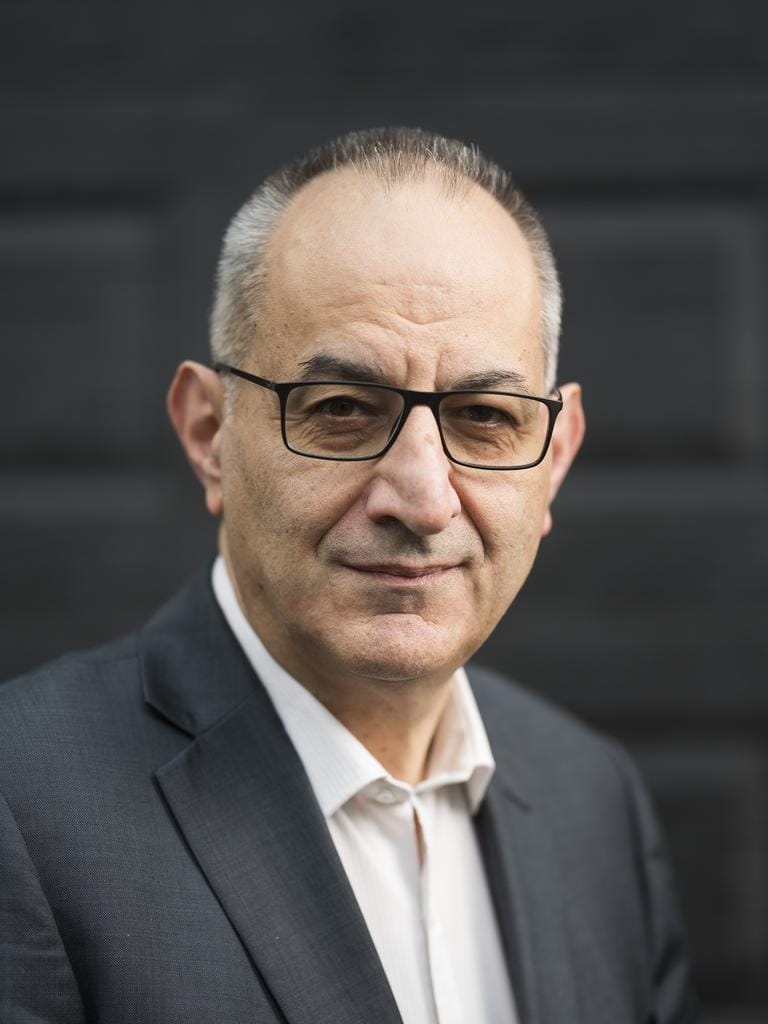
Mike Pezzullo oversaw Australia's immigration apparatus for nearly a decade. He ran the Australian Customs and Border Protection Service (2013-2014), then the Department of Immigration and Border Protection (2014-2017), then the Department of Home Affairs (2017-2023). Across these roles, he was responsible for how we screen, select and integrate new Australians.
Someone with so much institutional knowledge would rarely be both recently retired and willing to speak in great depth about how the system really works, so I'm grateful to Mike for speaking with me.
We discuss the central but underappreciated fact about Australia's migrant intake: the broad distribution of source countries among our overseas-born population is a happy accident of global migration flows, not engineered policy.
We also walk through:
- how the visa system actually screens for security and character;
- what explains Australia's historic talent for acculturation and whether we still have it;
- why Pezzullo doubts the father of the Bondi attackers would have been refused a student visa in 1998 even with today's digital tools;
- what a 2027 China-Taiwan blockade would mean for the Australian migration system in real time; and
- a never-aired proposal for fixing Australia's "permanent temporaries" problem – amending the Constitution to close off the High Court's original jurisdiction over non-citizens, replacing it with a single 30-day review.
We finish with the question: will, and should, "populate or perish" return as strategic policy? Speaking "as a military strategist and a military defence planner," Pezzullo (who is also a former Deputy Secretary of the Department of Defence and wrote the 2009 White Paper that reputedly displeased Beijing) wants Australia at 40 million people by 2050, rather than the projected 35 million.
Video
Sponsors
- Eucalyptus: the Aussie startup providing digital healthcare clinics to help patients around the world take control of their quality of life. Euc is looking to hire ambitious young Aussies and Brits. You can check out their open roles at eucalyptus.health/careers.
- Vanta: helps businesses automate security and compliance needs. For a limited time, get one thousand dollars off Vanta at vanta.com/joe. Use the discount code "JOE".
Transcript
JOSEPH WALKER: Today I'm chatting with Mike Pezzullo. Mike was one of Australia's most senior and experienced public servants. Notably, he was deputy secretary in the Department of Defence, where he was the lead author of the 2009 Defence White Paper – a document that was prescient in the way it contemplated the military implications of China's rise, and which reputedly earned Mike a trip to Beijing, where senior CCP officials unsuccessfully demanded that he change the White Paper.
But most relevant to today, Mike ran Australia's immigration and border protection apparatus for almost a decade. He was CEO of the Australian Customs and Border Protection Service from 2013, where he oversaw Operation Sovereign Borders. He was appointed secretary of the Department of Immigration and Border Protection in 2014, ran it all the way through to 2023, including through the transition to the mega department of Home Affairs in 2017.
Today we're going to chat about acculturation, social cohesion, and the security dimensions of immigration.
Mike, welcome to the podcast.
MICHAEL PEZZULLO: Great to be here.
How Australia selects migrants
WALKER: So I think the question I most want to start with is, what does the process of selecting migrants to Australia look like concretely? So if I'm looking over the shoulder of an immigration officer at the department, what are they actually seeing and doing? Obviously the process is going to look different depending on the visa. So maybe we could start just with the skilled permanent stream. Say I want to migrate to Australia under the points test. I check my eligibility, I check my occupation is on the skilled occupation list. I submit an expression of interest. Sometime later I get an invitation to apply and then I submit my full visa application with all of my supporting documents. What happens next?
PEZZULLO: Well, what happens next – and I've not been there for two and a half years now, so the extent to which they've progressed on this path is a bit of an open question, but certainly on the track that we were on when I left in late '23 – increasingly, that's going to look automated. So you're going to have that officer, typically working with increasingly a suite of AI tools, applying their own personal judgement, because these officers are deeply experienced. They know what they're looking for. They know almost intuitively, because they've typically been doing it for five, ten, fifteen, sometimes more, twenty-plus years. They know intuitively what an objective points criteria translates into as a real human. [This applies] whether you're looking for people with skills in nursing or welding or production, agricultural labour …
Over time though … simply because of the volume of applications and … the more rigorous checks that we're going to want to do … increasingly you'll have AI tools sitting beside the officer, assisting the officer. We were talking before off-camera about the change in the AI world where you increasingly are moving from a chat function to an agent-like function that inevitably will come in. There were some early versions of that starting to come into the department, both as Immigration and Border Protection, but then Home Affairs subsequent to 2017, which subsumed the immigration function.
And what you're looking for is, you're not obligated by law to deal with each application in the sequence in which they've arrived. You're just required to give them due consideration. You can move applications around on different piles depending on regions or states that might be expressing an interest, because there's a lot of engagement in states and territories, say about nurses or doctors or people who are willing to go, for instance, into regional health medical practices.
Over time – and we didn't quite get there by the time I left at the end of '23 – you're going to want a completely digital way of doing that. Because what you want to do is really calibrate the demand side – so [for example] doctors in regional and rural Victoria – against your applications. And then what we're doing – largely at the moment still with human intelligence, but over time it'll be augmented with AI – is then going through all the applications, say, for medical practitioners who have expressed a desire to go into rural or regional Victoria. [And we’re saying] “Okay, here are the top candidates based on academic qualifications, their points, and so on and so forth.”
So it's a transition from a human-based system to what will ultimately be a human-and-machine-based system. That's going to involve a challenge, which every large enterprise is going through, of retraining your workforce. [Some of the workforce will probably] transition into retirement not having to pick up too many of those skills. And at the other end of the pipeline, you're going to have younger officers coming through who are just completely digitally native. And so they'll be able to apply their educational qualifications, but also just their ease with technology, and then apply that to these tasks as I've been describing them.
WALKER: And does that all happen in the ICSE? So for people wondering, that's the Integrated Client Services Environment, which is the department's main visa system.
PEZZULLO: It certainly was when I left. Again, I'm two and a half years out of date, but that [system] is an amalgam [of digital systems and earlier paper systems]. This is a function of investment and just the take-up of tech across government. But over time you want to go to a fully digital system.
WALKER: So say with the skilled permanent stream, when if ever are applicants interviewed by an immigration officer?
PEZZULLO: It’s reasonably late in the piece. So you go through a lot of this triaging that I've been describing. And you're really getting a fair way down the process of what's called “candidate selection” before interviews are scheduled. Because … to be honest, for Australia – Canada is in the same position – you've got a great number of candidates in terms of quantity. And so that triaging and that selection process happens upfront and then you start talking to people at a relatively mature part of that process.
WALKER: So everyone gets an interview?
PEZZULLO: Yes, if they're coming under the permanent program.
WALKER: Yeah. So because we're going to focus on acculturation, I'm curious, when immigration officers select migrants in any visa class, do they consider how quickly the migrant is going to acculturate? And do they screen for values?
PEZZULLO: Indirectly. There's what's called a security and character check. And if you like, that's almost a negative filter. So are there any issues of security concern or character concern that have come up in the application, either through the objective data that we've got in our own data holdings … There might be, for instance, a reference that you find in one of your data holdings which is adverse to that person, or perhaps suggests that further enquiries need to be made, because maybe they come from a particular area, or they've got associations with either criminal elements or terrorist elements that you want to interrogate.
So that's when you do your data-checking and you're running names constantly through … I wouldn't call it an ever-expanding range of data sources, but certainly … a larger set of data holdings than we used to have. And we're just constantly coming to arrangements and agreements, not just with our Five Eyes partners, but with others to mutually access each other's datasets. So that's one set of criteria.
Increasingly, not available for all candidates, but increasingly you can do social media scrapes. Not everyone's online obviously, but you'd be surprised at the number of people who are online. So they've either got their own social media presence, they've posted things, they've posted things about themselves. In some cases, the officer will either be the beneficiary of an intelligence analyst in the separate part of Home Affairs that does immigration intelligence work, who might prompt a query saying, “Look, we found a post that you might just want to think about or look into”. It might be a post that is suggestive of a security or character concern.
And then there's the interview process itself, and it might well be that matters come up through the interview process that give the officer cause for concern … When I was running the department, I didn't want a particularly – it's going to sound counterintuitive – I didn't want a particularly fixed view of what Australian values, or if you like, the Australian character was … I know the formal document's called the Australian Values Statement. But if you look at the values statement, they're no different from what you would describe as liberal democratic (small-l) values.
WALKER: I read the statement in preparation for our chat. With the exception of the section on the fair go, I mean, it could be an American value statement or a British value statement.
PEZZULLO: But you want it to be, right? So I mean, is anyone seriously saying that an Italian or a Dane or a French person is any [less] committed to pluralism, the rule of law, respect for the rule of law, democratic … whether it's a presidential system or a parliamentary system, some form of democratic system of resolving political difference. So I don't see those as being uniquely Australian values. I know for legal and probably for political purposes we call them Australian values. [But] a fair go in other societies might be called égalité, “egalitarianism”.
So most societies have also got a sense of balancing liberty on the one hand – freedom – with, if not equality, at least equity. So my view was always – and certainly in all the instructional materials we used to give our staff on what they were looking for is – “Look for … aberrations, or look for people who aren't going to live in that pluralistic liberal democratic society, rather than who are not going to fit into Australian society”. Because you end up in the same place … And this has been our overwhelming migrant experience … Typically if you're going to migrate permanently, you've already got a sense of the country that you're migrating to.
There's a couple of exceptions that no doubt we'll come to in the course of our conversation, where there are particular religions or particular cultural backgrounds that might run up against not Australian-ness per se, but pluralism, tolerance. And no doubt we'll come to that. And I think there's a particular issue in relation to some of the harder interpretations of Islam, for instance, particularly with the Salafistic jihadist interpretation. But we'll come to that in a moment.
So whether you're migrating to Canada or whether you're migrating to New Zealand or whether you're migrating to Australia, the model is essentially the same. We use different systems, points, and different security and character testing algorithms and procedures and processes. But essentially you're looking for the same thing, which is not so much to say, “Joe, we want you to conform with a particular culture”. No, what we're really asking you is to conform with a particular institutional system. “This is how we run Australia. It's plural, it's democratic, men and women are equal, there's equality of opportunity, the courts dispense justice. We don't have an extrajudicial way of dispensing justice. When a court decides something, even the government is bound”. In other words, the courts can restrain the executive government.
If we believe you as a candidate are able to live within those, if you like, institutional [parameters] … and I describe them as institutional rather than cultural parameters, because our culture, like French and Australian culture, is very different, but we're both democracies. It seems to me the common touchpoints in migration typically to at least Western nations are a commitment to the, if you like, the institutional values of that society.
So when you do your security and character checks, you're looking for things like criminal behaviour, obviously, criminal associations. But you're also looking for things like extremist belief. Has the person come up in a database of extremists, for instance? Are they potentially associated with someone who might be in your extremist database? Is there anything that they said during the interview, or maybe that they've expressed through social media, that might give you cause for concern in terms of extremist ideation? That's what you're looking for, rather than a more nebulous … And I understand why in the political debate we talk about Australian values. I absolutely get that. And I get why a politician, for instance, a minister or a senior member of the opposition, would want to talk about the Australian way. I absolutely get that.
But as an administrator, turning that into something that is, if you like, able to be delivered as a program where you can train your staff as to what to look for, you can train your decision makers as to how to make decisions … There are limits to what a fairly nebulous idea of Australia – there are limits to how you can apply that in a programmatic sense. You've got to turn that into some decision points that are able to be documented and where the thresholds are clear.
WALKER: What's an example of an interview question put by an immigration officer that might turn up whether someone has beliefs that are incompatible with liberal democratic values?
PEZZULLO: If the officer's so minded, or [if the Department is] doing a particular campaign through their questioning and they want to have a discussion about men and women, equality, the rights of women to work, the rights of women to live free of domestic violence, for instance, you might probe away at that. Now you've also got to apply … some judgement, because it might be that the person engaging with you and answering your questions has anticipated the fact that you're going to ask that. So you're not necessarily getting to, if you like, deep ideation, but it might sit alongside other indicators that might cause you to be concerned.
WALKER: Because I can imagine people who are applying probably will have a pretty good idea of what the immigration officer wants to hear.
PEZZULLO: Yes, and for the most part there's a beautiful confluence of what the immigration officer wants to hear and what the person believes. In my experience – and it's very rare to find examples to the contrary – most people have got a positive idea of Australia.
WALKER: Of course.
PEZZULLO: In a sense it's a land of opportunity, it's a land of freedom. As long as you don't harm others or adversely affect others, you basically are free to live as you want. Most people express that both in their application and through their enthusiasm during the whole candidacy process, through interviews and the rest of it. And the officers become very attuned to detecting that enthusiasm and that genuine desire.
Now, can someone mask that? Of course they can. Can someone create a legend which isn't what they really believe? Yes. And the more skilled they are, the harder they are to detect. But then you're really almost starting to get into counter-espionage and trying to penetrate someone's legend. Typically, most people's beliefs are … deeply held but lightly expressed. In other words, “I'll say, yes, of course women should be able to dress as they choose. Of course women should have an equal opportunity to get a job”. Most people, it's just like conversing with someone at a restaurant or in a pub, will express their view of life in pretty basic terms.
WALKER: So thinking back on your time as secretary of the Department, are there any vignettes that stand out as particularly salient around how we select migrants? Any anecdotes?
PEZZULLO: I've got to be a little bit careful because I don't want to give away the tradecraft of how particular intelligence operations are mounted, or how particular campaigns are mounted through the selection process. But I certainly recall at particular times, especially when we were dealing with that period from about 2013 onwards until about 2019, with the rise of the caliphate – and we should now go into the question of the more extremist versions of Islam – what was heartening during that time is both through candidate selection, which is what you're asking about, but also in the parallel question of the attitudes of second-generation migrants (so those who are the children of people in this case with a Muslim or Islamic faith background) is the relatively small numbers relative to population size where we were concerned.
Now, yes, it is the case that there's an overrepresentation. This is not so much on migrant selection; it's really about the second generation. But it makes the same point. There's an overrepresentation, no question. And I can't discuss the numbers simply because it's really a matter for the head of ASIO to speak about this publicly, not me. But let's say, for argument's sake, there's … several hundred hard targets that you're looking at. That is, people you're seriously concerned about who might take their ideation to the point of attack planning.
WALKER: Who are already in the country.
PEZZULLO: Yep, either first or second generation typically. We're not quite at the point where we're getting third generation yet.
And you might have several thousand who might be on the periphery of some of these more extremist preachers, for instance. So you've got an overrepresentation within the groups that are under investigation, the groups that are charged, and the groups that are brought before the courts and convicted – in other words, an overrepresentation typically of younger men of Muslim faith who have got a view that there's a somehow deeply existential conflict between the West, the Judeo-Christian West, and the Christians and the Jews particularly, and Islam. And the only way to resolve that is to live in a caliphate.
And we saw this play out for real when the caliphate – which is a very different model from the Al-Qaeda model which is a very decentralised terrorist model – the caliphate of Islamic State [said]: “We're going to create a territorial unit and we're going to invite people from all over the world, from the universal Islamic community, to come and live their true Islamic faith where men are superior, women are in a subordinate position, your children are raised in the caliphate.”
What was heartening about that was the small numbers. Yes, there was overrepresentation. So if you look at the people who've been charged and convicted since, say, 9/11 – so that gives you a 25-year sample set – [that is] very much overly represented by young Muslim men. [Their religious community] is now getting above 850,000; [the] last census was about 825,000, from memory, so about now it'd be 850,000 …
WALKER: It’s the largest non-Christian faith group in Australia.
PEZZULLO: And rapidly growing, for a series of reasons. One is source-country immigration, humanitarian program, and birth rate. So at least for the moment, in the second generation, [it has] high levels of fertility relative to other groups. So [it’s] growing at quite a size. That to me is a remarkable achievement.
WALKER: The absolute numbers are small.
PEZZULLO: Correct. So yes, you do get overrepresentation, and there's no beating about the bush. You can't avoid making this statement. You have overrepresentation. I won't give you the numbers, a) because they're classified, and b) [because] I'm two and a half years out anyway. You have overrepresentation in the ASIO and AFP caseload. [They are] ahead of the second group, which is actually Caucasian men – again increasing not at a startling rate, but increasing significantly enough – who are following neo-Nazi type or white-supremacist type ideation. So those are your two groups that you're most worried about.
WALKER : And they kind of feed off each other as well.
PEZZULLO: And they kind of feed off each other to some extent. They've both got a very different view about … about the very thing we spoke about a moment ago: pluralistic, tolerant, equitable, cosmopolitan, multicultural Australia. They come from different vectors against that vision. Absolute numbers are worrying enough. You certainly wouldn't want thousands of targets, but let's say …
WALKER: Several hundred.
PEZZULLO: … let's say several hundred. I'm not going to go beyond that.
And I'll just do a quick side note because we'll come back to this, I suspect, in the context of the Royal Commission that's currently underway: this is something that Virginia Bell, the commissioner, the former High Court justice, is going to have to think about … (And regrettably, my good friend Dennis Richardson, as of the time that we're broadcasting this, has just recently announced he's not going to further assist in the process, which I think is a shame, but I respect Dennis's motivations and reasons.)
But one of the things that Virginia Bell's now going to have to think about is … for the likely quantum and the trajectory of those quantums – one with young Muslim men typically (very few Muslim women, notwithstanding the discussion about ISIS brides who went to the caliphate)... The attack planning and the attack execution was typically younger Muslim men (although in the case of Bondi, you had the father as well, but the surviving suspect is in his twenties).
[And the other with] those caucasian neo-Nazis and/or white supremacists.
One of the things that the judge will have to consider is: what is the baseline of those two caseloads at the moment? … Because ASIO needs to think about absolute numbers rather than proportions. And then, is the resourcing level set right for both extremist Islamist attack terrorism and white supremacy and/or neo-Nazi terrorism? And she's going to come to a view, and she might well have to give public venting to those numbers.
For the purpose of this discussion – and I’m happy to talk about white supremacists if you wish, because they’ve got an integration issue as well in a perverse kind of way – but if we're just focused on those who follow the more extremist Salafist jihadi version of Sunni Islam, the numbers are actually quite small relative to the Australian Muslim community. And I think we should be heartened by that. That's a good thing. As I said, based on the last census, that community is about 850,000. So those numbers, whilst worrying in absolute terms, including the numbers that have been brought before the courts and numbers prior to that who have been charged … You don't want to see an increase in those numbers, that's for sure. But you're not talking about thousands and thousands of people who hate Australia. So that's the good news.
WALKER: That's good news… So how did we get onto this? Oh yeah, I was asking about whether you had any kind of vignettes or anecdotes about how we select migrants.
PEZZULLO: Well, at that time, just reverse engineering the answer, because we were concerned about the idea of the caliphate, extra attention and resources – and again, I'm going to be circumspect in describing the exact methodologies and the classified systems that are used – but at that time there was extra checking done on anyone who might come from countries where that Salafistic jihadi version of Sunni Islam was prevalent. So parts of Somalia, parts of Iraq, Sudan, et cetera.
And at the same time, about 2014, 2015, we achieved a number of breakthroughs in what was still the Immigration and Border Protection Department in terms of getting agreements with partners, both domestic and foreign, to link in digitally databases that had never been previously made available. So you could do some of that digital checking. Now, acknowledging that the technology's 12 years old ... it was cutting-edge at the time, but you could run your search parameters through larger data lakes. And you'd get flags that frankly might never have been flagged to immigration officers previously.
So for instance, [at] the time of the caliphate we got access … to a number of classified US databases. I’m not in a position to [say] whether it's FBI or CIA or someone else, I'll let your imagination run wild.
Because the Immigration and Border Protection Department, as it then was (subsequently Home Affairs) was not a rated intelligence agency at that time, you might not have full access to all the bio[graphical] data. But you might have enough of a hit just based on basic biodata – name, date of birth, aliases – where the host agency [such as the US’s Department of Homeland Security] would say: “Ah, we need to send this file to the Australians, which we might do through ASIO”, right. So we're not going to send it to an immigration officer who doesn't have the quite the high-level clearances required, but a flag's been hit. And in days of old, that immigration officer would have been none the wiser. So then what happens is they get a call from ASIO saying: “Oh, you've sent a ping for Joe, biodata, and an alias has come up. We're running that lead down with our partners”, say, in the FBI ...
In that federated searching process, just that alone, [we] started to see an increase in our rejection rate. And I can't go into the numbers, but: why? Because we were hitting databases even just at the stripped-down data layer – name, alias, date of birth, maybe region of origin, town of origin, place of birth, maybe at most. You don't get the full FBI file, you don't get the full CIA file, because they're highly classified and they're subject to different sharing arrangements. But it's just enough for the officer to be flagged to say: “Hey, we've sent a file to ASIO, you better talk to your colleagues over at ASIO.”
WALKER: Yeah, interesting.
PEZZULLO: And ASIO might have access to the deeper file saying “do not issue a visa”.
WALKER: Yeah, well, which is interesting because it implies that prior to the 2010s we were letting in a lot of people who …
PEZZULLO: Before 2014. I can almost date it. So what was that? The Abbott government funded … There was some earlier work done to the credit of both the Rudd and Gillard governments where they started going down this path. But the investment in something called VRA, a public program (not classified, although elements of it are classified) – Visa Risk Assessment – was funded from memory in the [20]14–15 Budget. So we got quite a lot of money, I think upwards of $100 million, to create this federated search engine, a classified search engine.
We created, for the first time … There were intelligence officers in the old Immigration Department going right back to 1945, typically retired military, retired police, sometimes retired ASIO, very good officers, but very much working with paper files. With VRA we started to deploy digital tools. We created an intelligence cell which ultimately became a division, a whole division.
So in a bureaucratic hierarchy, you've got the department, which is run by the secretary; you've got groups that are run by deputy secretaries; and then you've got divisions that are run by first assistant secretaries. [This] roughly mimics the military system of an army, a corps, and a division, just in broad terms, for those of your viewers who are military—
WALKER: —minded.
PEZZULLO: Military-minded, yeah. So a first assistant secretary is broadly equivalent to a two-star general. So we created a division under a two-star civilian equivalent. And they had top-secret codeword clearances so they could engage more openly on, if you like, the under-the-line text and other information. The immigration officer, who might have a lower-level clearance, might never see the full file. But because you had this federated search capability, they were able to be advised “do not issue a visa; or probe more deeply on these questions and factors before you come to a view and then come back to us”.
And so that loop that was created between the intelligence staff and the visa issuance staff was a first, and subsequently built upon. There was further investment under the Turnbull government, as I recall. It's not quite to that fully digital selection machine that I spoke about at the top of this discussion, where ultimately you're going to have everything digitised, including down to having an AI agent who can not only look for those security flags and concerns, but can also say: “You're looking for nurses in Tasmania; here are your best 20 candidates”. I mean, ultimately you want to get to that. Unless there's been a dramatic lift in investment in the last couple of years, I don't know that they're close to that level, but that federated surface searching at least has been a feature of our visa risk assessment process for now 12 years.
WALKER: So that increase in the rejection rate … I don't remember the exact increase, but I did read it in one of your opening statements to [the Australian Senate’s] Legal and Constitutional Affairs [Committee]. I can put a link in the show notes, but that implies …
PEZZULLO: I think from memory … we added something like a 1.5 percentage point lift in sort of rejections.
WALKER: Yeah, that sounds about right. So that implies that prior to 2014, we were letting in tens of thousands of people that we wouldn't have wanted to. Is that the right order of magnitude?
PEZZULLO: I think that's about the right order of magnitude. We'll have to go back to the relevant … Because I did quite a lot of work on this in anticipation of one of the Senate estimates hearings, because there was a question about … particularly after the caliphate episode, whether we were checking deeply enough, thoroughly enough. I think from memory, and again I'm going to have to be corrected, and you can put a link, I think we got the rejection rate up by at least a whole percentage point, if not 1.5 or something, which in absolute numbers was in the thousands.
WALKER: Right. Yeah, interesting.
PEZZULLO: Now, not all of that, I should be clear, was about terrorists.
WALKER: Sure, of course.
PEZZULLO: In some cases, through these international checking channels, we picked up repeat applicants who'd gone to different countries with maybe fraudulent academic qualifications. And so you'll get a hit, say, in a Canadian database saying: “No, no, we've seen that person before and we looked behind their application; they don't have that degree.” “Okay, thank you. Thanks, Canada. And we'll share our information with you.” So some of the rejections were on security grounds. Other rejections would have been on character, and other rejections would have been on basically fraud – fraudulent qualifications for instance.
WALKER: This is all under the VRA.
PEZZULLO: Yep.
WALKER: What's your gut intuition: Do you think AI is going to net out in favour of bureaucrats using it to detect weak applications, or in favour of weaker applicants trying to get around the system?
PEZZULLO: I think in net terms, if you combine it with and keep building on these digital systems that I've been describing … more and more of these databases, right? So the visa officer has this force multiplier which they might not be aware of, because it's coming through an intelligence portal And they might be reliant on CIA, FBI, MI6, MI5 information that they'll never see. But as you force-multiply – say, we establish a relationship with the French intelligence services, or the Belgian intelligence services – it's not just AI, but the feed. So the more data you're pushing in, you're scraping people's social media, you're hitting more and more databases, both at the biodata level but also in terms of classified holdings. And you're moving to a sort of an AI agent model that's helping the officer do the research. I think the balance of favour falls on the side of the officer.
WALKER: Okay.
PEZZULLO: And the reason why I say that is because a bit like crime, criminals will always be working new ways of importing drugs or conducting fraud. And if the defending organisation just stays on its own, they'll always be overwhelmed. But the more you federate – this is a point about law enforcement, but the same applies to immigration and border protection – the more you federate with like-minded jurisdictions, and you just keep multiplying, multiplying, multiplying…
Now you've got to give as well, right? So if I get a French database, I've got to give them an Australian database. And the way you protect privacy is we say to the French, say for instance, or the Belgians or others, we say: “We're going to give you our headlines of all our key targets, and all you get is the name, the date of birth, place of birth, and if it pings, we'll then have a protocol to give you more.” The more you do that, the more you suppress the opportunities to game the system.
WALKER: Right. So at least with respect to immigration applications, AI will be defence-biased?
PEZZULLO: Yeah, yeah, I believe so. Again, collaboration always defeats the gamer.
Australia's broad distribution of source countries is a happy accident
WALKER: Okay, so I've been trying to get an answer to this next question for more than a year now. It's come up in a lot of my conversations with people who've worked previously in the Department of Immigration, and I ask, “what are the reasons that historically Australia seems to have been so successful at acculturating migrants into the Australian mainstream?” And one of the points I often hear is that we've always taken a mix of national and cultural groups such that no one group has formed critical mass sufficient to form a breakaway culture like the Québécois in Canada or the Catalonians in Spain.
And it is true that if you look at the spread of the 31.5% of Australians born overseas, 43 different countries account for at least 0.5% of that population each. In contrast, I think the US is much more top-heavy in terms of its distribution; maybe like a quarter of their foreign-born stock are from Mexico, for example. But what I don't understand is, a) the extent to which that has been a happy accident versus deliberate policy, and b) if it has been deliberate, exactly how it's been operationalised.
Because obviously since about 1973, we've had the principle of non-discrimination. I know that at various points in our history, governments have kind of consciously accepted refugees from particular regions with a view to kind of … counterbalancing certain diaspora already in Australia, or expanding or building out the mix somewhat. So for example, I think in the '70s the Whitlam government consciously took migrants from Latin America because we hadn't drawn migrants from there before. But since then I haven't been able to find any other more recent examples. So yeah, I'm just going to put that out there. What do you know?
PEZZULLO: It's been driven by global population dynamics.
WALKER: Not deliberate planning.
PEZZULLO: No. And that's a function of the shift, the very welcome shift, to non-discrimination.
WALKER: Yep.
PEZZULLO: However, and here's the however, even if you're open to the world, in some cases – so India is a good example, and China to some extent – the world wasn't always travelling.
WALKER: Yeah.
PEZZULLO: It's only been in recent years, probably from the '80s in the case of China, '90s, even the 2000s in the case of India, we have the mass migration out that you saw previously in places like Italy or Greece or Ireland and the Baltic states, et cetera. In other words, these waves go through global history as a function of two factors … the openness of the receiving society, whether it's Australia or Canada or New Zealand, but also the temperament, if you like, or the attitude, or the sentiment, I should say, of the emigrant nation.
So for a long time, people in India, for instance, didn't have the means to apply for the visa and to do the travel. Now they do. So you've had this dramatic rise … And that's a function of two things. One, you get temporary migration with students. They can stay for a post-study period. They sometimes form family attachments, or they apply for the permanent stream. Applying for the permanent stream – just going back to our earlier conversation – from onshore is as important today as applying offshore.
In other words, you came here to do a four-year degree. You might have had a two- or four-year post-degree study and work period. You met someone, you fell in love, you decided: “I want to stay in Australia.” You switched to the permanent program, either off your own volition or through maybe a family, through a relationship, partner-sponsored visa. And what initially was a uni placement becomes a lifestyle choice.
When people from India were not emigrating, our numbers were low. We didn't go out saying, let's get people from India. They just simply weren't emigrating. The great emigration from India started – I'll have to check my data on this, but probably in the early 2000s, I'd say.
WALKER: Sounds right.
PEZZULLO: Yeah. China a little bit earlier – and China, interestingly, more from Canton and the areas around Hong Kong, so southern China more so than northern China. That probably started in the '80s. So Sydney, for instance, [attracted] a lot of people from Hong Kong, what used to be called Canton, they speak Cantonese, for instance. There's an overrepresentation relative to the demographic breakdown of China.
So it's when those waves are both attracted by the receiving country because of openness and non-discrimination in selection, but also those waves have to start. They ripple out from the source country. And then over time, in some cases, people stop migrating. So there hasn't been an immigration wave from Ireland for decades. And if anything, people are sort of going back, particularly when Ireland became economically very successful.
So these waves go for decades and then they either peter out or they transform or they become different. The thing that slightly operates at the margin of that is the refugee intake. Why? Your system for granting asylum to people with a well-founded fear of persecution typically doesn't mirror waves of economic emigration. It's people fleeing from violence, torture, rape, political oppression, et cetera, discrimination on the basis of gender, sexuality et cetera. That's a different group again. And that's why in your refugee ranks after the Second World War, [there are] a lot of people from Eastern Europe, the Baltic States etc., a lot of people fleeing communism, for instance, in the immediate aftermath of the Second World War.
That changes dramatically, Vietnam obviously being the case in point in the '70s, Cambodia to some extent, and in more recent years Syria, Sudan … Somalia, places like that. Because we've also got a non-discriminatory policy in the refugee area, as we should, depending on the absolute size of your refugee program, you can get actually quite visible changes quickly.
So say for instance you're taking a lot of people from Sudan. They normally wouldn't be migrating in the way, say, Italians migrated or Greeks migrated or the Irish before them, or more recently people from China or India. They're fleeing. And so nearly everyone that you see in Australia who's come, who just from their physical appearance you might think might have come from Sudan, is almost certainly here as a consequence of the humanitarian stream. So that is the sort of subset within your permanent program that's a function of drivers other than economic immigration.
WALKER: It's kind of a remarkable fact about modern Australia that to the extent that the distribution of national groups in our foreign-born population is obviously far from perfectly uniform, but more uniform than it is for other Western democracies, that that is just the result of us kind of hopscotching our way to the mix over these successive waves of emigrations.
PEZZULLO: Yes. I can assure you we don't have officers sitting in the permanent program saying, “what is the global distribution of Spanish-speaking people from Latin America?”
WALKER: “And we filled up our quota here, so now we're going to go to…” – there's none of that?
PEZZULLO: No. It … largely mirrors the world, with that exception around the refugee intake, which is probably disproportionate. So we would not, I suspect … I haven't looked at the data for a long time, but I don't think we've got the global distribution of people born in Sudan or people born of Sudanese parents in Australia. We've probably got a higher quotient or a higher proportion as a function of taking people who have got a well-founded fear of persecution, and granting them asylum.
But if you control for that variable, so people from Nepal or Bangladesh or India or Pakistan, and you go through with some – not oddities, but where there's perhaps overrepresentation relative to global demography – we basically mirror the world.
WALKER: Do you think we should have a deliberate policy with respect to the mix, or like quotas?
PEZZULLO: No.
WALKER: You just kind of take what’s there.
PEZZULLO: I just think you take what's there, based on those two factors. [You maintain] openness of reception, subject to those character and security and other checks we spoke about earlier. And then you're basically, if you like – and Canada's similar – through the point system … basically a reflection of global mobility.
So there was a time when people weren't emigrating from India. There weren't a lot of Indians in Australia. … Once they started to emigrate – a lot of them, either because family was here or they just knew about Australia as a Commonwealth country, both play cricket … they can get by very well with English, [the two countries have] similar sort of common law justice systems, [so they said] “I want to go to Australia.” Why? “Schools are better, better education. I still am devoted to my homeland, you know. I celebrate national festivals. I'm a Hindu, as the case might be. I have freedom of religious observance in Australia. I can go to the temple etc. Australia is this wonderful land. But I'll make sure that my children understand their roots. And depending on our wealth over time, we'll travel back.”
And in some cases – it certainly has happened in the Italian community that I'm familiar with – subsequent generations even buy property back in what is the ancestral home and almost live a split life. You know: “I'm going back to Italy for three or four months … but my main house is in Australia.” Indian people will do that. Chinese people, I suspect, will do that.
With second, third, and by the time you're fourth-generation, they might well say: “Actually, I've opened up a business in India. My home is Australia. That's where my main residence is. My children all speak Australian. They want to play for the Australian cricket team, not the Indian cricket team. And when my children speak, they sound like little Australians, you know, in terms of the accent, for instance. But I also love India, and I've opened up a business there.”
And you've seen this with Italians, you've seen it with Greeks, you've seen it with people from former Yugoslavia, that you start to live in those two worlds, and that's a very healthy thing.
WALKER: So I mean, fundamentally what you're talking about there is acculturation, which is a very powerful and natural process … Just so people who might be listening are clear, when I say acculturation, I basically mean what economists mean by assimilation or what people mean by integration. I avoid the word assimilation because in the Australian policy context it's a very loaded word. But acculturation is a universal, natural, and powerful process.
PEZZULLO: Yes.
WALKER: And it's a two-way street. And along different dimensions, the migrant culture might acculturate, might converge more on the mainstream culture or vice versa. So a classic example of the mainstream culture converging to the migrant culture is through cuisine. In the other direction, it's like language acquisition.
And the definition of acculturation I like most is [that] it's the diminishing of ethnic or cultural difference over time. I like that definition because it permits the two-way street. It's about a convergence.
So just so I'm clear, what you're saying is that we don't need to worry about or have a deliberate policy with respect to the mix, because of this process of acculturation. But if it's true that the success of Australia's experience with acculturation is contingent on the fact that none of the groups have been sufficiently large that they can kind of sustain their own culture, and then you end up with … You know, you travel to California and all the road signs are in both English and Spanish. We don't have that kind of situation. Why shouldn't we be deliberate about the mix? Just so I’m clear, why do you think we don't need to be deliberate about that?
PEZZULLO: I think for the reason that we touched on earlier – that the mix doesn't matter as much as the allegiance does. It doesn't matter whether you're a Greek-Australian, an Anglo-Australian, a Lebanese-Australian. If you accept a number of basic precepts – we resolve our political differences through the Parliament; we have political parties and we have representation; the courts determine both civil and criminal penalties; there's equality of opportunity and equality of employment – then your culture shouldn't matter.
Where it does start to matter … And you're starting to see this in Britain to some extent, [and] parts of Canada, where either because the size of the group in objective terms is large enough or in political muscle it's large enough, you do start to see multilingual signs. You do start to see some experiments. And your viewers might be interested in looking up over the last 20 years some of the experiments that have been made, for instance, with Sharia [Islamic law] in both Canada – about 20 years ago, I think it might have been Ontario, from memory – and also there's a debate in Britain about having Sharia, as long as it's not inconsistent with the common law, to have a degree of being able to resolve disputes in a Sharia format.
We should stand opposed to that. Under no circumstances [should we compromise]. We have a single justice system. It's based on the common law of England, as modified by statute. That's it. We've just got one legal system.
Now, to the extent that challenges you in terms of faith – well, then you either have to make a decision about living here, or you've got to accommodate, whether it's in relation to marriage or sexuality or how we resolve financial or other disputes. We do it in a secular fashion, in the case of the legal system, through the common law system. We should just have no tolerance at all [for alternative legal systems].
My preference is not to go for mix. My preference is to go for – is it rigidity? Yeah, I'd say it's rigidity, or at least principle, really firm principles about those in that institutional design. “This is Australia.”
Now, to your point. You made a passing comment which I didn't pick up on at the time, but I will now. “Assimilation” has got a particular connotation. And I certainly saw the back end of it. I was born in 1964, second-generation Italian. I saw the back end of this, as I remember, in the late '60s, early '70s, where assimilation was assumed to be “you're assimilating to a culture, a monoculture, which is Anglo-Australian.”
So I grew up in a street [with] what used to be called Federation housing in southern Sydney, [with] all the houses that they built just after the First World War, principally for returned soldiers. By that stage, people have been living in the streets, say, for 50 years. They're quite elderly World War I vets.
There were only two families in the street [who were] Italian. There was a Sicilian family down the street. We were at the top end of the street, and we were accepted, but it was always accepted on the basis of: “Oh, I noticed the other day in the backyard, you were making sausage or you were making tomato pasta sauce. I remember that during the war, you know. I was in the Second World War, you know. Unfortunately we fought the Italians. They had great food.” So you'd have that sort of discussion where you were the kind of the oddity in the street but accepted.
But every Sunday was fascinating … Very few of us drove – some drove, but the churches were in walking distance. The Italian families would go to the Roman Catholic Church. And all of the Anglo-Australians would go to the Church of England. Not Anglican. “Church of England”.
So Australia was a very different place. That Australia is very different. I remember that Australia, largely Anglo. It hadn't yet been, if you like, affected by many migrant waves. By the '70s and '80s, there was more multiculturalism evident. The policies of the Whitlam government changed that, [and] the creation of the Special Broadcasting Service, SBS, under the Fraser government. You started to see multilingual public broadcasting, for instance. There wa no internet.
So for instance, for Italian Australians, you'd get the weekly newspaper, La Fiamma, that might have sporting scores or something from Italy. But all of my father, his brothers, so my uncles, they'd all become devout Rugby League fans, because you weren't – except for maybe the weekly highlight package – you weren't watching Italian soccer on TV.
Now it's changed again, because the world has come closer through the internet. But in those days, no, they became, in my case, southern Sydney St George supporters. They were fierce St George supporters. That's assimilation.
I think what's happened since the '70s is acculturation, as you described it, and Australia looks and feels more like its demography. So, you know, whether it's Little India or Little Vietnam, or you go to the place I grew up with in southern Sydney … a lot of Chinese people are in the suburbs of Hurstville and Kogarah. How do you know that? Because of all the signs.
But typically – and we know this through our children – second- and third-generation children, when they open their mouth or when they speak, they're Australian. And I gauge that just by their accent.
So I think that's a better model, where … we've got certain fixed and non-negotiable rules about institutional design, and then the culture just evolves organically depending on demography.
WALKER: Yeah, it's that sort of creedal national identity. You mentioned Indian migration before. So India is Australia's fastest-growing migrant group. I think last year there were about 900,000 Indian-born Australians, and it's soon going to surpass the United Kingdom as Australia's largest …
PEZZULLO: First time, yep.
WALKER: … for the first time, as Australia's largest source country.
PEZZULLO: Yep.
WALKER: Putting aside the obvious stuff like cuisine, how, if at all, do you think that will change Australian culture?
PEZZULLO: You sometimes see in the discussion and in the policy discussion concerns expressed because a lot of first generation, less so second generation, are still tied to, say, the politics of home. So when [Indian] prime minister Modi comes to Australia, a lot of Indian – not just temporary migrants but permanent migrants – will turn out waving the Indian flag. I think that's fine. I've got no issue with that. They're proud of India's rising status as a great power. I don't see any clash of allegiance there.
It's especially evident when there's a sporting tournament, you know, when we're hosting particularly cricket, a World Cup, either the one-day international or the T20. The crowds that you get for an Australia–India game, or say an India–Pakistan game, are enormous. And it might be the MCG, and most of them are following India. No problems with that at all. I think the fact that they're waving the Indian flag, even if they're first-generation permanent residents – not a problem. I'd like their second-generation kids to play for our cricket team. So, you know, I'd like to have the next Tendulkar playing for Australia and not thinking that they've got to play for their homeland.
I think so long as none of the communal or political differences come here … The Prime Minister talks about the Australian covenant. He's talked about this in the context of the Bondi atrocity, that he uses this phrase, the Australian covenant – that whoever you barrack for, or whatever your culture is, or whatever your sporting interest is, or how you want to dress, or your cuisine, you don't bring hatred, or you don't bring differences here. I think he's onto something there, because that's another strand of that acculturation that we spoke about: that if you've got a view about how India should be run, say by a Hindu majority party, and Hindus should have special benefits over Muslims in India – okay, if that's what you think, you go to India and prosecute that case. We don't live like that here. We don't have communal privileges here.
And we saw this when Modi visited in '22 or '23 ... [He received a] rockstar welcome. And they had to get sporting stadiums because there were so many people. For me, that was an expression of pride, including by Indian-Australians, in India's rise. I don't see any problems with that at all, whatsoever.
WALKER: Let me go out on a limb and test one potential unexpected positive benefit on you. I think Australia has what I've been calling a culture of acculturation …
PEZZULLO: Yep.
WALKER: … which I think partly connects to the egalitarianism.
PEZZULLO: Yep.
WALKER: And I've been meaning to write something about this, which I will at some point this year, hopefully. But it's possible that the Indian diaspora kind of leans into that and supercharges it. Because India is an incredibly multicultural country. And I think people evolve or adapt ways of communicating and dealing with that difference in Indian society that maybe is quite resonant with Australia's culture of acculturation. Total speculation.
PEZZULLO: All of us have got Indian friends, either temporary migrants or more typically, increasingly, Indian-Australian permanent residents [and] ultimately citizens … I think [this affinity is] to do with the Commonwealth and to some extent the British Empire.
Even just phrases like we talked semi-seriously, but let's talk about it seriously – sport. If an Australian of Italian heritage – so let's say an Italian Australian and an Indian Australian are talking about fairness, we'll use the idiomatic phrase “it's just not cricket”, as an example, and we both will know exactly what that means. It's sort of distilled or derived to some extent from the Empire, from the Commonwealth. You would probably have to translate that idiom to a Chinese Australian or someone from the Middle East. They probably wouldn't quite get it.
But with someone from India, they have come from a polyglot country, multi-ethnic, multi-religious, multicultural, very tolerant, with some outbreaks of terrible violence, but largely tolerant. And they see Australia often as a better version of that. Because, you know, for all the tolerance of India – and it is a remarkable achievement for just how tolerant and pluralistic it is for such a diverse country with so many different religions, sub-religions, sects et cetera – they do occasionally have horrific instances of communal violence.
With Australia, you get all that multiculturalism without any of the communal violence – you know, the sort of terrible violence you saw in 1947, for instance, at Partition. You don't have any of that here.
So I think for certainly anyone who's come from a British tradition, the Commonwealth tradition, Australia – and I suspect Canada and New Zealand are in this category as well – are almost like an ideal type, without all the class and all the privilege of Britain, of what that imperial heritage looks like when you overlay it with a fair go or egalitarianism, or however you want to couch that.
I think for others though, they quickly come to appreciate that. If you're from Latin America or you're from Southeast Asia or you're from Africa or the Middle East – and we've all got friends in our broader friendship network or partners of our family members – they get that even though they don't have that deep British heritage, because of that idea of the fair go.
Now I said earlier – and you drew attention to this in the values statement – that the fair go is the one thing that doesn't kind of translate in Canada or France or elsewhere. They've got their own ways of expressing egalitarianism. But it seems to me that that idea of the fair go – let's call it egalitarianism or equality of opportunity – is a universal currency.
So even if someone [is] second-generation Chinese Australian – they might not have that deep background in the Empire and cricket and all the rest of it in the way that an Indian Australian would – it's very easy to translate, as a core simple idea about how to live, into a universal value.
Acculturation services
WALKER: Yeah, yeah, yeah, yeah. Okay, so … I like to split what we might call “acculturation policies” into two separate categories. The first is selection policies, which we've just been talking about, and I think there are a couple of mechanisms by which selection can affect acculturation.
One is just, as we were saying, sheer numbers. So a smaller group is going to acculturate more quickly than a larger group, all else equal. And the second mechanism is just the selection criteria – so, choosing migrants with traits that are more consistent with the mainstream culture or are going to make those migrants acculturate more quickly.
PEZZULLO: And noting what I said that that’s largely done through a filtration process. So you're filtering on security and character. Because you're assuming that unless there's a derogatory holding against someone or some sort of adverse indicator, they're in.
WALKER: Yep, yep.
PEZZULLO: So it's that filtration process rather than thinking, “Joe will make a great Aussie.” And then once you've got those filters set right, it's then just an organic demographic outcome – the weight of numbers.
WALKER: Yeah, it's like a negative check or something. So that first stage or first category of selection policies … And then the second category or stage are what we might call acculturation services.
PEZZULLO: Yeah.
WALKER: So I want to talk about these now, and … because these questions are quite factual or empirical, and I'm just trying to learn as much as possible, I'm just going to rapid-fire a bunch of questions.
So, acculturation services: if I'm a skilled migrant, is it correct that there really aren't any government services that I can avail myself of to help me integrate into Australian society?
PEZZULLO: Largely not, unless there's a question about your English proficiency, in which case you've probably struggled to get selected in the first place for skilled migration. But for other categories, there is adult migrant education, which is really about English proficiency. It's about ensuring that maybe a family member of someone who's come in – so they've got a visa as well, but they've come in on a skilled program – it might be one of the family members is struggling with English, so they get into a funded program.
But look, it's nothing like – and this is a matter of regret, I think – it's nothing like the kind of programs that we had in the '50s and '60s, particularly under Menzies. Menzies was especially strong for all migrant groups … They didn't really have the sort of skilled family breakdown. It's basically all family, like the program that my parents came in in the early '60s. So basically what came as labourers or unskilled workers, because Australia was looking for unskilled workers.
In the '50s especially – [it] started to wind down into the '70s – there were neighbourhood groups. So there were committees of Australians, Anglo-Australians …
WALKER: The Good Neighbour Councils?
PEZZULLO: The Good Neighbour Councils. Menzies was especially strong on that. Now we've got a form of that in the refugee space. [We have] really, really good services … With refugees, special case, they're not really coming here to fill a skills gap. They're fleeing from the sorts of things we spoke about earlier. So there are government services about, “Okay, here's how you live in Australia; here's some English language training; this is going to make you job ready.” In those cases, through a combination of civil society groups that might be ethnically based, so Sudanese people helping Sudanese, Somali Australians helping Somalis, for instance. They're also a version of good neighbours who are, you know, settled Australians from different walks of life, different ethnicities, who form a committee or a group in, you know, regional Victoria or regional New South Wales to make people feel welcome. That in microcosm in the refugee space used to be done on a much more pervasive basis in the '50s and '60s.
WALKER: Including for non-refugees?
PEZZULLO: Yeah, yeah. Absolutely.
WALKER: Okay. Yeah. Because one of my questions …
PEZZULLO: Well, sorry: more so in the '50s and '60s. It started to actually decline in the '70s. As a child growing up, I remember very little by way of services. So I was born in '64. I went to school in '69 … I don't recall any kind of assistance from the Department of Immigration, as it then was … And I don't mind that, because our family made its own way. Because our networks were my father and mother's relatives. Typically some older siblings who'd come to Australia first. They helped them navigate through banking, the legal system, how to buy a house, basic English. Certainly neither mum or dad did any kind of intensive English proficiency, and they came in '61. So even by then it was starting to tail off.
What the government relied on was the second-generation children, as they grew up. So in my case, me. As the … oldest child, eldest son, typically I actually helped my dad translate conveyancing documents. So I remember as a 12 or 13 or 14-year-old, helping him read legal documents to do with conveyancing and the like. So you become quite skilled even at a young age, saying, okay, this is what a tax return looks like, because you're helping Dad fill out the tax return.
But that idea in the '50s and probably early '60s of Good Neighbour Councils, reception committees – I think a version of that … requires funding, and funding is always a problematic issue, but a version of that I think would be very welcome.
WALKER: Yeah, so one of my questions was going to be, to the extent that we now take a very laissez-faire approach to integration and acculturation, how much of that is just a function of the fact that in the immediate years or decade after World War II, most of the migrants we were taking were displaced persons, [or] in other words, refugees.
PEZZULLO: Yeah … largely Europeans.
WALKER: Largely Europeans. And we do provide those kind of integration services for refugees today. But it's just that from the '80s and then even more so, again, from the kind of mid-'90s, there was this shift to focusing on skills and the sort of economic rationale for migration. The balance shifted from refugees to skilled migrants, and skilled migrants don't need the same level of support.
PEZZULLO: But even earlier than that, Joe. Ministers in the Fraser government look back at one point of regret [which is support] for Vietnamese refugees, some of whom came initially by boat, very famously into Darwin Port. [At first they came through then prime minister Malcolm Fraser], and then ultimately there was the Comprehensive Action Plan for displaced people from South Vietnam who were probably never going to go back to a communist Vietnam. They were typically Catholic, religious people from South Vietnam; they were displaced persons who came in on a program.
If you talk to the remaining ministers from the Fraser days, they would say that the sort of Menzies-style approach probably should have been put in place in the '70s. Because those early years in places like Cabramatta in Western Sydney were difficult because it was assumed that the children would be supported through the school system as long as the hospital or the GP had some Vietnamese language, mum or dad would kind of navigate the health system, for instance.
And [when] you talk to anyone from the Vietnamese Australian community, they would say those years were tough. And now look at the wonderful, vibrant community we have, second- and indeed third-generation now because of having grandchildren.
WALKER: Super successful.
PEZZULLO: Super-successful business people. They trade back into Vietnam. [It’s a] great language capability that Australia has.
But I think they would argue that unlike the support that we put in place, say, for people from Hungary, Poland, the Baltic States, Germans in the '50s – even by the '70s, I think you'll find, if someone mapped the history of this, a diminution in those services.
And that's 50 years ago, right?
WALKER: Yeah. So it's been a while. Okay, let me keep rapid-firing. So if I'm a skilled migrant, I don't think I'm even eligible for the Adult Migrant English Program.
PEZZULLO: Nope.
WALKER: I'm not eligible
PEZZULLO: Because you wouldn't have got the visa without proficiency. Your spouse might be … unless you're both primary visa holders, right? So let's say you've got a couple, they're both welders or both schoolteachers. It might be that the family, including the spouse – typically a woman, not always – maybe has got challenges with English proficiency, even though the primary holder has got good English, because that was a condition of getting the visa.
WALKER: Yep. So putting to one side the humanitarian program, i.e. refugees. And just to give people context about the numbers here, for 2025–2026, I think the permanent program is capped at 185,000 places.
PEZZULLO: I think that's right, yep.
WALKER: In comparison, the humanitarian program is just 20,000 places. So I think oftentimes in the public conversation, refugees get conflated with migrants, but the humanitarian program is really only about 11% of the size of the permanent program.
PEZZULLO: And at times has been smaller.
WALKER: Absolutely. And the permanent program comprises the skilled stream, the family stream (predominantly partner visas), and then also a very small stream called special eligibility.
PEZZULLO: Correct. And there's a slight misnomer with the skilled. That's roughly two-thirds, one-third split between skilled and family.
But within [the skilled group], everyone in the family unit gets that visa.
WALKER: Oh, I didn't know that.
PEZZULLO: Right. So it's not like, let's say …
WALKER: I didn't know that.
PEZZULLO: So let's say …
WALKER: So it's kind of inflated. The skilled numbers are kind of inflated.
PEZZULLO: Correct.
WALKER: Because it's not just the skilled worker, it's their family as well.
PEZZULLO: So let's say roughly the long-run program is about 190,000, thereabouts. Let's in round terms call it 180,000 just for the sake of this illustration. It's roughly two-thirds, one-third – 120,000, 60,000 – split between skilled and family. But within that 120,000, you're not getting 120,000 skilled workers.
WALKER: Oh, that's crazy. I did not know that.
PEZZULLO: But you do get their kids. So the idea is that the family unit comes, hopefully, and it's a slightly gendered thing. So typically the non-income or the non-primary-income partner is the woman. [Often] she goes into part-time work. Maybe [she] has to get some assistance with English language. Although that's not usually the case because typically with us in a skilled situation – [it’s] not always gendered in this way, but typically the male in a conventional, traditional nuclear family [has] got a uni degree, [an] IT specialty. The woman might well have some qualification. It's not always gendered in that way, but typically it is.
But … because they either come with small kids or they decide to have children, typically in that second generation, that family unit is, if you like, a professional family. So it might be that mum, dad, say two kids – that's four visas, but only dad is the IT specialist, say.
WALKER: So with all that context, just like putting to one side the humanitarian stream and the skilled stream, I guess you're not left with – well, you're left with family visas and temporaries.
PEZZULLO: Yeah.
WALKER: For those people left, is the main sort of acculturation service available really the Adult Migrant English Program? Would that be the one that stands out?
PEZZULLO: Yes.
WALKER: Including for temporaries?
PEZZULLO: No, no, because for temporaries you're either here to study English, to study uni, but you have to have English proficiency, or you’re here in a working holiday, in which case you get by. We’re not going to give backpackers English training.
WALKER: So you're not even eligible if you're a temporary, but you might be eligible if you're a temporary skilled?
PEZZULLO: Yes.
WALKER: Yeah. Okay.
PEZZULLO: But typically not the primary visa holder, because that person would have had to have already demonstrated English proficiency. It's a question about whether their spouse has got English proficiency.
WALKER: Yeah. Okay, so a priori the Adult Migrant English Program [or AMEP – a free English language education service] seems really important. Because I think maybe – I don't know this for sure, but maybe – the most important lever for acculturation is language acquisition. Because that kind of opens up your ability to participate in all other parts of the society.
But the evaluations of the effectiveness of that program are pretty lacklustre. So Peter Shergold's 2019 report into settlement services for refugees mentions that only about 7% of participants in the Adult Migrant English Program achieve functional English by the end of the program. I don't know whether actually that's not that bad internationally speaking or something, but … yeah, I don't know if there's anything interesting to say on this. Just how good is the AMEP?
PEZZULLO: We had a number of runs at this, at trying to improve quality. Essentially the problem was [that] if you drive the standard too high and those scores even get lower [then typically] you're starting to almost break up family units. That's your problem.
So take skilled migration, which we just spoke about. It might be that someone qualifies because they're here on a visa … Their English is not great, but it wasn't detrimental to gaining the visa because the primary visa holder had English proficiency. You're not going to knock someone out and say, “well, you either have to leave or improve your scores” as a function of the AMEP requirement, because … [take] the experience of Italians and Greeks. I suspect my mother, who's a naturalised Australian … she's well into her 80s. [And] if you tested her today, she's got enough English to get by in a shop, but I'm not sure that she'd achieve functionality. Sorry, Mum. And she'd be okay with that, because she just needs enough to get by in a shop, getting basic banking services.
So I think in the end we've always come to a pragmatic view that typically, as long as you can get by, get directions, go into a shop, understand street signs – we're not going to have variable street signs – that's kind of good enough. And that's a level slightly below functional. And I think the pragmatic view has always been you can spend a lot of resources getting to that next level for frankly very little return.
WALKER: Yeah, I see. So turning to refugees, would it be accurate to say that they present the most challenges from the perspective of acculturation?
PEZZULLO: Yes, by and large … I just need to step through this carefully, largely because the environments they're coming from are so atypical or so different from Australia. It's almost like another planet.
So if you're coming from a place where there's been generation after generation after generation of communal violence – say, Christians on Muslims, Muslims on Christians, Hindus on Muslims … [or] the former Yugoslavia, Serbs and Croats, to take an example. In some cases, the violence that's built into the structure of your society also regrettably leads to attitudes where there's lower thresholds and more acceptance of violence, simply because it's the character of the society and the culture you've grown up in. And trying to get that out of a person's thinking is the work, potentially, of generations. Potentially.
A good example: we have very little evidence in any of the security intelligence reports that I ever saw … again I'm out of date, but there's virtually no communal schism any longer, of a material nature, between Serbs and Croats. But there was in the '70s. There was in the '70s, to the point of violence.
People coming from Sudan, because of the nature of the society there, the ongoing conflict particularly between Christians and Muslims, you've almost got to get people comfortable and almost teach them through settlement services that: “Hey, Australia is a safe place. We actually don't go around butchering each other based on religious, ethnic, you know, cultural or indeed political differences”.
And that's both a source of joy... I mean, I remember when the Abbott government opened up out of Syria something like 10,000, or was it 12,000, places principally for refugees from IS [Islamic State] barbarity, most of whom ended up being Yazidi and various Christian minority sects. They immediately embraced the idea of peace. They said, “we're in a blessed country where you get up in the morning not fearing that by that evening you might be dead”. And this was when IS was at its most rampant, going into villages, putting people into the town square.
You've got to make that extra effort, not because you're dealing with violent people – because typically they're people who are fleeing violence – but [because] the norms, their sensibility, their understanding of society is so different from Australia. It's almost got to be taught, to some extent at least. In other cases it's embraced. I remember the Yazidi community out of Syria. They settled in … it might have been Wagga or Albury or one of those large regional towns in New South Wales or Victoria. They formed their own community associations [with a] common language and the like [and] were embraced almost like an organic, almost spontaneous version of that old Menzies notion of good-neighbour communities. I remember Prime Minister Abbott, Minister Dutton going to visit them. And I remember one person saying to me, because I was just chatting in the margins of one of these political visits and meetings, and they said: “You just smell the air, there’s peace,” just because you don't have the smell of acrid smoke, burning villages, gunfire. They could smell peace in the air.
So the challenge you've always got with refugees, particularly who've come out of the most barbaric situations, is trauma. That's what you're really dealing with … There's some exceptions, the Serb-Croat problem of the '70s being a case in point. But it's not typically any ongoing hatred or violence that they've carried with them. It's normally adjusting to a place that's not violent.
WALKER: Yeah. I guess one other way to think about the difference might be – for, say, migrants through the skilled program, you're explicitly selecting on traits that correlate with rapid acculturation. So things like English proficiency and education.
PEZZULLO: Yeah.
WALKER: When it comes to refugees, I mean quite rightly, you're really just randomly sampling from the home country's population. And if that home country is –
PEZZULLO: And hotspots – global hotspots, right? It's a function of that.
WALKER: Yeah. And I guess that comes to your trauma point. But there's another point, which is that if you're just randomly sampling, then if that home country's culture happens to be more culturally distant to your country, then they're naturally going to be slower to acculturate.
PEZZULLO: Correct, because skilled migrants, even if they say come from more middle-income countries – so Latin America, parts of the Middle East, parts of South Asia, say middle-income – they are developing. So you come here as an automotive mechanic. You might have come from a poorer country. But you basically know what an urban motorised society looks like. Why? Because you're a mechanic. And you might have come from Mexico or you might have come from Chile or you might have come from somewhere else that might not be per capita up there with Australia – more middle-income – but you kind of get what an urbanised, motorised, automobile-heavy society looks like. Well, that's not Somalia. That's not Sudan.
WALKER: Yeah. And also, if you're educated, in some sense you're part of a global culture. Education downloads like a particular package of modes of thinking.
PEZZULLO: Mechanics are a great example, by the way. So Audi, for instance, a very well-known case. Audi is heavily reliant on temporary skilled migrants. Why? Because they all come from the Audi mechanics’ university in Germany. And they come here and they train the local mechanics. (And I know this case particularly simply because we've got an Audi in our family.)
The mechanic then sometimes goes to get their postgraduate qualification or their higher qualification back at the Audi school in Germany. You know you're part of a global network of people who work on increasingly sophisticated cars. Most middle-income countries have got fairly sophisticated cars that have got computer-assisted engines. You typically don't have a lot of mechanical tinkering that you do under the hood any more. You just take it into the service dealership. You've got a sat-nav in the car, et cetera. You've got a sound system. Well, you can be a mechanic who's able to deploy that skill to Australia or to Canada or to any European country where Audis are sold. Well, again, that's so different from the experience of most typical refugee-producing countries, where very few people will drive an Audi, for instance.
WALKER: Yeah. Interesting. So four final questions to rapid-fire at you on this topic. For refugees, there's a raft of what are called “settlement services” available. Should I basically think of those as like acculturation services?
PEZZULLO: Largely. [For] some of them, you might not agree the label is applicable. I happen to [think it is]. But they're things like employment-readiness services. Now, is that part of acculturation? Well, in a sense it is, because work and employment, having stable employment, is part of our culture.
WALKER: Yeah. But also that's how you interact with other Australians.
PEZZULLO: A third of your waking day, you know, eight hours at work. So getting employment-ready, employment-specialist, employment-placement services, which also then marry up with the English-language piece, that is part of enculturating you to Australia. Because apart from our family life, our second mode, if you like, of social interaction is our workplace.
WALKER: Yep. So apart from the Adult Migrant English Program, what are some of the other services available to refugees?
PEZZULLO: Especially the migrant employment services. They'd be probably co-equal with English language.
WALKER: The two big ones.
PEZZULLO: The two big ones. And the migrant employment programs are all, as with job services for other Australians, delivered through a government-regulated system, but privately delivered. So you get these private service providers who, for instance, specialise in migrant employment services.
WALKER: Okay, got it. So, well, that answers my penultimate question, which was going to be, you know, one of the most important ones. So it'd be the Adult Migrant English [Program], and Employment.
PEZZULLO: Language and employment.
WALKER: And then just finally, it sounds like it would be true to say that on a per-migrant basis, humanitarian entrants receive the most acculturation services.
PEZZULLO: Yes, if you use that label. Some people would argue, because they … are uncomfortable with the term as you and I have been using it, and they say, “no, no, no, that's language and employment”. I argue [that] in a bigger sense, language and employment is central to culture.
WALKER: Yeah, absolutely. They're sort of like vehicles for culture, right?
PEZZULLO: Yeah.
WALKER: Fantastic. Okay, so now we've got those factual premises out of the way. I want to talk about whether we've been getting worse at acculturation. So if you compare the success of the post-war migration program with today, has Australia gotten materially worse at acculturating migrants?
PEZZULLO: No, I genuinely do not believe that.
WALKER: Great.
PEZZULLO: I do not believe that. I think with that one exception – and I spent a bit of time earlier in this discussion on adherents of Islam, not all Islam, but who have got a particular reading of Islam that is in some cases so … adverse to a secular plural rule-of-law community … And as I said, in proportionate terms it's not as big a problem as you might imagine [but] in absolute terms, it causes ASIO and AFP to have some concerns – we can come back to that if you wish. But other than that, we are incredibly successful – incredibly successful – at blending together different demographies, ethnicities, religions, and cultures.
WALKER: To this day.
PEZZULLO: Yes.
WALKER: Notwithstanding obviously the decline in acculturation services since the '60s or '70s.
PEZZULLO: Yes, correct. Yes.
WALKER: Is there a country in the world, to your knowledge, that's being intentional about how it acculturates migrants? Or a country that we should look to as a model? Are we the model?
PEZZULLO: Look, I think we're the model for us, if that's not too much of a contradiction, because I think – and this is where some European countries have – I will actually give you one example. I was originally contemplating not naming a country. I think France has had a huge problem. Because it precisely invested so heavily in a unitary version of the French identity, largely from the imperial experience. French imperialism was quite different from British imperialism. When you're in a French colony, you're in France. It was metropolitan France.
And what that resulted in was when migration then started there was no need to enculture because you're already French, because it was such a function of being a French speaker. And that was largely the francophone position. So people like de Gaulle would talk about “there is no need to enculture because you speak French”. And … language was carrying so much of the burden of identity that now … the French themselves have recognised this. I remember some of the most intriguing discussions I used to have in government were with my counterparts in the French system.
WALKER: Oh really?
PEZZULLO: Who were fascinated [by] Australian multiculturalism, and indeed for that matter Canadian multiculturalism. There's a separate issue because of the Quebec issue, but they were fascinated [by] Australia because they said, “but you're kind of English”. And I said, well, no, our institutions are English. Our culture has become an ever-evolving – and it'll evolve again as more people out of the Indian community, so Indian Australians or Chinese Australians, become more senior in academia, in commerce, in cultural life, et cetera… Australia itself will gradually, through increments, change. So we don't have a fixed idea of Australia. You tend to have a very fixed idea of France, the grandeur of France. A lot of it's invested in language, because they're so proud [of having] such a beautiful language.
And now you have the situation where by not having an approach to multiculturalism which accepted that you were going to, if you like, blend different ethnicities together … you go to places like Paris – and we know this from some of the terrorist incidents – there are areas of Paris, the greater Paris area, which are terrorism hotspots, because the idea of “France”, which was supposed to overcome all difference, has never really taken root – simply because someone whose background might have been African, they speak French, but they don't necessarily accept the institutional design of France as a parliamentary democracy which is plural, courts of law, et cetera, et cetera.
Some would argue that Australia has been monocultural; I don't fully accept that [although] it's certainly British in antecedents, that's true – language, culture, sport, et cetera. But I think what we've done is [that] we've evolved and we've, if you like, taken the best of different groups as they've come – but still, we're still recognisably Australian in an institutional sense.
I think France is potentially in a world of hurt. And that's why you have a much more extreme version of One Nation. I mean, National Front is very different from One Nation. It's basically proto-fascist, because of the problem, as they would describe it, of these ghettos. We have virtually none of that here.
WALKER: Yeah, this is so interesting. I want to pick up on two threads here. So firstly, I'm really glad you mentioned France because I think it's a really instructive case study. And a pen pal of mine, a guy called Mike Muthukrishna, who's an Aussie academic – he was at LSE, he might be at NYU now – Mike's an expert in the field of cultural evolution and he distinguishes four models of multiculturalism.
The first is called the umbrella model, which is closest to what Australia is. Then there's the melting pot model, which is closest to what America is. The mosaic model, which is closest to what Canada is.
PEZZULLO: Yes.
WALKER: And the no-hyphen model, which is closest to what France is.
PEZZULLO: That's France.
WALKER: No hyphen meaning that there's no such thing as a German-French or an Ethiopian-French. You're just French.
PEZZULLO: Yeah.
WALKER: And it's a very rigid form of assimilationism where you have to, as you were saying, adopt the language, adopt the customs and then you can be French. And it's kind of counterintuitive, because compared with some other European countries, France has quite generous naturalisation laws. In a formal legal sense, it's quite easy to become French, at least for the second or third generation. But at a kind of social or cultural level, the French natives are very exclusive with respect to the French identity.
And I think this is partly rooted in the much less egalitarian, more hierarchical culture of France, as distinct from Australia's sort of egalitarian …
PEZZULLO: Notwithstanding what the French Revolution was meant to have achieved.
WALKER: Of course, yeah. I'm using egalitarian in the kind of John Hirst equality-of-manners sense. And I think that is one of the main reasons why France has done quite poorly with integrating Muslim migrants. There's a good book about this, which talks about how there's been a kind of discriminatory equilibrium in France where the French natives mistrust Muslim migrants, which causes them to further separate, drives more mistrust, and then the radical versions of Islam feed off groups like the National Front and vice versa.
That was the first thing you reminded me of. The second thing was, I'm curious: … What kind of questions did your French counterparts ask you about Australia? Was it just stuff like, “how did you do it?” Or anything more specific?
PEZZULLO: In part it was “how would you do it”. But the big difference [is that] they still don't think they've broken up. Because they think there's still this sort of francophone world – and the British Empire broke up … I found myself constantly in a sense of repartee with my French counterparts, saying “we never assumed that there was ever an Australia abroad”.
The difference between us is, for you, someone in Nouméa, in New Caledonia, or French Polynesia in Tahiti, is French because they speak French. They might have locally adopted a dialect and an accent. And they used to rib the people from Quebec, they said, “well, they don't really speak French”. They kind of do, but they don't. So you had an assumption that anywhere in the world where you went, if you were tied in a francophone sense back to the idea of France, you were the same.
The British rejected that a long time ago, and Australia is … evolving within the British context – mixed. We never had that, from the start, because of course we had a strong Irish quotient. You didn't have the class system. You didn't have that sense of manners that John Hirst and others have talked about. So that's why we might have been British in antecedents, in institutions, in a parliamentary democracy, in our common law, our jurisprudence, et cetera. But very early we, if you like, synthesised an Australian culture, in part irreverent and anti-hierarchical and all the rest of it, which was never exported anywhere. In other words, you only ever experienced it by being in Australia.
WALKER: Yeah, yeah.
PEZZULLO: The difference with France is that the French … They've got such a beautiful language, a deep culture, extraordinary literature. Of course you'd be proud of it. But the problem is that they – if I can say this respectfully, I hate to think what your French viewers are going to make of this – are still caught in this 18th or 19th century of France abroad.
WALKER: Yeah.
PEZZULLO: And that's where you get the difficulties with integration … France might have been in West Africa for even a century. It probably didn't change the cultures of those countries, whether it was Senegal or anywhere else that was in the francophone empire. They were only in Morocco for a couple of decades. So why not accept that someone coming from Senegal or someone coming from Morocco is probably going to have deeper roots [and will] go back generations and generations in their own customs, religious traditions, et cetera. And then say, that's fine, but in metropolitan France, true metropolitan France, here are the house rules.
And by not having that house rules idea … We talked about the Menzies period. You came to Australia, you left all your hatreds behind, whether it was Serbs and Croats, or later on Jews and Muslims, or whatever the case might be. Leave all those hatreds behind. Because we've got house rules. I don't know that the French ever [had them]. And Britain ironically also … through the '70s and '80s with their immigration program – particularly from the former parts of the British Empire – I don't think went hard enough on house rules.
We have house rules here. And it goes back to the very first thing we talked about, which was the deliberate institutional design, and everyone signing up to those rules: parliamentary democracy, courts of law, courts dispense justice. We don't have any extrajudicial or extralegal way of resolving difference. We have politics. That's all we have. That was intrinsic to Australia's design almost from the get-go. Largely because in the settler groups – leaving aside the soldiers and the officials, but in the settler groups – you had a mix of both Protestant landed [people] and in some cases wealthy groups, and you had the Irish.
So right from the get-go, even though there was sectarian differences and sensibilities – Protestants tended to dominate in certain professions, for instance, Catholics in others – when we then came to federate – and you see this in the constitutional protection for the freedom of religious expression that's embedded in our constitution – we were from the get-go not going to be a sectarian society. And we were not going to be a stratified society. I don't think you get that in former empires.
And I think that's one of the material differences with France.
WALKER: Yeah, that's interesting. I hadn't thought about that, that connection to empire.
Okay, super quickly. You can only pick one. What do you think is the single best measure for the speed of acculturation? Intermarriage, language acquisition, second-generation economic mobility?
PEZZULLO: I can only pick one.
WALKER: Yeah.
PEZZULLO: Um, sport. Sport. If I can see in second-generation – not first generation – either typical or indeed abnormal levels of participation… So for instance, you see Pacific Island and Lebanese Australians and other Middle East Australians, in my hometown of Sydney, all through rugby league. They love their rugby league. Similarly in cricket, we're seeing a lot of not just Indian Australians but South Asian Australian kids.
I only jokingly said if we ever have a Sachin Tendulkar born here in Australia, I want him to play for Australia, not to migrate back to India. It's an odd metric and maybe a bit quirky.
WALKER: Not, it’s interesting.
PEZZULLO: But it's foundational. I see myself as a second-generation Australian with a … broadly Australian accent, hopefully a degree of culture associated with it. But I speak in the Australian idiom, the Australian vernacular. I understand my mother well enough to be able to converse with her, but my mental language is Australian.
And my sporting preferences – now this doesn't work for people who don't have sporting biases, so you're going to have to have an equivalent measure for culture or something – but a lot of second-generation young kids are sporty. Have a look at them. In rugby league… So I'm less of an expert in AFL in Victoria, but certainly in Sydney you have wonderful representation in all of those rugby league clubs. And you look at their supporter base, you know, Canterbury-Bankstown particularly, [they have] a lot of Middle East Australians because it's geographically coherent. West Tigers, because of the western suburbs, but also some of the inner western suburbs. Sport for me is a real indicator.
WALKER: Yeah, I was not expecting that answer, but I can –
PEZZULLO: And in cricket, Usman Khawaja.
WALKER: Yeah, yeah.
PEZZULLO: Second-generation Pakistani Australian.
WALKER: Yeah. And there's a plausible kind of mechanism there where it's almost like a microcosm for cooperation within a broader society.
PEZZULLO: What does it tell you, right? So some sport is every week. Your parents associating as you get dropped off at training, whether it's cricket in summer or footy in the winter. Every week you get taken to the ground. You play; have a halftime break. One of the parents does oranges; another parent does this or the other. Another parent's running up and down the sideline, officiating. It's a social experience. And how's that any different from the acculturation process for English and Irish Australians playing rugby league, rugby union, cricket, et cetera, back in the day? So sport.
WALKER: Love it.
PEZZULLO: I should very quickly add: I went on [an] official visit to Islamabad. And it was the week when Khawaja had just made his debut in a Test, and my counterpart said: “oh, he's very good, can we have him back?” I said: “no, no, he's ours”.
WALKER: That's great.
The temporary migration dilemma
WALKER: We haven't spoken too much about temporary migrants, and I've just got one question focused on temporaries. And I went into this more with Martin Parkinson, but we didn't really get to the bottom of how we solve this issue. So let me present my framing of the issue, and then I want to hear your thoughts on it.
Australia's stuck in this bind where on the one hand, every night about two million people in Australia go to sleep who are not permanent residents. They're not citizens, but they have work rights in the country. That is they’re temporary migrants.
PEZZULLO: Correct. And that’s in a population just shy of 28 million.
WALKER: Yeah, so it's a significant percentage. And we've sort of drifted into this equilibrium where our society and our economy are now quite dependent on this class of permanent temporaries. So for example, I think they make up about roughly 10 to 15% of the labour force. University funding models have become quite dependent on international students. The horticultural industry is quite dependent on working holiday makers. So that's on the one hand.
On the other hand, being permanently temporary is surely sub-optimal from an acculturation and social cohesion standpoint. It kind of violates the settler society paradigm of: “I'm coming to this country; I'm committing to the national project; I'm on a clear path to citizenship.”
So how do we resolve that bind? And what should the new paradigm be?
PEZZULLO: I think we need to be slightly careful with the premise. I'm familiar with the term “permanent temporary”. It's not really a thing in legal terms, because temporary is temporary, even if you get a number of extensions. So [after a] four-year uni degree, you get a two-year or four-year [period] … with work rights. We get value out of that.
So you've come to Australia to do a four-year degree or a three-year degree, in say computer science or whatever. You get picked up during that three-year period or four-year period, depending on what your post-study entitlement is in your field, right? Now in the meantime, we don't want you loafing about. So the idea of “this person came to do a uni degree and now they're driving Uber” Well, that means that there's a demand for that Uber driver, because they're only driving because people have got the app and they're demanding car rides. And typically… I always have this conversation with my Uber drivers, and the ones who are here [say] “I'm either about to finish my degree or … I'm in my two- or three- or four-year extension. I'm desperately keen to get a job as a computer scientist or IT whatever, whatever. But in the meantime, because I want to get income, I want to be gainfully employed, I'm packing shelves, I'm an Uber driver.” [That’s] not a bad thing, because those jobs need to be done.
WALKER: Yes.
PEZZULLO: So why would you exclude that workforce? … We've talked about my childhood a bit … In the equivalent of Coles and Woolies – we used to have a supermarket called Franklins – typically, the people stacking the shelves were not what we would consider to be non-Anglos. They were Anglo-Australians, typically unskilled, older Australians.
Now you go to Woolies, Coles, a lot of them are students. A lot of them are exercising their work rights, depending on whether they've got 40 hours a fortnight or whatever the work right entitlement is. I get a service out of that. The shelves are packed. Produce is put into the … They're getting income. They're either studying their degree or they're here for that, searching for employment.
WALKER: It's positive-sum.
PEZZULLO: It's absolutely positive-sum. The problem becomes – and there's a suggestion that I read recently that the Coalition might be going down the path of revisiting something that we've looked at before – that you get to a point where there's no more extensions onshore; you have to go back offshore. I think we probably need to tighten up the departure rules. So you might have a two-year with a hard break, but with a right to go offshore and extend or get a new visa to come back … either in your skilled area or again in a temporary situation where you're looking for employment.
I think if you get the departure piece right and deal with the other problem, which is the – not so much overstay problem… We've actually got a very small overstay issue, in the sense that last time I saw the numbers – and I'm a couple of years out of date… between the sum of all persons who have arrived in Australia since the Second World War versus all those who have departed, there's something like a discrepancy of around … don't hold me to the precise figure, but it's around 80,000. Now, some of those people might have arrived decades ago and they've probably passed away, they're dead. So that's a very small amount compared to America, with what's called the undocumented problem.
WALKER: Which might be like 11 million…
PEZZULLO: Something like that. So in undocumented terms, where we can't reconcile an arrival with a departure, it's about 80,000. Might have gone slightly above that in the time since I've been out. Very small problem.
Where we do have what's sometimes described as an overstay problem is people on what are called bridging visas pending resolution of their status. They've got to the end of their, say, four-year study period. They put in an asylum application. They didn't put it in at the start of the period, interestingly, but towards the end of their visa.
Okay, they put in an asylum claim, [and that] has to be judged on its merits … Unless the application is completely vexatious and without merit, it's typically considered and you get bridged. And there's different classes of bridging visas, A through to E and F, from memory. That bridging amount, or the bridging number, sometimes in the media or in public policy discussion is described as “overstays”. Well, they're technically not overstays because they've got a visa. It's called a bridging visa. [It grants] very truncated rights. And that's a problem, because if you don't have access to benefits and access to work rights, [it’s unclear] how you're going to survive and get by.
So we have to solve two problems essentially. And then I think the question of mass migration or uncontrolled migration such as it is goes away. One, we've probably got to have a harder back end, right? You only get one extension – say, two years or three years after a degree of study – and then you have to go. If you go to ground and try to do what happens in America and elsewhere – try to disappear – well, one way or another we'll find you, because you've got to surface at some point for benefits or to go to the doctor or whatever. So you certainly want to intervene well before you get to the American problem where they've got ICE agents deploying in paramilitary garb into major cities, doing these incredible roundup operations which at times become incredibly violent. And as you know, people have been killed in those operations. We have nothing close to that.
And then the other problem we've got – and this is a really hard problem to solve legally – is the rolling extension through the bridging process of reviews of reviews of reviews, whether it's an asylum application or you're contesting a visa cancellation.
The most radical suggestion – and this is breaking news, so I've never said this publicly – the most radical way to deal with that, and you probably would need a constitutional amendment, but it's probably one that would win a lot of favour – is, because you've got in the Constitution … and this a whole different discussion; it would take a whole podcast of just legal discussion to explain this.
WALKER: Sounds like a fun podcast.
PEZZULLO: So I'll give you the summary version. Because of Section 75 of the Constitution, the High Court's got what's called original jurisdiction. It can issue a writ that were the old common law writs that were in existence in 1901 in any case.
So you can arrive at an airport, you've only been in Australia for 10 [minutes], you get denied entry. If you're smart enough and you've got the right lawyer, you can put an injunction in to the High Court. They've been in Australia for 10 minutes, and the High Court probably wouldn't necessarily hear it. And if you put it in at 2am in the morning, the judges might be a bit put out by being woken up.
And so what typically has happened is that the Migration Act has taken that burden away from the High Court, so people aren't just screaming into the High Court all the time, and allowed for applications to be made. So you have merits review within the department. You have administrative rights reviews in the Administrative Review Tribunal. You have judicial review through to the Federal Court. And then you can get to the High Court. So we're not all bothering the High Court at 2am in the morning with our applications.
If you wanted to really choke that off and get to a point where [the system says] “now hang on, we will give you some review rights, but you can't just tie us up for years and years and years, including by getting into our highest court”, [then] what you would have to do is you'd have to change the Constitution slightly to say that the High Court's reach, or its ability to grant [an alien], even if they've just been here for 10 minutes, some form of injunctive relief, is denied. And what you do is you have a separate section of the Constitution that says aliens have got the legal rights such as Parliament has provided for in statute.
If you did that, what you then could do is have a statutory provision that says you get one go, and it's a 30-day determination. That's it. So if you're being denied a visa you can't take it all the way to the High Court. [It is a] really radical idea, and it would offend some people saying, “hang on, but the High Court should be able to, if you like, interrogate any decision of government”. That's a fair view. Or you might say, “hang on, the right of access … to the ultimate form of judicial review, which is a High Court injunction or throwing out a law on constitutional grounds, is only available to citizens”. In other words, it's a special privilege of the club, of the membership rules of the club. And if you're an alien, to use the constitutional term – not trying to be derogatory, but just using the legal term – [government would say] “sorry, you can't tie us up in courts for years”. That's the only way you could cut that knot.
WALKER: Interesting.
PEZZULLO: Now, if you did that, what you could do is the parliament – and the parliament would then have to decide how many bites you could have of the cherry – the parliament might say you get one review. 30 days, that's it.
And if the original decision to deny you a visa or to cancel it or to deny an asylum application is upheld within 30 days, you have to leave. And you become deportable at that time. That's the only way you could.
Because otherwise – because you can't cut the High Court out of ultimately being the recipient of someone's injunction application – then you can theoretically, depending on how skilful your lawyers are, be here for months if not years.
WALKER: I see. So people sort of exploit that. But changing this would require a referendum?
PEZZULLO: I think so. It's – just to be clear for your viewers – not a question that's ever been examined formally, as far as I'm aware, by any government. But just reading the Constitution on its plain text, in Chapter 3, which sets out the powers of the judiciary, because the High Court's got this what's called original jurisdiction – it's written into our Constitution – what that means is the High Court can issue an injunction against any executive officer of the Commonwealth on any matter. Then logically what that means is that … Say I've arrived at an airport. I put my hand up for asylum. They said “no, we're going to kick you out”. I happen to have a free lawyer, because I phoned them or they were here. They've filled out the paperwork, they've gone into the High Court at 2am in the morning. The High Court says: “Oh, okay, we better hear that. Okay, we'll grant you two weeks or whatever, and we remit it to the department or whatever.”
Now, you don't want a situation where the High Court's getting hundreds of thousands of these writs being lodged at all hours. So what the Act is designed to do is to take that pressure off the High Court. So you go through that other conveyor belt that I mentioned earlier, of internal departmental review, ART [Administrative Review Tribunal] review, Federal Court review, and then if it gets standing, ultimately High Court. But that could in some cases take years.
WALKER: Yeah, interesting. So as far as you're aware, this hasn't been considered by [federal] Cabinet, but it's an idea that you've had.
PEZZULLO: We'll call it a Pezzullo special.
WALKER: Pezz spesh.
PEZZULLO: And that's the function of having a written constitution that has that power explicitly enumerated in the powers of the High Court.
WALKER: Right, right, right. Okay, so this would help with this problem of permanent temporaries.
PEZZULLO: Because what would happen is if you solve those two problems – so the High Court jurisdiction problem and the hard close on either bridging or renewals where you have to leave.
So go back a step. We talked about the three- or four-year study visa. You get two years to find a job. If you haven't found a job within 24 hours, you have to leave. You can apply again, but you have to leave. So if you put a hard close on the rights to get renewed and you put a hard close on review and appeal rights, then essentially the problem goes away.
WALKER: Yeah, okay. Interesting. Okay, so when I was framing the problem a little bit earlier, I did it quite rhetorically and provocatively, and I'm glad that you corrected the premise that not all temporaries are permanently temporary. There's maybe another premise that we could correct.
PEZZULLO: I think when people use that term, they mean that there's a permanent part of the Australian demography or population and labour force which is always temporary. That is statistically right, but it's not right at the level of the individual. It can't be right at the level of the individual unless they abscond and they somehow kind of just disappear into Australia in the way that people have in America.
WALKER: There's also another premise that we could correct, which is that temporaries are actually sub-optimal for acculturation. Maybe there are actually benefits where you can sort of try before you buy, or if you don't like Australia, then you leave.
PEZZULLO: I've got the opposite view. I think temporary is good for acculturation, partly because, as I said, there’s increasing … Or certainly there was; I'm two years out of date. But the proportion of what are called onshore permanent applications is increasing. So you came here for a three-year degree or a four-year honours degree; you've got two years at the back for post-study residence, sometimes four years, but typically two years. So you've been here, say, for six years, right? Through that period, you fall in love with Australia, or better still, you fall in love with someone. “I want to create a family unit.”
If you're here during your either four years of honours, or, you know, undergraduate plus honours, or your two-year bolt-on period, so that's within that six years, you can apply for permanent residency. We know something about you. You're paying taxes, you're employed. You may or may not have a police record. Hopefully you don't, because if you do, we probably won't accept you. You've probably been on social media. So a lot of that checking that I talked about earlier, at the very top of this conversation about security and character, we can already start to screen based on live observation.
So because you've been here for the best part of six years, Joe, we know you, Joe. We've checked all the databases – not just the foreign databases but all the state and territory databases. You haven't even got a speeding ticket. We've scraped, with some AI, your social media posts. You're interested in sport, you're interested in chess or origami. You don't express, you don't exhibit, any interest in extremism. That's a good – that actually adds to social cohesion and the quality of the applicant, of the candidacy for permanent consideration. I'm a fan actually.
WALKER: Yeah, it's interesting. I hadn't thought much about that, but it's almost like running a trial period.
PEZZULLO: And also I've got a greater concern. As I said, there's two groups, socially and culturally, that I worry about, not in proportion[al] terms [but] just [in] absolute numbers: the second-generation Muslim men and some third-, fourth-, fifth-generation Caucasian white males. They're my two groups that I actually worry about. In absolute terms, too many. In proportion terms, insignificant.
They're permanent residents – in many cases, citizens … Simply because I was the [departmental] secretary, sometimes people would recognise me. So you get in a conversation at a checkout or in an Uber or taxi. Nearly everyone who's temporary loves the place. They say the freedom here, I don't want to go back, but I know I've got to go back. And if they knew who I was, they'd say: “Don't worry, I'm going back.” Or “I've started a romantic relationship, you know, we'll see where that goes. I'd love to have a family here.”
I think a lot of temporary migrants are sort of, in their own mind at least, guest Aussies. They're starting to think of themselves like that, with maybe the aspiration of “I love this country so much” – wide space, freedom, economic opportunity – that they're already starting to think of themselves as Australians.
Social cohesion and the politics of immigration
WALKER: So to finish [with] some questions about social cohesion and security. When you were secretary of the department, you appeared before the Senate's Legal and Constitutional Affairs Committee about two or three times a year. And I went back and read all 26 opening statements between 2014 and 2023.
And it struck me that across the 26 opening statements you gave, the word cohesion appears about 33 times, and it's usually framed as a core objective of the department's work, whereas diversity or multiculturalism or their variants appear only about 15 times, and never as a positive value in their own right, but instrumentally or as the name of a division or a policy function. Was that deliberate, and what's the Straussian reading of that?
PEZZULLO: The numbers tell the tale. When I was looking at the design of the functions of the department … So I was given about six months, from July of 2017 to set up the design, and Mr Turnbull gave us until December to be ready to make the change, which is pretty generous. So [we had] six months to do a lot of mapping, a lot of design work.
Looking at functions that were spread across a number of different departments: the Attorney-General's Department; my own Department of Immigration and Border Protection, obviously I knew very well; Settlement Services; and some of the social cohesion functions that traditionally had been clustered around Multicultural Australia. They were in the Department of Social Services.
WALKER: They were moved there in maybe 2013 or 14 by Tony Abbott.
PEZZULLO: By Tony Abbott, yep.
WALKER: And previously they had been in the Department of Immigration.
PEZZULLO: Correct.
WALKER: So they were coming back.
PEZZULLO: They were coming back. So what had moved was some of the settlement services that we spoke about – so employment and English language – but also the multicultural function – so the whole idea of multicultural Australia, the Office of Multicultural Affairs, things of that nature. That was in Social Services. Some of the functions were in the Attorney-General's Department, I think I mentioned. The Department of Prime Minister and Cabinet, and also the Department of Transport when it came to aviation security and the like. And some of the functions were in the Department of Defence, insofar as they related to cyber warfare. So [they were] quite an eclectic sort of grouping, and it struck me that we needed to think coherently because otherwise we're just going to be a federation of tribes sort of doing functions that could be moved around later on without any kind of unifying purpose.
So as I looked at the operating model, in the same way that the Department of Defence looks at how you defend Australia and the Treasury looks at how you run the Australian economy, it struck me that our job was to think about how we run Australian society in terms of protecting its sovereignty and its security short of war. Obviously the wartime function is led by our colleagues in Defence, but everything else: the protection of our borders, the control over who enters and who leaves or who is required to leave, the sovereignty and the security of our critical infrastructure, our ability to be resilient in the face of supply shocks and the rest of it; all of the things that, if you like, the security function of Australia entails outside of a war.
When it came to social cohesion, it struck me that the positive value that mattered most was our cohesiveness: our ability to come together whether we're dealing with a pandemic, whether we're dealing with a major outage of our internet and cyber, whether, as we're seeing as we speak, [we’re dealing with potentially the] loss of fuel supplies. So how do we think about working together as a society which can ration goods and services, which can prioritise essential services, which can face a common foe if it requires that, right up to, at the most extreme level, war. But short of that, dealing with terrorism.
So for me, the things that bind us together, the things that give us a common interest in defending our sovereignty, in defending our territory, in protecting our borders, that's far more important than the diversity of our faith, our culture, et cetera. Because the latter can be managed organically. We're not going to tell people what to believe or whether to believe in a supreme deity, and if so, which one. Those things are matters for culture. And my starting point was: the less the government has to do with culture the better. Because culture is sort of pre-governmental. It's sort of deeper and pre-governmental, and government should only get involved in culture to the extent that tensions arise or gaps in common understanding start to arise. We talked earlier, for instance, about people wanting to live under Sharia law. Well, no, we're not going to do that. So even though that might be organically coming up through a particular culture, we're not going to translate that into the institutional design of Australia.
So for me, cohesion trumped diversity simply because the function of government is more about cohesion and congruence and unity than, if you like, generating, affirming, or managing difference. Because the latter is done culturally and should be done organically with, frankly, the least involvement, or the least possible involvement, by government.
WALKER: I'm heartened to hear that my Straussian reading was at least directionally correct. The other reason I appreciate your emphasis of social cohesion over multiculturalism or diversity is that it's descriptively true that Australia is a diverse country, and there are benefits to diversity. Like, for example, there's an economics literature showing that some level of diversity helps with innovation. But as a national identity, I don't think diversity is adequate.
I'm quite fond of and influenced by Fukuyama's work on identity in, I think, a book by the same name. He talks about multiculturalism just not being load-bearing enough as a national identity. You do need that additional creed around liberal democratic values and potentially also another layer of positive virtues.
PEZZULLO: Yep.
WALKER: So when you were secretary, to your knowledge, did the department have its own internal measure of social cohesion or did it just use the Scanlon index?
PEZZULLO: We certainly used a lot of academic or open-source indices, Scanlon being one. I wouldn't raise this to the level of mathematical or quantitative design, but we certainly did scrape across all of the available data to look for the problems. Which goes back to the point I just made: cohesion is your starting point, and what you're looking for is deviation.
So you are looking for [deviation], whether it's through your own focus groups and your own outreach through certain community associations, whether it's working with ASIO and going through their caseload, for instance. So ASIO would share their caseload. Typically the most sensitive information was stripped off, but even that's not quite the case because the head of our intelligence and the senior people in our intelligence division, and myself included in this, would also see the most sensitive cases.
So we're able to run, if you like, at the macro scale, trends across their caseload, for instance. And ASIO did their own quantitative work in terms of: “Okay, here's what we're seeing in terms of demography, age, gender.” And as I said earlier, there's a particular group – some, not many, Caucasian white men, and some, not many, Muslim males. Not many in proportional terms, but as we discussed earlier, significant enough in absolute numbers to be concerned. Those are the two groups.
You wouldn't just rely on your academic sociological research for that. You're also running a model of sorts, I suppose you'd call it. You'd run models across caseloads that AFP and ASIO are seeing, for instance, and you'd come to a common view with them … I won't go into too much detail here, but we certainly would do classified assessments saying: “Look, here's what we're seeing, both in the academic literature over here,” and you mesh that with learnings that we've received from the Institute of Criminology, the federal government body, the AFP, ASIO, what states and territories are seeing. Here's what we're seeing through the Countering Violent Extremism program, CVE. Here's what we're seeing through the CVE engagement with states and territories. So what are they seeing on the ground in terms of ethnic tensions, communal tensions, anti-Semitism, Islamophobia, all of the indicators?
So you're looking for indicators of harm, and you're essentially looking for indicators of deviation from unity, because those things, when you think about them, are the opposite of unity. So if you allow culture to do most of the heavy lifting for most people in terms of living together, being tolerant, enjoying each other's culture, enjoying each other's cuisine, tolerating each other's national origin stories and the rest of it. What government's focused on are the problems.
So that's why you flip – you flip the social cohesion discussion for early identification of those problems and remediation of those problems rather than frankly, the easier task, which is really what I call the 1970s model of multiculturalism. So starting with the appointment of the first minister for effectively multicultural affairs – it wasn't actually in his title – but Al Grassby. And then later on, there were ministers with dedicated titles, typically, well, initially actually ethnic affairs was the nomenclature and it became Multicultural Affairs, and that largely started under Malcolm Fraser.
That period also saw the establishment of SBS as a second public broadcaster. That probably had its role in place – in fact, more than probably, it certainly had its role in place in 1970s Australia. Because I remember 1970s Australia – we talked about this earlier – as sort of coming out of that Anglo period and then sort of grappling with: “Okay, all these Southern Europeans have turned up and they're starting to have kids, so they're second generation. Now we're having Vietnamese people coming as a result of the war. Okay, what is Australia going to look like going forward?”
So Fraser, I think, was far-reaching or far-sighted in that sense, and Hawke built on that with the Office of Multicultural Affairs in the '80s. But then 40 years on, we've achieved that multicultural, polyglot, multi-ethnic, multiracial, multi-faith society. So you need to keep celebrating that. A degree of celebration doesn't harm.
Or is that engagement with your different communities really about early indications of problems? Like, what are you seeing in your community? Well, actually, some of our young can't get employment, or they're discriminated against, or they feel that their culture is denigrated. Okay, that's a really important insight.
So with the Muslim community or the Jewish community, okay, talk to our state and territory colleagues, talk across the Commonwealth. What can we do to mitigate and push back into that? Typically, the only groupings, or the only sociological elements that mean you go to further levels to actually mitigate against potential terrorism risk, are those two that I've been identifying throughout this discussion. Very small number of adherents of extreme Islamist ideology, and more recently – but it's in a sense an older strand – fascist or neo-Nazi or white supremacist ideation. Very small numbers.
WALKER: So it's interesting to hear that the department would combine the academic literature, so things like the Scanlon – I think it's actually the Scanlon-Monash Index – with its own internal data and case files from agencies to essentially keep your finger on the pulse of Australian social cohesion.
PEZZULLO: Yep.
WALKER: Alas, I don't have access to those kinds of confidential sources of data, but the main thing I've looked at is the Scanlon-Monash Index, which is probably the premier Australian index of social cohesion.
PEZZULLO: Yep.
WALKER: So it's been running since 2007, and they have five different dimensions of social cohesion. And then they build an average. So the index starts at 100 in 2007 and it's pretty steadily declined over the last couple of decades. It now sits at 82, which is the lowest it's been on record.
Taking the index at face value, if you had to boil it down into a couple of sentences, what's your general account of why Australian social cohesion seems to have declined over the last couple of decades?
PEZZULLO: They measure what they measure, and it's a long time series. They measure social cohesion more through a lens of an appreciation of diversity. So what they're tracking, what they say they're tracking at least, is – and you see this expressed in political discourse as well – “Australia is starting to feel different because it's starting to look different.”
That to me might well be a view that many people have, largely because of changes in migration patterns – we talked about that earlier – more from the Middle East, more people from India and South Asia, more people of Chinese heritage. But from the point of view of the Department, or certainly the government at large, but I think the Department in terms of its more specialised work, social cohesion is actually a narrower subset of that.
WALKER: Okay.
PEZZULLO: And social cohesion is less an attitudinal sense of what we feel about Australia ... So what Scanlon's tracking – which is a thing, right, because they've got rigorous methodology which they've extended over a longitudinal axis now of, what, 20 years almost now. So they've been measuring the same thing – is how people feel about Australia in terms of probably an idealised or a memory of Australia, and to what extent it's starting to feel different. I think it's possible that number will continue to decline. But is that a problem? No.
WALKER: Okay, interesting.
PEZZULLO: It's only a problem when – and you're starting to see this in parts of Europe and elsewhere, but principally Europe – when that attitude about our cohesion's breaking down and we're breaking off into different tribes that are antagonistic to one another, either because we live in ghettos, or if we use the example of Sharia law, some parts of my country are under different legal systems whether formally or informally. And we're a long way from that. If you start getting into that territory … The tell for that, the canary for that, is actually not the rise of parties like One Nation, but parties to the further right of One Nation. People might think, well, but aren't they at the far right? No, I think they're just the populist right, call them whatever you want. And you start to see this in –
WALKER: I mean, Barnaby Joyce can be in One Nation.
PEZZULLO: It's pretty mainstream.
WALKER: It's within the Overton window.
PEZZULLO: It's very Overton. I don't want to get into political commentary here, but I don't think that's extreme. What you start to see in Britain though, for instance, is where people are rebelling or reacting, if not rebelling, against things like council ordinances that say not so much the Union Jack even, but the flag of Saint George cannot be flown because it's offensive to some groups. But English Defence League say, “Hang on, what do you mean? If they don't like the flag, whether it's the Union Jack or the flag of Saint George, they can leave.”
And there's some evidence there that people are starting to organise in militias of a certain variety. In my mind, [when] that indicator where our social cohesion is breaking down to the point where it's starting to translate into an organic separation and almost getting ready for conflict, or schisms at least, you would see enormous numbers starting to flow into things like the National Socialist Network. We're just not seeing that.
NSN, for instance, is a whole lot of frankly misguided young men who venerate – either venerate Hitler or venerate a version of Nazism that they say should be rehabilitated from history because apparently there was good Nazism and it sort of went a bit off track. No, all Nazism was evil. That's not One Nation, and that's not even particularly large. It's dangerous if you let it fester and grow, but I just don't ...
And even the so-called mass anti-immigration rallies a few months ago, quite a few of them have been held – March for Australia, I think the network is loosely called … Yes, some neo-Nazis tried to platform themselves, and typically they were yelled down. Typically. So you've got people who might otherwise be on the right of the political spectrum saying too many migrants, too many migrants from certain parts of the world, I want to see less migration, certainly want to see less migration from certain parts of the world. But no, I don't venerate Hitler and I hate the neo-Nazis.
WALKER: If you reflect on the unprecedented support One Nation's enjoying at the moment – at least in opinion polls – and for the first time in its history it's tied with a major party, namely the Coalition, I think it's pretty clear that that reflects concerns about immigration. But just to narrow it down, do you think the concerns are more about the level or the mix?
PEZZULLO: Level. Level, much more so than mix.
WALKER: Interesting.
PEZZULLO: Level, much more so than mix.
WALKER: And what do you think is the biggest piece of evidence for that?
PEZZULLO: I think either quantitatively – so it's not just Scanlon, but a lot of the larger reputable polling companies, because they're obviously looking at major issues – cost of living, access to bulk billing, levels of migration, housing affordability. They're sort of, in different sequence, Issues 1, 2, 3, 4, and they sort of move around. But largely it's cost of living, housing, immigration, I'd like to visit the GP, bulk bill. They're sort of roughly Issues 1, 2, 3, 4. So we've got a lot of quantitative data.
And so when the different polling companies – the ones who do the political polls as well – they then drill into the immigration question, it's always about housing and congestion. Always.
WALKER: Yeah, yeah, yeah, yeah.
PEZZULLO: Which is never by definition about mix. It's always about numbers.
WALKER: That makes sense.
PEZZULLO: And there's a very tight correlation with: “I tried to get into the housing market”... Whether it's economically true or not, whether there's a causality … Using multifactorial analysis, some economists can sort of break that down and say: “Well, no, actually, it's because we're short of tradesmen or the building and construction industry can't keep up with demand.” It's not because there's more migrants. Because we've got such a biased system towards points and skills, they're actually coming to Australia with money. So they're actually not a drain on our economy. They're actually adding to our economy …
People talk about students … Typically, most of them live in student accommodation – typically, not always – rather than houses or units. So when the companies then drill into the impression that one has about migration, it's typically about too much congestion on the streets traffic-wise and [that the interviewee] can't break into the housing or rental market.
WALKER: Yeah, it's a pretty classic pattern across time and place, right? Stagnant or declining living standards, dot dot dot, zero-sum thinking, dot dot dot, blame migrants.
PEZZULLO: Yeah.
WALKER: And so “blame migrants” sounds quite judgmental. There's often quite a rational component to that because migrants are driving up the demand, but there's oftentimes an irrational kind of scapegoating component as well.
PEZZULLO: Correct. And what's interesting in that is when it comes to mix, because you've got 30% foreign-born, and what is it, 49 or call it 50%, with at least one if not both parents, those attitudes themselves, those people themselves are playing back into the question of mix. So typically it'd be highly unusual, I would have thought, but typically an Indian-Australian would not be concerned that there's too many Indian-Australians in Australia. Or someone who gets polled and they're of Chinese heritage, they're not typically going to say: “no, too many people coming from China”. So the tolerance for a more pluralistic or more multi-ethnic society itself has been built into the structure of the very society that's been polled.
WALKER: Yeah, that's a good point. So this next question feels out of place, but I think it does connect to this conversation about social cohesion.
There's this striking juxtaposition between the way we treat legal migrants and the way we treat illegal migrants, at least those who come by boat. It's almost like putting Disneyland next to a gulag. And there's a view, or like a shibboleth in Australian politics, that the very harsh treatment of illegal migrants is necessary to sustain broad public support of the high level of legal migration that we've had over the last couple of decades. What's your impression of the empirical evidence for that connection? Because it's taken as a truism, but I've never really had anyone explain to me whether it is actually true.
PEZZULLO: Well, in fact, Scanlon is one of the reputable time series on this. There is a correlation between a sense of the management of our borders – so the degree to which border control is being effected – and confidence in migration levels. So we're actually out of kilter at the moment because we've got high levels of confidence in border protection because the boats have stopped by and large. The crisis of 2009 through to about 2013 has passed into memory. But there's different concerns that are driving immigration anxiety to do with levels and housing that we just spoke about.
But if you go back to that period – say the Rudd, Gillard-Rudd period and very early Abbott – including looking at Scanlon but also other reputable quantitative work done at the time, people felt on the one hand, and there was a close correlation [between] “we've lost control of our borders” [and] “I'm anti-immigration, or I want to see fewer migrants”. So there is a nexus.
And then as you regain border control, I would argue – you use the adjective “harsh” – I'd argue through robust measures … I mean, we always ensured we're spending a lot of money on medical care, good catering, safe transport options to get people to regional processing and the like. We can talk a bit about that in a moment if you wish.
But that sense of “there's only one way to come to Australia, that's through the visa system. You will not get any benefit.” And this is actually a Labor policy in the first instance, so Labor policy of 2013 adopted by the Abbott opposition: that if you come by illegal means or unauthorised means – the nomenclature sometimes varies – you'll never be able to settle in Australia. July 2013.
We're coming up to 13 years of that policy enshrined in law [applying] if you arrive by illegal or unauthorised means … The two terms are interchangeable. It's just that the two parties prefer different [words]: Coalition tends to prefer “illegal”; Labor tends to prefer unauthorised. But the legal consequences [are] the same. Effective – in fact, I can give you a precise date – the 19th of July 2013, when Mr Rudd and then Deputy Prime Minister Albanese announced it, you can only apply for a humanitarian visa, if you come by boat seeking asylum, by invitation. You otherwise will never settle in Australia.
We've had that policy for 13 years. The consequence of that is that you will be removed to regional processing. We had two sites – Manus Island in PNG, now closed, or Nauru. That's gone global; everyone knows that. That is the Australian policy.
We know – and obviously I'm not aware of the classified information, but we know from periodic public pronouncements – that some boats still come occasionally. There seems to be, from questions taken on notice, maybe about 100 people on Nauru, we think. Not entirely clear, and I haven't been tracking the detail in any event. But that is below the critical mass. In other words, you don't have enough arrivals where people think, “oh, if I get down to Malaysia or Indonesia, East Timor, there's enough cash flow going to the smugglers that they'll have another venture ready for me to go”.
So in other words, at its peak, so when Labor was returned in'07, they changed the law and some migration regulations in the middle part of 2008. They cut the processing time, closed regional processing, cut the processing for humanitarian visas, I think from memory, down to 90 days. That started to send a demand signal around the world … Labor subsequently accepted that's what had happened.
Smugglers then had enough of a business case or a business proposition to actually start taking advance orders, stacking the boats, the fuel, the rations and saying: “Okay, you get yourself to Jakarta, or you get yourself to Kuala Lumpur, or you get yourself to wherever, one of my people will meet you, will take you down through some back roads, maybe to southern Java, say. And don't worry if you miss next week's boat, because there's enough of a throughput going. I'll get you on in two weeks' time”.
That loss of control saw the 50,000-plus arrive from mid-'08 to early '14. And that's the period where it sort of peaked and then was then got back under control through turnbacks, through regional processing, through temporary protection visas. And it saw conservatively around 1,600 people drown, we think, based on the information we had about likely departures versus what we know arrived, the numbers that arrived. So we think about 1,600 people died.
That effectively in the early part of 2014 stopped. Why? Because it was a global signal that that way is shut. So people stop making advanced bookings, cash starts to dry up. The smugglers aren't getting cash flow. They can't – it's not economic for them to run ventures. Whereas at its peak, they were running a timetable. They're saying, “oh look, you've missed tomorrow's boat, but … I'll get you on Thursday”.
Radical Islamism and the limits of selection
WALKER: So in this chat, we've touched on the question of Muslim integration, but specifically the problem of radical Islam, and I want to come to it explicitly now. So I have some questions that kind of cover some issues that we haven't discussed so far. First one's a philosophical one.
PEZZULLO: Yep.
WALKER: Should an open society exclude people who adhere to radical Islamic ideology?
PEZZULLO: It's not really a philosophical question because it's actually a matter of law and application of law. I spoke earlier at some length about the visa risk assessment application process, which is becoming increasingly digitised. If your security and character checks are working, you should – doesn’t always happen – be able to detect that in your first-generation migrants.
Now you've got an issue, I said earlier, candidly, that we've had an issue with second-generation Australian-born Australian citizens who went off to fight for the caliphate. You wouldn't have got that through visa screening.
But more than philosophically, as a matter of law and as a matter of bureaucratic procedure, we attempt to do that. The logic being not because of your religion, but what the interpretation of your religion could lead you to do in action.
So whether you're an adherent of the teachings of the Prophet or a Christian or any religious sensibility, if there's a possibility that we pick up through security and character intelligence checks that you might translate that into extremist ideation and, worse, extremist intention of extremist action – ultimately building a bomb or engaging in a, say, a mass-casualty attack against a synagogue or a church, for instance – we want to keep you out.
WALKER: Yeah, okay. So just so we're clear, because these terms can be quite slippery, are we defining radical Islam as people who believe in taking up violent means to advance [their faith]?
PEZZULLO: It's even more precise than that, or more particular than that. Because in different parts of history, there have been Christian groups who have taken up arms. I mean, the Crusades was about that.
WALKER: Yeah.
PEZZULLO: There's a particular strain – Salafist jihadi thinking – that really emerged after the Second World War. It's traceable to the Muslim Brotherhood, some scholars and intellectuals in Egypt that we won't have time in this podcast to talk about, who started to promote the idea because of the discovery of oil in Saudi Arabia, as those societies were likely to become westernised.
So under the Ottomans, there was high levels of tolerance if you wanted to practise as a Muslim. Typically, that was the majority throughout the Ottoman Empire, which of course went right down into Arabia. But there was respect for and tolerance of Christian communities and Jewish communities.
These questions didn't really arise until you started to get the decolonisation after the Second World War. So states such as Egypt started to emerge, Jordan – Transjordan as it was called – the question of Palestine, the advent of the State of Israel, that actually started to harden views. [People said] “hang on, now … there's a United Nations, because the empires have all largely broken up”. We talked earlier about the dissolution of the British and French Empires – well, that saw the demarcation of Iraq and Syria, for instance with the geographical boundaries being drawn. Saudi Arabia, incredibly important there because people knew that oil was going to be the future.
This movement intellectually started in Egypt, but it also took hold in places like Damascus. [Many scholars] started to say – and this is where the Muslim Brotherhood idea started to emerge – that “hang on, we're not going to be plural societies, we're Islamic societies. So yes, we might want to do trade with or have investment and maybe even have Western businesses here, but we don't want to look like those countries, including in terms of religious instruction, schools, mosques, halal eating rules, and all the rest of it”.
By the '80s and '90s, and you saw this with bin Laden particularly, Al-Qaeda was one of the early adopters of the idea that this schism between the view we have of the Islamic world and how Islam can be best protected and preserved in opposition to the West is existential. “They've got all the financial power, they've got all the military power, they can overwhelm us if they choose to. So we have to take up asymmetric means”.
And you saw that on 9/11: “We're going to crash planes into the centre of American capitalism and the centre of American military power”. And it would seem that they were also looking to target the Congress, so the centre of American political power, because it's an existential struggle to the death. “We don't have vast military force or financial power. They have all the power. We've got the deed. We can carry out the deeds that will show to them that in this struggle we will prevail, and we certainly will not surrender to your ways”.
Now, Al-Qaeda then obviously was pulverised after 9/11. They splintered off into different parts of the world. And as I said earlier, the Islamic State then emerged almost as a reaction to the defeat of Al-Qaeda on the battlefield, saying, “hang on, sure, we've got to take the attack into their homelands, but the first thing we're going to do is secure our own base. And these apostate countries that are compromising with the West” – you know, including Jordan and countries like that – “no, we're going to take over territory” – in this case parts of Iraq and large parts of Syria – “and start to run it in accordance with our belief system, which is the caliphate”.
To the extent that that idea is inextinguishable, it’s probably going to be with us for generations. The good news is that a lot of Muslims themselves are opposed to that way of thinking. In fact, some of the hardest campaigns against these extremist groupings are actually to be found in Muslim-majority countries. Saudi Arabia, Jordan. You've got a reformed Al-Qaeda guy in charge of Syria now. Egypt. UAE [the United Arab Emirates]. They go after these cells, frankly in a more tough and robust fashion than even we do.
WALKER: Yeah. So because you said it wasn't so much a philosophical question for you, just so I'm clear on the claim, that the claim would be that radical Islam as—
PEZZULLO: Or Islamist, I would say. I prefer not to use the term radical Islam because even though you're qualifying it with the adjective radical, you're still tying it to the religion.
WALKER: Okay, so radical Islamist.
PEZZULLO: Islamist, yep.
WALKER: So radical Islamism is fundamentally incompatible with liberal democracy?
PEZZULLO: Well, just on a reading of their own belief system.
WALKER: No, that's good. So therefore we should want to exclude migrant applicants who adhere to those beliefs?
PEZZULLO: Yes. Which is where the rigour of your security and character-checking comes in.
WALKER: Yeah, okay, great. So does the non-discrimination principle in Australian migration policy allow us to exclude migrants on that basis?
PEZZULLO: Yes, absolutely. Absolutely. Because we're not discriminating against you in terms of your religious belief. We're probably discriminating against you in terms of your political belief. Because you're saying that your adherence to Islam in your particular view of the world, because you followed a particular scholar or a particular imam, leads you, for instance, to say that Jews and Christians and Muslims cannot live side by side, it's the way of the sword. Or in some of the more extreme hate preaching that's been the subject of discussion post-Bondi, you're going to place emphasis on parts of the Quran that are particularly violent in relation to Jews.
WALKER: I see. So are there particular grounds in the Migration Act that allow us to exclude anyone with extremist views?
PEZZULLO: Yes, all the provisions that are underpinned by the Act in relation to security and character.
WALKER: Yeah, so good character and good order or whatever the term is.
PEZZULLO: Yeah. The phrase used in the Act which ultimately can lead to a cancellation under Section 501 – and also denial of grant under other sections – is where your presence would not be compatible with the good order of Australia.
WALKER: That's the wording, yep.
PEZZULLO: And there's very strong jurisprudence in relation to that, very strong.
WALKER: Like the Tien case [Tien and Others v. Minister for Immigration and Multicultural Affairs].
PEZZULLO: Tien principally. It was also affirmed in Djokovic [Djokovic v Minister for Immigration]. [That addressed a] completely different issue, but when Djokovic came there was uncertainty about his vaccination status. He wasn't then excluded or in fact deported from Australia because of his lack of having appropriate vaccine credentials.
But because anti-vax groups started to rebel or started to get incited, and were surrounding the hotel he was being kept in … his presence here was not consistent with good order … he was deported. Right, the world's number one tennis player.
Now, we didn't discriminate against Mr Djokovic on the basis of his religious belief, his ethnicity as a Serbian. His exclusion was in relation to his presence being contrary to good order.
WALKER: Yeah, okay got it.
So probably the ultimate instantiation of a failure to acculturate is when someone commits a terrorist attack in their new host country.
PEZZULLO: Sure. Yep.
WALKER: Do you think there's a way that selection criteria can filter out people like the father of the two Bondi terrorists, who first came to Australia on a student visa in 1998? Or is it kind of too difficult to see inside their minds or what they might become, and you've kind of got to leave those functions to other agencies like ASIO to pick up the work after the person arrives?
PEZZULLO: Look, this will, I think, be tested through the reports of the Royal Commission, the criminal trial, and any coronial [inquiry]. So there's probably going to be three lenses put on this. I suspect all of them will find…
And certainly, Akram, either senior or junior, didn't come to my attention when I was the secretary. And we know from what ASIO has said publicly that the younger Akram was on the periphery of a number of investigations they were conducting into street preachers and people associating with those street preachers that we just spoke about. And he was looked at, I think, in 2019 – for a period, I think from memory, of about six months, the head of ASIO has said – this is the son, not the father – and the case was effectively closed. He was associating with people expressing these sorts of views about the caliphate, about the need for Sharia, etc. – all the things we've just spoken about. [He] was listening, was engaged, a young man, about 18 or so, impressionable.
[He was] not deemed worthy of ongoing surveillance or scrutiny, because you've got to triage. You've got to make case prioritisation decisions. Have you got enough resources to track everyone like that? Or going back to what I said about the caseload earlier, if there's a smaller, harder-core group of potential attackers, do you throw all of your material resources to the likely attackers as opposed to people at the periphery? This will be established through the Royal Commission and through other processes, the criminal and coronial processes, I suspect.
In relation to the deceased Akram senior – student visa, India, an Indian Muslim – I suspect it's already been examined as part of the initial Royal Commission work. His application's been looked at. Going back to what I said in this discussion, the digital tools were not quite what they should have been up until about 2014. So you're talking about an application that probably would have been paper-based. A student, I think, from memory; I can't quite recall reading the course of study that he came on. I think [he] subsequently formed a relationship here and subsequently married here.
WALKER: And moved to a partner visa.
PEZZULLO: Moved to a partner visa, and then that's how he got into the permanent stream from off-student.
'98, I would think looking back, the systems would be almost prehistoric compared to the sorts of datasets that I spoke about that emerged in the 2014 period and thereafter with digital access to foreign databases. But, and here's the but, if you could conduct this mind or thought experiment – and I think Judge Bell should – knowing what we now know, that he was one of the terrorists, just now deceased, won't be able to cross-examine him at trial obviously, although we'll learn something through cross-examination of his son … if we could go back to that application in '98, and controlling for bias in terms of hindsight, would you have made a different visa decision? I suspect the answer would be no.
Were there flags at the time that … It was almost certainly a paper application, I suspect. [It] might have been in the old mainframe system, so maybe elements of it would have been digitised … The file … would have been examined either in New Delhi, when a lot of the caseloads were distributed around the world. Probably there would have been a visa officer in New Delhi – one of the last posts, simply because the size of it, where we retired the old trolleys that used to move files around to the different visa processing offices and literally were tied up with the British pink imperial era bureaucratic ribbons where the phrase red tape comes from.
There would have been a file which would be somewhere in the Department of Home Affairs.
WALKER: Here in Canberra.
PEZZULLO: I suspect so. The archive file might be actually in New Delhi because some of the archiving was done around the world, simply because of volume.
WALKER: And we have an office there.
PEZZULLO: We'd have a big immigration team in New Delhi in the '90s. They might have punched in some basic data into what passed as … They didn't have sort of the computers we have today, but they would have had some desktops starting to emerge, and they would have been networked back to a mainframe back here. But the file, now I suspect the file's been called for and it's been carefully scrutinised.
But here's something the Royal Commission should do. They should conduct that thought experiment and try to eliminate for as much bias as possible. Knowing that the guy ultimately, many years later, ended up being an assailant at Bondi Beach, would you make a different visa decision? I doubt it. I doubt it. Even if you had – if you could time travel and have the sort of digital capability, the data checking capability that I mentioned earlier – would he have come up? I doubt it.
WALKER: Yeah, I think this is a really important point for people to understand. Just what we can reasonably expect from our immigration system. I guess it raises the question: where, if anywhere, was the point of failure then? Is it a failure of acculturation? Is it a failure of intelligence?
PEZZULLO: It goes back to the point I've been making recurrently through this discussion: a small group, in absolute terms large enough to be concerned about, [but] in relative terms not, of Muslim men who are alienated and dissatisfied / disassociated from Western plural liberal norms. So again, I'm just going to have to speculate here, because I just don't know.
So Akram Senior migrates here as a student in '98. Talking to people who know him, his wife and others, what was his attitude? And we could reconstruct this on 9/11. Did he cheer? Did he say, “good on you, bin Laden, you've stuck it up those Americans”, because the Americans, partly through support for Israel, the Palestinian cause, or whatever strand or particular sub-narrative they're buying into, deserved a punch in the face with bringing down of the Twin Towers and so on and so forth? Or was he repelled by that? There's an interesting thought.
As then the post-9/11 campaigns in both Afghanistan and Iraq unfolded, how did he react to those? Was it, “hang on, the Muslims are being put down”? Bush has gone into Afghanistan. Okay, maybe you can accept that because that's where al-Qaeda was based. But they've gone into Iraq. Where next? We're losing our Muslim identity around the world. Crass consumerism, promiscuity. I don't agree with women having the rights that they're given. How did his thinking … now the man's dead, but to the extent you can reconstruct this, how did he react?
And it might have been that there were no indicators of this because he wasn't chatting, he wasn't sending people messages. But privately, to his relatives or to his friends, he was going, “Yeah, it's good that they stuck it to the Americans”, or “It's good that the Palestinians, you know, Hamas or Hezbollah, are sticking it to Israel”. How did that … ? What did he think about the caliphate?
We know at the end they were displaying the IS flag, the caliphate flag. What sort of discussions were being held in the household? Now, it appears – and again, we can just go off what's been said publicly – they weren't talking to others, it would seem. There's this trip to the Philippines, but in more recent times. But around 2014, what were father and son talking about? The younger one was still quite young. He would have been, what, 13 at the time? How did Dad view the caliphate? Did he think those beheading videos were good? You know, people in the orange jumpsuits, Westerners being beheaded.
To answer your question, you need to reconstruct that. I think that it actually should be a case study for the Royal Commission. Because the failure-points, so-called, are: why is that behaviour not detected? Well, in a sense, it's the strength of our society. If you're keeping those thoughts to yourself or to your most intimate friends, you go outside and say, you know, “I hope this caliphate gets up and running” – you're not online, you're not in a chat group, you're not searching the internet, you're not sending messages to, you know, isis.com, [to a] recruitment office [saying] “I want to come and be a fighter” – then [it’s] almost impossible to pick you up, because we don't have that intrusive surveillance that would otherwise pick you up.
Now there is then the 2019 point where we know from what Mike Burgess has said that the younger Akram became the subject of an investigation. I think he's just been described as a preliminary investigation to see if more detailed investigation was warranted. I think that ran for, I think Mike Burgess said for, six months. And he said: “We threw everything at it, including our classified capabilities, and we came to the view that he was on the periphery of these street preacher groups.” Impressionable young man, but not requiring ongoing intrusive surveillance.
In a sense, as terrible as the outcome then was, because 15 innocent Jewish Australians were killed, the fact that the security intelligence service of your country says, “look, I've had a look at you, if you come up again we'll have another look at you, but we're not going to tag you, we're not going to follow you, we're not going to be on your device” – that's actually the sign of a free society. But it then creates that risk.
WALKER: Yeah.
PEZZULLO: So if it's just he and dad increasingly saying, “look son, we're not even going to tell mum to protect mum” – and I think there's a sister – “let's go out the back and have a discussion”, [then] it's almost impossible to break into that thinking. Because there's no communication tell associated with that increasing ideation, that increasing intent.
Now, the Royal Commission might find otherwise, and there might have been potentially a dramatic intelligence failure. But from everything we're hearing – including ASIO statements in relation to a Four Corners program, for instance, that was aired last month – those indicators were not available.
What if China blockades Taiwan tomorrow?
WALKER: To close, some bigger questions on the intersection between immigration and security. Take the total space of immigration policies that Australians would plausibly accept. If you were Xi Jinping, which set of policies in that space would you most like us to have?
PEZZULLO: I think he would like to have a change in an adjacent policy area – not quite immigration per se, but in some of the security checking and character checking.
WALKER: So that it is easier to infiltrate Australia.
PEZZULLO: And there's probably not much more I can say on that. So I think the settings that he would, to the extent he's given it any thought – I mean, he's got a lot of responsibilities – but to the extent that he's thought about this, or he's caused to think about it, he would be more concerned, and he'd want to see Australia relent to the extent that he can affect that. He'd be concerned about our hardened counter-espionage and counter-interference posture that's emerged since 2016–17, in the last 10 years.
WALKER: Anything else on that? Nothing you can say?
PEZZULLO: No.
WALKER: Okay, so hypothetical. Imagine you're Secretary of the Department in 2027.
PEZZULLO: Yep.
WALKER: China blockades Taiwan.
PEZZULLO: Yep.
WALKER: And this triggers a regional economic crisis. Shipping through the Strait of Taiwan is disrupted.
And simultaneously, three major migration flows converge on Australia.
Firstly, the Taiwanese. There's already a diaspora in Australia of, yes, maybe 100,000.
PEZZULLO: It might not be that much, but I'd have to check the number … It'd be in that range.
WALKER: Yeah, people shouldn't quote me on that, but [it’s] maybe roughly that order of magnitude. Some of them will be on temporary visas. And they'll now claim protection. But they'll also pressure the government to accept some of Taiwan's 23 million citizens, many of whom will be evacuating the island as refugees. Secondly, there might be Southeast Asian boat arrivals, so people from countries like Indonesia, Vietnam, and the Philippines who are pushed to travel to Australia to escape this sort of instability and economic crisis that the blockade has triggered. And then thirdly, there'll be a lot of onshore people, out of necessity, overstaying. So people like those two million temporary migrants we discussed, who may even lose their jobs if there's an economic downturn in Australia as well, but they won't want to leave because of the crisis.
Okay, so having set up that hypothetical scenario, can you just walk me through how, as Secretary of the Department, you would think about that? And maybe just to sharpen the question for you, maybe operationally what happens in the department in the first 72 hours? What happens in the department in the first six months?
PEZZULLO: At a prior stage, because the Department of Home Affairs is now more deeply embedded in the national security architecture – and I can assure you, the most sensitive intelligence, including the prospects of an invasion or the prospects of a blockade or the prospects of a military strike, those assessments are given under the Secretary and a few other officers – not because they're responsible for military defence, but [because] there's other issues around cyber warfare, critical infrastructure protection, protection against sabotage, for instance. There's a whole other part of the Home Affairs brain that gets engaged, not in relation to this immigration set of challenges, but Home Affairs has also got that domestic security and civil defence role.
So the secretary [of the Department of Home Affairs] is already – along with the Foreign secretary, the Defence secretary, and others – already starting to think weeks out, if not months out. And they should be thinking about this now. A whole series of preventative and mitigation measures, everything to do with keeping the internet on, critical infrastructure protection, defence against drone attack, sabotage, and the like.
Then an element of that planning – so it's not [just in the] first 72 hours [but] actually should be weeks if not months before – would be in those three areas. What does a Taiwan, maybe, temporary humanitarian program look like? One which you'd want to coordinate with the Americans and a few others, maybe Canada and a couple of others. It'd be good to get our early share of people in advanced IT and chip making, because temporary could become permanent. So you'd have a Taiwan [humanitarian] program.
With boat arrivals, you don't want any in a war or pre-war situation. Blockades [are a possibility in] the early phases … of a war. It's not quite clear from your question as to whether military operations have commenced between the US and China, but you'd have to think …
WALKER: Yeah, I left that out deliberately, because it brings in some other …
PEZZULLO: Correct. So let's assume that you're in a pre-conflict phase, but you're alert enough that conflict could start soon, potentially – particularly if the Chinese want to take some US assets off the table and Australia is implicated in a war. You would want to harden up your maritime border protection anyway. You don't want any vessels coming towards Australia, whether they're carrying people or saboteurs or internet cable-cutting equipment or whatever. So you would surge Operation Sovereign Borders [the military-led joint agency task force that helps to maintain border security]. And yes, you would be doing turnbacks. You would be ensuring that that flow is stopped.
WALKER: Because in my scenario, the boat arrivals here are probably certainly dwarfing the numbers of arrivals in 2013.
PEZZULLO: And it might be that in that circumstance you've got to look – and this would be part of the planning – at serious onshore detention as you sort through. So you can't just rely on Nauru because it's not …
WALKER: Because there are too many boats to turn back.
PEZZULLO: Too many.
WALKER: You apprehend them on the land.
PEZZULLO: If they get through that far, or you apprehend inside the migration zone and you simply accept that your defences have been overwhelmed, and you open up your onshore northern detention. Because it's not like you're in peacetime, saying “we're deterring you because we're going to send you to Nauru, and from Nauru you're going to be put through regional processing, and then you'll, in a peacetime context, end up in another country but not Australia.” If you're getting to a point where the arrivals are overwhelming the catches, that peacetime arrangement falls apart.
So you do turnbacks where you can, and you should be checking as many targets as possible, contacts of interest, because they might be laying mines, they might be doing all sorts of other things rather than just carrying people. So you'd have to run an integrated border force and naval operation just for that screening. And that would chew up virtually all of Australia's maritime surveillance capability. So different podcast, different discussion, but our ability to contribute naval and other forces forward in a Taiwan scenario, even pre-war, is very much limited just by the vastness of our maritime domain. We'll have to, to use a football analogy, defend our own line rather than push forward.
WALKER: And when you say defend, that predominantly includes just turning back refugees? It’s not even…
PEZZULLO: If you can. Because it might be [that] you're getting overwhelmed. It might be that the number of arrivals that are streaming through, say, Java [are substantial]. You'd work with Indonesians to try to block off the flow as much as you could. People might be slipping through PNG [Papua New Guinea] into East Timor. They might be coming the long way around from Malaysia. You'd certainly, as your first port of call, try to blockade or barricade it. Java, that's the main thoroughfare to block off.
But let's say you've done everything and boats are still overwhelming you. You have to accept a degree of onshore arrival.
WALKER: So, far from undertaking military operations, the Navy is actually getting sucked into helping turn back boats.
PEZZULLO: Some assets. Your ANZACs [frigates] and maybe your LHDs [Australia’s two landing helicopter dock ships]. You'd keep your air warfare destroyers and submarines off for other missions. But certainly your patrol boats, your frigates, and probably your LHDs. You might use your LHDs, the two large aircraft-carrier-type vessels, as helicopter carriers for surveillance. And they might be doing a combination of looking for drones and mine-laying, internet cable sabotage, as well as illegal maritime arrivals. So it'd be one operation.
Now the good thing is that OSB [Operation Sovereign Borders] is headed by a rear admiral, so they could exercise military command and command over the Australian Border Force as one joined-up operation. And they actually wear two legal hats to do that at the same time.
And then the third element, which was just the people here. Long-term permanent residents and citizens you would treat no differently. And you certainly would not go down the path of any kind of mass internment. Any Chinese Australian you would assume is loyal until proven otherwise. So if ASIO or AFP had particular concerns about a group or a cell, a network that they felt or they judged were being tasked by Beijing, sure, they get attention. Not because they're Chinese Australians, but because they've been tasked by Beijing.
And then people who can't travel back … There might be airline closures; there might be the early start of military operations as you've seen in the Middle East. You would be looking to extend visas.
Should 'populate or perish' make a comeback?
WALKER: Okay, final question. I'm cheating a little bit here because it's a double-barrel question, but do you predict ‘populate or perish’ will make a comeback, and should it?
PEZZULLO: I think yes, and that's simply a function of –
WALKER: Sorry, yes to which part?
PEZZULLO: To both. It'll make a comeback. And should it? Yes, because as much as we might generate leverage through AI agent capability – so [we have a] relatively small population, but we've become super-productive because everyone's got their AI agent in their workplace – there still is going to be a requirement, whether it's in building, whether it's in military services, whether it's in healthcare, for humans.
And to secure Australia, just as a military problem, a population of 28 million – and that's even if you allow for a degree of national service or a degree of conscription – is only going to generate a defence force, if you have to mobilise it to defend Australia in a war, to a certain level. Now, AI can help offset that to some extent, but as a military strategist and a military defence planner, I look at Australia – I'd want to be protecting Australia with 40 or 50 million people rather than 28.
Now, there's all sorts of issues. I mean, where are those 20 million people going to live? Do you double or triple the size of Sydney or Melbourne? No. [Are you] in a better place where somewhere like Perth has five million people? Yes. But can Perth take five million people? Don't know. Don't understand enough about sustainability there.
Kevin Rudd was probably the last prime minister who talked in those terms. He talked in general terms. I think he mentioned it in his memoir, for instance, of talking about an Australia of 40 million people.
WALKER: Well, the irony of Rudd's big Australia is that he got a lot of pushback for talking about an Australia of, I think, 35 million people.
PEZZULLO: I think it was about 35, maybe 40.
WALKER: By 2050. But today, 17 years later, that's the ABS's midpoint projection for 2050.
PEZZULLO: Correct. We're on track, so our population growth has been well out relative to 20 years ago.
WALKER: Yeah.
PEZZULLO: More recent population projections are likely to be more accurate, particularly with the establishment of the Centre for Population in Treasury. But you go back to …
WALKER: And was that just net migration catching them off guard? Is that why we were always underestimating?
PEZZULLO: Yes. And not a turnaround in fertility, but less of a decline in fertility than what was predicted.
WALKER: Okay. So if the ABS's midpoint projection for 2050 is about 35 million people, from a defensive standpoint, what would you prefer to see by 2050?
PEZZULLO: About 40 [million].
WALKER: Okay, that's only an extra five [million] – that's not too much.
PEZZULLO: … Yeah, but that's another Sydney or another Melbourne.
WALKER: Yeah. And … just exactly what [does] that extra five million get us defensively?
PEZZULLO: So 40 million, it's a function also of how much you spend on defence. But from a defence point of view, you go from a full-time ADF of about 60,000. [That’s] very light, and you don't have any depth. And even with AI and automation and digitisation, you don't have the hitting power that you need.
And we – a Defence of Australia podcast is an entirely different –
WALKER: We'd have to do that another time.
PEZZULLO: We'll have to do that another time. But for an ADF of 60,000, you just don't have enough coverage. But with a defence budget of, let's say, 3% of GDP – just, there's nothing magical about 3%, just more cash. So it's about a percentage point on top.
WALKER: Because we're about 2% currently.
PEZZULLO: 2%. Let's say 3%, ideally a bit more than that, because it's going to become a pretty tough world. But there's lots of trade-offs. Where do you get that percentage point? In population terms, if you carry through current ideas about recruitment, retention, your life in the military – “do I want to do 20 years or whatever?” – and exclude for a moment national service, you get an ADF of about 100,000. And that is probably the minimum viable.
A 3% budget and an ADF of about 100,000 gives you the number of people you need to then – even if you've digitised, automated, gone heavily into drone warfare – it gives you the kind of size of a defence force that you'd need for the most credible contingency that we would face, which is basically a theatre-wide war where Australia's not been attacked directly because someone's attacking Australia, but we're part of a theatre war which extends from the middle of the Indian Ocean probably right up to Alaska. And it's a bit more like the conflict that we faced in 1942.
In that war, or in that kind of credible contingency, because there's for the next century at least, all things being equal, unless Indonesia turns into a very different sort of country, it's almost impossible to see a circumstance where Australia is engaged in an existential military conflict where it's fighting for its life, absent a broader war.
WALKER: Yeah, I see. So it's actually quite an important assumption here that you're not contemplating the defence of Australia – you're contemplating a theatre war [outside of Australia’s immediate region].
PEZZULLO: Where the defence of Australia is a subset, is a subcomponent of that war.
WALKER: Right, right. But we're not trying to repel an invasion to the continent. Okay, so that makes more sense in terms of beefing up the ADF's numbers.
PEZZULLO: Because what you'd want is an army in rough terms, is about a 60,000 army, and an air force of 20,000 roughly, and a navy of 20,000 roughly. They're very much at the low end, and then probably through reserve service and/or national service, the ability to probably double those numbers in relatively short order. So you get to an army of about 100,000 or so and Navy and Air Force of roughly 50,000 each.
WALKER: Absolute last question. Do you know what kind of increase we'd need in migration levels to achieve that extra 5 million by 2050?
PEZZULLO: It wouldn't be that much because of the compounding effect. So I'd need to look at the numbers, but I would have thought you wouldn't be far off that with a permanent programme of 190,000 to 200,000, I think.
WALKER: Okay.
PEZZULLO: I think. Because you get generational benefits – people have children depending on fertility. They have at least two, if not three children. So you'd want to crunch the numbers, but I don't think you'd be that far off that extra five million over what is a 25-year period with a programme of around 200,000 maybe. But I'm really just taking a stab at that, which is above our long-run historical average since the Howard years, which has been about 180,000 thereabouts. So you're looking to put 10,000 to 20,000 on top.
WALKER: Yeah, got it. Well, we better leave it there. This has been a truly fantastic conversation, Mike. Thank you so much.
PEZZULLO: Thanks, Joe. I really enjoyed it. Thank you.
WALKER: Done. Thank you, sir.
PEZZULLO: Thank you.
WALKER: Appreciate it.