What Prime Ministers Actually Do: Fraser, Caro, and the texture of power — Patrick Weller
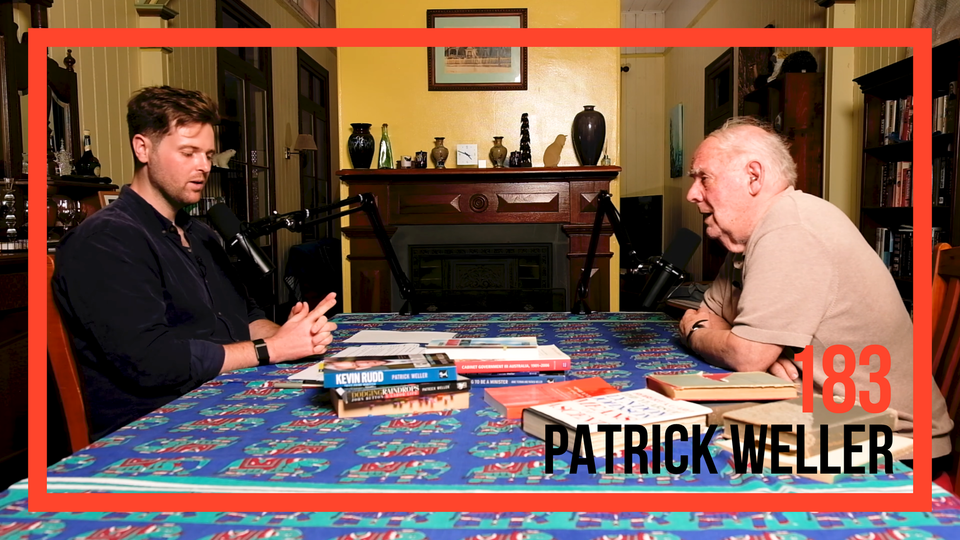
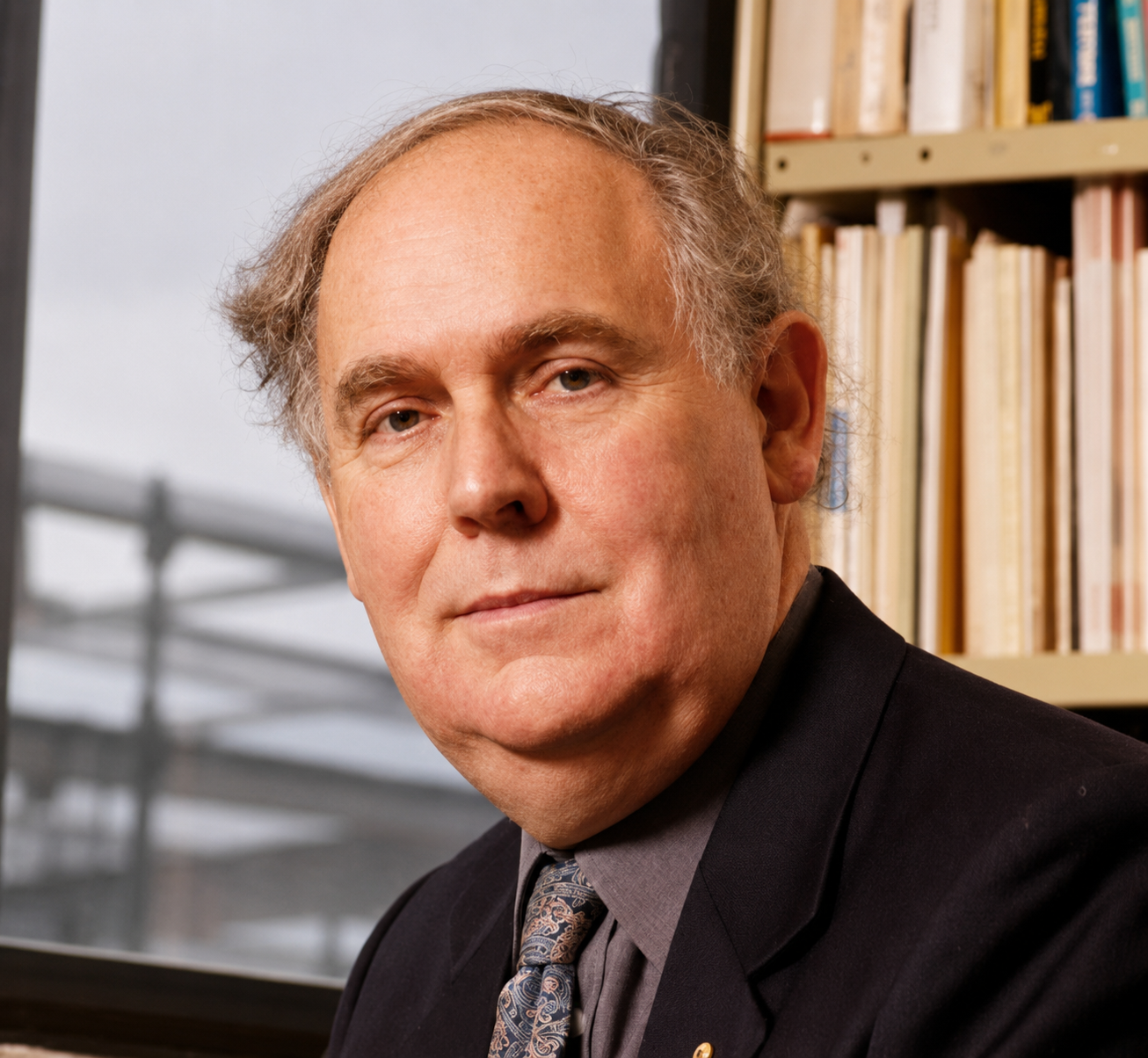
Patrick Weller is emeritus professor of politics and public policy at Griffith University and the author or editor of some forty books.
Pat wrote what was the first (and may still be the only) Westminster-system equivalent to Robert Caro's epic meditation on Lyndon Johnson: a detailed study of how Australian Prime Minister Malcolm Fraser wielded power. First published in 1989, it's a fascinating study of how one individual climbed into the hermit-crab-shell that is the prime ministership and made it his own.
Pat is also the author of two other detailed studies of Australian political leaders, and the definitive history of cabinet government in Australia.
Pat's work offers a picture of how human institutions – in this case, Westminster cabinets – work in practice and on a day-to-day level. Understanding the messiness, the beautiful malleability of the institutions, and their human bottlenecks has helped me build a more accurate model of the world – useful for predicting how governments may both respond to and utilise powerful new technologies.
Video
Sponsors
- Effective Altruism Australia: how Australians give to GiveWell's top charities — tax-deductibly, and with 100% pass-through. Until June 30, 2026, EAA is matching new donations up to $300,000. Donate at eaa.org.au/joewalker.
- e61: a non-partisan economic research institute focused on Australian public policy. To receive a copy of the new essay I co-authored with e61 on data centres and the compute economy, go to e61.in/joewalker.
Transcript
JOSEPH WALKER: Today I'm speaking with Patrick Weller. Pat is an historian, a political scientist, and an emeritus professor at Griffith University. He's the author or editor of about 40 different books, including a study of Malcolm Fraser as Prime Minister, a study of Kevin Rudd as Prime Minister, and the definitive history of cabinet government in Australia. Pat, welcome to the podcast.
PATRICK WELLER: Thank you very much.
WALKER: So Pat, you are of course originally from England, but you've called Australia home for about 60 years now, I think.
WELLER: I arrived in October 1966. The day was notable mainly for Galilee winning the Caulfield Cup.
WALKER: Wow, so you're coming up on your 60th anniversary?
WELLER: That's right.
What Robert Caro taught him about studying power
WALKER: So I think of you as a kind of combination of a British Tocqueville come to Australia and an Australian Robert Caro, who examines the texture of political power. And for that reason, I was very excited to read in a few of your essays reflecting on your work, especially your book about Malcolm Fraser as Prime Minister, that Robert Caro was maybe the major influence on you intellectually, certainly the major influence on you with respect to your book about Fraser.
WELLER: But he adds to [three] other works which took me up there, one of which was a book which made me a political scientist rather than a historian, about how parties operated in the pre-party days in Australia. And it's the nitty-gritty, it's how people work, it's the way that they understand the problems they've got, which I find particularly interesting.
And the second one was a book written by two Americans about the British Treasury. Now, the details are slightly outdated, but the way they did it was to point out that these are people who work with each other day in, day out. When you deal with somebody on a particular problem, you know you've got to deal with them next week on another problem. So it's the routines which become important.
And the third thing was a book by Richard Neustadt, who talks about the American president and says the power of the president is the power to persuade. And what we need to do is to be looking over their shoulder to see how they see the problems.
Then Caro comes along and has this magnificent study of the routines by which Lyndon Johnson managed to create a structure of power, and he did it by incredible hard work. But it was the daily activities that gave him the power.
Too often we look at crises. I want to know what underpinned the crises.
So Caro was the last nudge, so to speak, of saying you can do things like this. And I thought, can you study an Australian Prime Minister? And who would be interesting? And this was 1983, 1984.
WALKER: So at this point we only had the first Caro biography of Lyndon Johnson.
WELLER: The first volume comes out in about 1983. So I thought, well, Malcolm Fraser might be interesting because there are two pictures here – there's a picture of the very dominant prime minister, and everything you hear talks about he spent his life consulting. So I thought, well, we've got Caro Volume 1 that showed the sort of inspiration of what you can do. So let's see if I can go and talk to Fraser and see if I can work out how he ran his government, how he ran his life – one year after he's left power.
Now, I knew David Kemp, who was his principal private secretary, and he knew that I had in the past edited the Labour Party's caucus minutes. They kept minutes ever since 1900, the day the Federal Labour Party met, they kept minutes. Gough Whitlam was sick of people coming to his office to look at them. It kept disrupting his life in 1972, so he contacted the ANU and said, “Can you get somebody to edit them?” And I was asked to do that.
So I had three volumes of the Labour caucus minutes, and then I was going to talk to Malcolm Fraser. So I wasn't sure about that.
But I was interested in seeing what you could do with Fraser, so I wrote to Kemp and said, if I'm thinking of doing this, how will he react? And Kemp said that he won't care about your politics, or what may be perceived to be your politics. The only question you'll ask is, is he any good? David must have said yes, because I then got an invitation to come down and talk to him.
The first question he asked, or maybe the second, but “Why do you want to do this?” And I said, “Well, your image is of a very dominant prime minister, and yet everyone emphasises how much you consulted.” “Huh,” he said. “Just because I consulted didn't mean I didn't dominate.” And although I didn't realise it at the time, he gave me the theme for the whole book: that he consulted dramatically, but if he wasn't getting the answer he wanted, he kept consulting.
And he ran a very consultative sort of exercise, so that if one public servant gets a phone call at 3 AM, he knows who's ringing. And he often had beside the bed the papers that were going to be discussed next year. So it was, “Wait a moment, Prime Minister, give me a moment to find out where you are. Right now, yes, what can we do?”
And another one who was rung up and asked something at 2 o'clock in the morning said to him, “Well, Prime Minister, I think you should consult,” named another officer. And as Fraser suggested, he said, “Oh, by the way, Prime Minister, happy Christmas.” And when he rang the other guy up at 6 in the morning, he at least started with “Happy Christmas now.” He was that sort of character.
So Caro's approach gave a lot of useful tips about how to talk about Fraser. It's a very different book, it's a very different circumstance, and a very different man, but that exercise in saying, how does this work, what does he do? So I was really interested in his day-to-day operations, his timetables, his scheduling, because that's the way that he could organise, mostly, to get his own way.
WALKER: So is there anything more specific to say about what you took from Caro?
WELLER: Caro says, “I study power because power reveals”. If you want to understand the way a person operates, his character, it's how does he exercise power. And that's what I think you can usefully apply to a whole set of circumstances.
And of course Caro spends 10 years writing each volume. His volumes came out in '84, '92, 2004, 2012, and we're still waiting for the last one, of which I gather he's written 900 pages. And since he's, I think, now [90], we're hoping that he will finish it soon. It's a magnificent description of how politics actually works. What Caro does is put the institution and the individual side by side.
He wrote a very short book in the middle of this called Working.
WALKER: Great book.
WELLER: It's a great read. It's a fascinating study. And there's one line there when he went and started talking to his editor, and the editor says to him, “Turn every goddamn page.” When you go through a set of things, don't take anything for granted.
One I found: I found a note from Tony Eggleton to Fraser. Tony Eggleton was the president of the Liberal Party, former private secretary, and this was in 1977 when Fraser was thinking of calling an election. Eggleton wrote, “I just spoke to the Governor-General, John Kerr. He says that you need to give some reasons if you want an early election, which he says he hopes and expects that you will want to call.”
Now, a message from John Kerr via Eggleton to Fraser, is sort of dynamite. It's fascinating, but you do that if you actually can go through page by page to understand the way that they work. Because prime ministers deal in detail. I mean, when I wrote one on Kevin Rudd, I was allowed to see his diary, appointment diary, so you knew who he talked to. And how often he talked to them. And you knew you could start tracing through that sort of detail, the way that he could actually operate.
How Fraser gave him unprecedented access
WALKER: Why do you think Fraser gave you such access so soon after leaving office?
WELLER: I haven't got a clue. I mean, this was, I say, 1984. He'd been out of government for less than 12 months.
I had written a little book with Michelle Grattan called Can Ministers Cope, which came out a year or so before. We had written a book on policymaking, so he knew via Michelle who I was, and perhaps he was interested in the hope that somebody would actually write a serious history about the process of governing.
I went to see him hoping he would say yes, and expecting to talk to him and talk to his ministers and talk to some senior public servants, all of which I did.
But then at the end of the initial discussion, he said, “Oh, I suppose you want to see my cabinet papers.” I thought, yes, I'd love to see your cabinet papers.
WALKER: So just for people's context, at this time – so today they're not made available to the public for 20 years. Back then the rule was 30 years.
WELLER: So this is a massive time. And he said, “I'll have a look at them to check them before I let them have them,” but he couldn't get round to it, so he never did.
So I’d just moved to Brisbane. I spent a week a month in Canberra. The Prime Minister and Cabinet gave me an office. Prime Minister and Cabinet helped me identify things that might be useful. So a friend of mine who was head of the Cabinet Secretary said, “You don't only want to look at these, you want to look at these files and these files and these files.” And I was given a list of all the files. All I had to do was call them up and they would appear the next day.
I wasn't allowed to take them out of the department, and some of them were so modern they even had bits and pieces of the new Labor government attached to the last bit of the file. It was an opportunity which I've never had since, and I would be quite surprised if anyone gets them again in a hurry.
So he never checked; he never asked to see what I'd seen; he never wanted to know whether I'd abided by any rules or conditions. I just suddenly had access to the Cabinet files. Now, for a historian/political scientist, that's gold dust.
WALKER: It is.
WELLER: That's gold dust. I mean, it's so fascinating to be able to pick a file and trace a story, and you realise the degree to which what the public sees is like an iceberg – the top 10%. And you saw how ideas come and go, how people raise them, they get sat upon, other proposals come along. They're presented as though it was a government decision which is undisputed, but in practice it's a whole range of compromises, proposals, all of which are tossed around within the government and within the public service.
And suddenly you can put a bit of flesh on those bones about how serious the process is. And that adds to that notion. You have to understand how they understand the problem. I mean, there's a quote in Heclo and Wildavsky, which is the book on the British Treasury. They make the decisions. We have to understand why they make the decisions. And that's understanding about them.
And the other thing which comes up is Heclo says governing is a process of collective puzzlement on the public's behalf. You know, people sort of think governments know what they're doing and why they're doing it. Often they are not very sure why they're doing it. And it's a 49-51 decision at the end anyway. “Should we do this, or we do that?” “Well, I don't know, perhaps we'll try and do that sort of thing.” And then you start developing a policy which follows on from that.
That's the process that interests me, less often the decisions themselves.
And then you talk to Fraser and then you talk to his ministers. Not one of the ministers said they were scared of him. And I talked to them all. All of them said several of their colleagues were scared of him. There's something a bit inconsistent about that.
He certainly made them nervous. And he would occasionally use cabinet raising questions because he wanted to test how strongly they felt what they were proposing. And they often thought, “Oh, the Prime Minister thinks this.” No, the Prime Minister was testing them. He was testing the way that the cabinet process worked and the way that he worked.
So I came out with a totally different view of when I went in about Fraser. And I lived through the Fraser period, of course. As a Prime Minister, he was much more thoughtful than he often gave the public view. In public, he gives the view, “I know what I think.” In private view, he's agonising about what I think. He's looking about it, but he knows that in public you have to go out and take a strong view on this way or that way.
But it was interesting, different times. You had AM and PM on the radio. And in between, you could pretty well be left alone. Now, and you knew who had cameras, which now you don't. So in that sense, I think you could pace yourself far more readily. But he also would come back on a Monday morning and say, “I've got 10 questions from all the people who've asked me questions.” Doesn't say who he met. “Somebody said this, I want to know about that. Someone said this.” So the department would get a swag questions each day about who he'd met previously or who he'd met over the weekend. And he queries this and queries that.
WALKER: Okay, there's a lot there. I have a bunch of follow-up questions. The first is, you got access to the cabinet minutes, which is the term of art for the decisions of the cabinet, the minutes; you got access to the departmental files; but I don't think you got access to the cabinet notebooks.
WELLER: No.
WALKER: So the first cabinet notebook for the Fraser government became available in January of this year.
WELLER: Right.
WALKER: 50 years after the end of his first year in office. Have you had a chance to read it yet?
WELLER: I haven't tried. I read some of the cabinet notebooks of the 1950s for the book I was writing on cabinet. Cabinet notebooks are not cabinet minutes. There is no record of discussion of the cabinet meeting. The notebooks are taken by the cabinet note-takers. There're usually three note-takers from Prime Minister and Cabinet in the Cabinet Room, and they will take increasingly detailed notes for the sake of writing up the decision at the end of this process.
So at the end of the process, the Prime Minister might say, “Okay, we'll do what the minister wanted,” or “We'll do what the minister wanted but with the variations of blah, Smith suggested earlier”. So somebody has got to be in a position of knowing what the minister wanted and what Smith said earlier.
So the notebooks are entirely idiosyncratic. Dependent upon the person who's taking the notes. They may be in their own shorthand, they may be including a series of ironic jokes about what had actually happened, but you can't reconstruct from the notebooks what was said at the meeting, which you can in the British ones. So that's one of the great differences. The British give you a much fuller version of what was actually being discussed.
So what you have here is at the end of a meeting, the Cabinet Office goes away and drafts a decision on the basis of what happened in Cabinet. It uses its notebook as a point of reference, so it says, “Okay, this is what I think was said”. Usually they're then circulated, signed off and circulated. They don't go to the ministers or to the Prime Minister unless there's a point of dispute. And that doesn't very often happen, nor very often do ministers challenge the decision.
I have heard of occasions when a minister said to somebody in PM&C, “Now I know that that's what cabinet decided, but if they'd actually had a proper discussion rather than [inaudible], they would actually have decided something different. So why can't we decide what I wanted them to decide? Rather than what they actually decided.” No. That's not how it works here.
So the decision is brief. I have certainly seen decisions under the Fraser government where things were added to make sense of the decision but weren't actually raised. I've seen decisions taken when there was no meeting. So on one occasion – Fraser was in Tanzania and he was in one of those debates about the independence of Rhodesia, Zimbabwe, and he rings up the head of his department and says, “I promised – I think it's Kaunda – that I will open a High Commission. Can you check around the Foreign Affairs and Defence Committee and make sure they're all comfortable with that.”
A few of them said this isn't the way to make cabinet decisions, but they agreed, and the secretary duly recorded a cabinet decision for a meeting that hadn't taken place. Well, no, not hadn't taken place; recorded the cabinet decision although no meeting had taken place… So it's a flexible process.
WALKER: And it's really just guided by conventions, right?
WELLER: Absolutely.
WALKER: I mean, they weren't really breaking a legal rule in doing that, were they?
WELLER: No.
WALKER: Yeah, I mean, it's a very malleable kind of institution.
WELLER: There is a Cabinet Handbook. Which at that time hadn't yet been launched into the public arena.
How he published the secret Cabinet Handbook
WALKER: Yeah, so I didn't realise that you were the person who launched it in Australia.
WELLER: I mean, that's why I said I'd bring props. What happened – I mean, if you look there, this is Politics, a journal of Political Science Association. And if you look at the bottom under document, it says “The Cabinet Handbook”. And if you look at the introduction, it says this is the first of bringing a document of public interest. This will be the first of a series. There never was a second. I was the editor of the journal.
What had happened was I was lecturing in first year at the ANU, and I gave a lecture on cabinet and mentioned there was a cabinet handbook and grumbled that for some reason it's secret, which is ridiculous because everyone should be able to know how cabinet actually works. And that was it, I just had a grumble. A lot of my students, of course, public servants and part-time students.
And at the end of the next lecture, some lady walked up to me and said, “Pat, I thought you might like to see this,” and handed me a copy of the Cabinet Handbook. It was a loose-leaf folder. I have no idea who she was. I never did find out who she was. But I thought, this is, when you read it, really silly. I'd just been to New Zealand, I think, and they are actually quite public in theirs. So I thought, well, I'll publish it, I'll publish it in the journal.
And I asked a deputy secretary in PM&C who was in charge of the government division, later became secretary of the Attorney-General's Department, who I'd met a few times. I said, “What would you do if I published the Cabinet Handbook?” He said, “Hmm, it's breach of copyright.” I said, “I know. What else would you do?” He just laughed, and I assumed that the answer was nothing, which of course is what it was.
But when they produced the next version two years later, the Secretary of Cabinet, who was Assistant Secretary, who I knew well, apparently said, “Well, Pat's produced one journal, it's on the public record, no one's fussed, why don't we just publish it?” So the Cabinet Handbook came out with the Australian Government Printing Service. That's the first half of the story. I like the second half more.
The second half was a friend of mine in Britain, a person called Peter Hennessy, who was a great journalist as well as an academic, just retiring from the House of Lords and just being admitted to the Order of the Garter. He was a great guy. I met him at a conference. And he said, “Well, you'd never get [a cabinet handbook] in our place.” I said, “Well, I'll send you a copy.” So I sent him a copy and he sent it to Number 10 and said, “Are you going to release this like the Australians have done?” Because it was now an official document. “No way.”
So each time there's a change of prime minister, he sent him a copy and said, “Are you going to release it?” Until John Major says, going into an election, “Just hang on a moment,” and announces during the election they're going to publish it, and it becomes a public document. And of course, both of those are now on the web.
WALKER: That's amazing.
WELLER: Now, this is a lovely case of – it's a nudge.
WALKER: It's a nudge.
WELLER: You know, everyone realises nothing much is lost when you publish the things. And other people follow up, and you eventually have most of those records are now public records, and each Prime Minister introduces his own new version of the Cabinet Handbook.
WALKER: Yeah, in preparation for my podcast last year with Glyn and Terry, I spent hours reading the 15th edition of the Cabinet Handbook and didn't realise that I have you to thank for that.
WELLER: Well, look, it will probably have happened anyway. But it helps when it's out already. Because there's not a lot of logic in trying to keep it secret.
But that's very much what interests me, is the how. If you ask Glyn, he would, I suggest, talk, as he does at times, about PM&C made sure the rules have been followed, that the criteria for the cabinet handbook had been fulfilled, that the document which was going to Cabinet is in a suitable condition to be considered by Cabinet.
I mean, up until the 1940s, the Cabinet Secretary was a minister, and the Cabinet records were sparse. You could have heard of whole things that were discussed in Cabinet which never got noted at all. But now it's far too big for that. I mean, there may be a Cabinet Secretary for deciding or agreeing on what the agenda will be, subject to the potential veto of the Prime Minister. But everyone else has got to actually settle themselves according to the rules.
And that's protecting, I think, everyone, because you could be assured that you can't bounce the cabinet, just bring something up at the last minute. Prime ministers still can. But prime ministers are judge, jury, and executioner when it comes to the processes of cabinet. They can decide enough discussion's been done, they can decide what the discussion will be about, and they sum up at the end.
WALKER: Exactly. I mean, that's really the kind of institutional source of their power, right?
WELLER: It's one of them.
WALKER: Being the chair of the cabinet.
WELLER: Yes. Yeah, being the chair of the cabinet: deciding who will talk in what order. I mean, ideally nothing will go to cabinet until the Prime Minister has a pretty good idea of what everyone thinks. And what everyone is going to say. And that's the job of the Secretary of Briefing.
Now, how they get briefed varies from place to place, but that's the power. And then it’s the power about – so what exactly was decided potentially? People stick pretty well to what the Prime Minister does, if anyone can remember them. And there are times when you have long discussions and people forget that. “Well, I'll do what Bloggs said, but what did Bloggs say? Well, what was it that we talked about then?”
“Just because I consulted doesn’t mean I didn’t dominate”
WALKER: So let's come back to Fraser because I've got a few more questions about him. I think the five kind of abiding impressions of Fraser that your book left me with were, firstly, the work ethic, which sounds kind of trite when I say it like that, but the very vivid descriptions you give of him, as you mentioned earlier, calling up a senior DPMC official at 2 AM on Christmas Day to talk about some cabinet papers – those kind of things made a great impression on me.
Secondly, how he was less intellectually secure than his public image gave off. So he was constantly interrogating both his staff, public servants, ministers with this kind of scattergun approach of just bowling questions at them. But the purpose was to stress test ideas and make sure he got to the right outcome. Because he didn't always know what the right outcome was.
WELLER: For which we should be grateful. Prime ministers don't think they know all the outcomes.
WALKER: Yes. It's very admirable.
The third thing I found interesting was he had this instinct for understanding the politics of institutions and how each department has their own kind of agenda and set of objectives. And he was very determined to never be captured by a single group or department. So he didn't want anyone to have a monopoly on his advice, and he sourced advice from a wide range of people, even people outside of Parliament, and would even sometimes have different departments working on the same question at the same time to get an uncorrelated spread of opinions.
The fourth thing I found interesting was that he had a hand in or approved virtually every decision that his government ever took?
WELLER: Every decision he wanted to be involved in. He would be involved in everything significant that he wanted to be in.
WALKER: I see. Okay. So I might have potentially misread.
WELLER: No, I think you slightly over... I mean, there were – oh, hang on, was it 19,000 decisions in seven years? That's an awful lot each week. Now, some of them were decisions not to make a decision, but that does mean the Prime Minister was involved in actually all those decisions.
WALKER: And then the fifth thing, which of course is the kind of central theme of the book, is that he dominated through consultation.
WELLER: Yeah.
WALKER: Which is so interesting because there's this false dichotomy that you critique, that there is on the one hand traditional cabinet government and on the other hand prime ministerial government. But he exercised a kind of blend of those two approaches and he invariably got his way, but through a process of consultation, through exhaustive cabinet meetings in “the bunker”, until everyone had just through sheer kind of weariness consented to the decision or the outcome that he wanted, the collective outcome that he wanted.
WELLER: Let me add a sixth.
WALKER: Yes.
WELLER: The sense of insecurity created by the means of reaching office. He was incredibly conscious that the events of 1975 were incredibly divisive, and he was really conscious, I think, at times that he didn't want to do things which would divide the country as he saw it. Now, that's totally different from what one would have expected going in. But he's often [saying], “Well, yes, but you know, if we did that, it would do X, Y, and Z.”
And he wasn't always bold. When John Howard starts suggesting a GST in about 1981, there's an interesting argument going on about who was responsible for checkmating whom in those occasions. Fraser would argue that Howard was too cautious, he should have got ahead and done things; and Howard was saying, “Well, he wouldn't let you”.
So Howard was talking about a GST and Fraser said, “You can't have a GST, you would introduce it, it would take three years to introduce it, you'll be running to [an] election on it and the impact will come straight afterwards and you wouldn't win”. Howard was saying, “Well, we wanted to have a review of the financial system that could basically turn into the Campbell Inquiry,” and Fraser sat on it.
So on a couple of occasions, I talked to Howard. Howard was quite keen to talk because we had had this discussion going on about what was Fraser in favour of and what wasn't he. I talked to him once, he got cut off, he rang up and said, “Can we finish it?” Because he had a good story to tell and Fraser was telling the opposite one.
So 11th November was never quite put behind.
I said I thought the second question was “why do you want to do [the book]?” Either the first or the second one was “should the Governor-General have done it?”
WALKER: This is in your first meeting?
WELLER: This is my very first meeting with Fraser, yeah. Should the Governor-General have done it?
WALKER: He asked you that.
WELLER: Yes, he asked me that. I said no. I said, “Well, that was before you're coming Prime Minister, it's not really within my remit, but since you asked, no. He should have waited till the money ran out.”
Fraser: “No, he should have done it immediately.”
But what was interesting is, having said that, he seemed unconcerned that I didn't agree with him. And this is the other interesting thing – I know at least one senior officer in PM&C who had been working very closely with the Labour government, the Whitlam government, disappears for a time, then is, brought back, and he's brought back to a senior job in Prime Minister and Cabinet.
One of Fraser's advisors thinks that – I mean, this is a decision for the secretary, not for the Prime Minister – but thinks that the Prime Minister should know that he's about to get a key advisor who worked closely with the Labor government. Fraser apparently stuck his jaw out and said, “So. Is he any good?” Didn't care. You know, as long as they were good, he didn't care who they'd worked for. That was their job. In that sense, that's a lot more tolerant than I suspect most people would have given credit for.
WALKER: Yeah, it's interesting, his sort of theory of government. I think at the end of the book you write this – he saw it as a kind of job of continuous administration. And he says that he would actually be [more] proud to have administered the government well than to be known for any single achievement.
WELLER: Yeah, it was a really interesting reaction, and not the one I was expecting. It fits – do you know the Oakeshott?
WALKER: Michael Oakeshott.
WELLER: Michael Oakeshott's definition of governing?
WALKER: Is this the boundless and bottomless sea?
WELLER: Boundless and bottomless sea. [Quoting from book:] “In political activity . . . men sail a boundless and bottomless sea; there is neither harbour for shelter nor floor for anchorage, neither starting-place nor appointed destination. The enterprise is to keep afloat on an even keel; the sea is both friend and enemy, and the seamanship consists in using the resources of a traditional manner of behaviour in order to make a friend of every hostile occasion.”
And the previous line is, “in government, people are not offered the blank sheet of infinite opportunity,” which is a phrase I love.
That is his image. I mean, I quote it in the book because it really came back to, when I taught first-year politics, that was one of the definitions I gave them, that politics there is not an end point. Politics is about keeping things going.
You're never going to solve, in inverted commas, poverty. Poverty becomes relative. You're never going to solve the economic problem. There is this constant attempt under new circumstances to work out what we're going to do with the economy. You don’t ameliorate, get things off the agenda; they can always blow up again.
It's not, “I did this, I did that,” he said, because you may have made a complete mess of several other things. It's the overall picture that he thought was important. And that's how he governed.
WALKER: Yeah, it also helped me understand how to make sense of his legacy because in policy terms the Fraser government was an underwhelming government. But I guess maybe that wasn't quite the test that he was holding himself to.
WELLER: Ah, well, he won three elections would be his answer to that. Well, that'd be one of the answers.
And certainly the notions of economic rationalism, if that's the word: the drys in the party only start emerging in about 1980. So for the first five years, at least part of it was trying to say “we're a competent, if boring, government”. The line he had, “I want to get politics off the front page,” which he didn't do, because you can't. But that level of governing was, I suspect, what he very much saw as his role.
Are these books manuals for power?
WALKER: How do you think your book changed how Fraser saw himself and his job?
WELLER: I have no idea.
WALKER: Do you know if he read it?
WELLER: Oh, I'm sure he's read it because I think he grumbled once about it. The last time I saw him, he cut me dead.
WALKER: What did he say to you?
WELLER: [huffs disdainfully].
WALKER: Oh, he just ignored you?
WELLER: Oh, he was giving a lecture, I walked up to say hello, he just went [huffs disdainfully].
WALKER: Oh wow. I think he comes off pretty well in the book.
WELLER: No, I think he probably does too. I think it's a different Fraser from the people that certainly were talking about in 1975. I wasn't trying to make him come out particularly well.
I always find it quite difficult if you finish the book on someone to then try and talk to them about it. I wrote the other one on John Button, and John's only had one conversation really with me about it.
John said, “well, you wrote as though I wasn't paying adequate attention to the management of the department. I didn't think that was my job.” Okay, I should have picked that up, you know. I should have made the point that he didn't see it as his job. And now, of course, some ministers do – most ministers don't.
But having a conversation about “did I get you right?” I suspect that would be quite difficult. I do my best shot at trying to see what happened.
I haven't had a discussion with Rudd either, by the way.
WALKER: Oh, interesting. So, okay, so for people's context, the three Caro-esque studies of political leaders in power and the practices by which they governed are the Fraser book.
WELLER: Yep.
WALKER: The John Button book, Dodging Raindrops.
WELLER: Yep. He hated the title.
WALKER: Oh really?
WELLER: And then there's Kevin Rudd.
WALKER: The Kevin Rudd book.
WELLER: Now there's a distinction which I'll give. The Kevin Rudd book was largely written while he was in office.
I was asked if I'd like to write a study of a prime minister in power, in office, and therefore I actually had an office in the Cabinet Suite. Wasn't allowed to see Cabinet documents, but I could talk to a lot of people in and around the government.
I wrote the book, and on a couple of occasions I was allowed to sit in on his meeting with his advisors. On one occasion I sat in while he had a meeting with international leaders about the GFC. I was out of shot. So it was really interesting being able to see that.
So Rudd was – it was a different one because he was still worried about what was happening now. And I suspect, you know, because he was Prime Minister for much of the time. And therefore acknowledging mistakes was something which Fraser was prepared to do. But Rudd was uncomfortable with the notion I would write it up.
I mean, on one occasion, which is written up there, I was going to sit in while he had a meeting with public servants, about 30 of them, because he was going to a Go8, I think, and he wanted to be briefed. And I sat there with the public servants for an hour and a half while we waited for the Prime Minister to arrive – which was an appalling characteristic of his government. His sense of timing was very different from, say, John Howard, who was always on time for meetings.
And so he was a prime minister of great talent, but a prime minister who upset quite a lot of people on the way through. So have I talked to him about it? No. Do I know what he thinks about it? Well, I know what he quotes from it when he writes his own books. But it's an interesting process sitting there while it's happening.
WALKER: To what extent can your studies of political leaders in power be used as manuals by political practitioners, like Machiavelli's The Prince?
WELLER: I'm not going to start comparing myself to Machiavelli. I think there's a difference. Machiavelli was consciously trying to use it to teach lessons.
The Prince is how a prince should behave. And even if Cesare Borgia is the person he's talking about much of the time, it's not an account of Cesare Borgia's behaviour at any given time.
These books are not trying to be manuals at all. They are saying this is how this person operated in government.
WALKER: But to what extent could they be picked up …
WELLER: Oh, other people could.
WALKER: And be co-opted as a manual?
WELLER: Oh, people could draw the lessons from it. But that wasn't my intent.
I mean, a lovely sideline is a thing called Weller's Law. It started as Weiler, I think, W-E-I-L-E-R. It's not me, by the way, but it's one of those interesting comments: nothing is impossible for the person who doesn't have to do it.
And whenever you look at observers, it's always so easy to do this, do that, do the other. It's obvious that you should have done that.
I'm interested in actually asking them what they thought about these sorts of things, why they did or they didn't do that. Because looking over their shoulder is much more interesting than lecturing them on how they should behave.
And I think if you understand how they see the world – and this is on the book I'm writing on secretaries – you know, what's your job? How do you deal with difficult circumstances? It's much more useful to get their view than me telling them what their view should be.
So in that sense, is it a manual? No, it's not a Machiavelli. It's an account of how a number of people understood the job, interpreted the job.
I mean, go back to Fraser for a moment. I asked him, when you got into the office, what were the first things you chose to do? He looked at me slightly askance and said, “that's not like that. There are things you just do.” You know, the job determines what it is. You aren't going in, I'm going to do this or that or the other. These are the things I have to do because I'm Prime Minister, and the job determines the way that you get to do it.
It would be quite interesting to try and do the manual thing. I noticed in the session you had with Terry Moran and Glyn, Glyn says somebody should interview [recent former prime ministers] about what they thought the job was and how well it went.
And I think that's what you should do. I think you should go and actually talk to a group of prime ministers and say just those sorts of questions, you know, “what did you learn about being prime minister?” So it becomes a set of exercises on, you know, what worked, what didn't work, what I thought I was doing, et cetera. That would be a – it would indeed be a really interesting exercise.
WALKER: I’ll have to think about that.
WELLER: I'm not the person to do it. You may be.
WALKER: If I did sit down with a few former prime ministers, what are some questions you think I should ask them?
WELLER: It's things like, well, how'd you get there? What's the job? How do you understand the job? Because I think that becomes quite important if they are running it on a day-to-day show or actually thinking they have some sort of vision that the people outside need to understand. I do think they do need some sort of idea about what we're doing. Strategic plans are overdoing it for governments and circumstances change, but too many of them seem to have survival as the be-all and end-all. “What do you want to do?” Muldoon: “leave it no worse off than when I got there.”
I'm really interested in how they see the job, what they see as the priorities, who they could trust. It's not a job with many friends.
WALKER: Until your book on Fraser, I don't think there was another book in any Westminster system country that offered a detailed study of a prime minister in power, as distinct from a biography or an autobiography. There were plenty of biographies, but this isn't really a biography. It's a study of Malcolm Fraser as Prime Minister.
WELLER: And of course, that's the power bit. It’s the Caro bit. How did he use his power? And the way to do it comes out of the Heclo/Wildavsky book, you know, which is to say they make the decisions. Our job is to understand why they make the decisions this way.
WALKER: But since that was published, we've got the Kevin Rudd book now, which is another one of yours. Are there any other book-length studies of prime ministers in power?
WELLER: In Australia, not that are consciously worried about how they operated in power.
WALKER: So it's still just these two?
WELLER: I think it is. The Rudd one was a little more chronological.
WALKER: Yeah.
WELLER: Jack La Nauze wrote a very good book on Deakin. But he's a historian. And Geoff Bolton's done a couple of good books. I think he wrote one on Barton. There's a book on Scullin by John Robertson. Alan Martin wrote a two-volume study of Menzies.
Now, they were all historians, so they were asking, in a sense, you know, how did it happen and what do we understand about the person. I have this odd combination, perhaps, of being a historian by inclination since the age of about 12, to finding myself in a politics department purely by accident, absolutely by accident, with an interest in those questions about power and process and routine, and how those things shape what people choose to do.
So it's a different sort of book. I know I noticed at one stage, I think it's in this [book] actually, somebody says the best five books written on prime ministers was Judith Brett –
WALKER: The Deakin one?
WELLER: No, Judith Brett, I think, on Menzies. Me [on Fraser]. La Nauze [on Deakin]. I forget what the other two – oh yeah, one on Keating: Recollections of a Bleeding Heart.
So most of these weren't actually books, traditional biographies. I mean, La Nauze was, but the other ones were all approaching it from a different sort of angle. And the idea was to say, how do we understand the prime minister who's there? How do we understand what it is that drove them and how they managed to succeed.
I quite consciously say, when their front door closes, I'm not interested. And I'm not a psychologist, so I don't even pretend to understand the psychology of prime ministers. I would make a fool of myself if I did. And I'm not interested in their private life.
So I don't write a study looking at the agonising of this, that, or the other that may have happened. I suspect both of them were probably – Rudd [and Fraser – would have been quite good examples for somebody with that sort of skill.
WALKER: Which Prime Minister doesn't have a Pat Weller/Robert Caro style book written about them that you'd love to see one written for?
WELLER: Well, I don't think you could do better than – or very difficult to do better than – Watson on Keating. It's so idiosyncratic, but it's such a vivid picture, even if it infuriated Keating, who thinks that …
Probably recently they've come and gone so fast that it's quite difficult.
Are any of them even worth it? I mean, they come and go so fast at the moment. Fraser was interesting. I'm not sure a couple of the recent ones are. Would I want to spend five years doing it? Probably not.
WALKER: Right, you need a good subject if you're going to do that.
“A telegram that cost a house in Melbourne”
WALKER: Say we did have 10 or 20 Pat Wellers and we had a book like your book about Fraser for every prime minister in Australian history.
WELLER: That'd be great.
WALKER: Yeah, if we had that, and maybe it's a little too late now because a lot of people have passed away, but say we did. We're in that universe where we had all this, we had a Pat Weller–style book for every Australian prime minister in history. What do you think we would learn from the collection of books? So I'm abstracting away from particular things about how each prime minister governed.
WELLER: What are the problems of governing? Weller's Law: everything is possible for the person who doesn't have to do it. Our prime ministers are not fools. They don't lack ambition, they wouldn't have got there, and many of them are quite bright.
Why is it so difficult? Well, I think I know to some extent why it's difficult. There's a pile of material that's coming in, we don't know the answers. And governing, I think, is becoming infinitely more difficult, which I'll quibble with you about on your reform stuff.
WALKER: We'll come to that.
WELLER: Yeah, I know.
I mean, as I mentioned with Fraser, he had AM, he had PM. You could go on 7:30 Report or Lateline, but that was pretty well it. And you could plan your day around the media reactions. Now you just have to sit in the prime minister's office to know, boom, boom, boom, boom, it's happening much of the time about “what are we doing about this, what are we doing about that”. The speed at which it's happening, the deepfake stuff, “which of these stories are even true?” It's not the first time that people told lies about people, but it circulates at an exponentially fast speed and it's getting faster.
So I would really like to know about how they see those sorts of changes. Now, I'm accused by some of my academic colleagues of assuming that it was always like this. And they say, “but now politics has become much faster”, etc. “And prime ministers are much less – much more demanding.” I don't think human nature has changed. I don't think the politicians have changed. I don't think suddenly the current group are greedier for power than many of the people 100, 120, 130 years ago.
I think that if you really want to take it back and look at Walpole in Britain, and there's a great book which I bought when I was an undergraduate and should have read but didn't for a long time called The Structure of Politics by Lewis Namier, and it's about the nitty-gritty about how people maintain their numbers by organising candidates, by persuading the opposition to go away, by giving money, by a whole range of things that they did in order to keep a majority, not by party but by a process of political manipulation. We now do it through parties. Okay, it's different. I don't think the humans are different.
I don't think that you can say that prime ministers now are greedier for power than Billy Hughes, who's always the one I use. I mean, Billy Hughes was outrageous in the way that he behaved. Oh, Fitzhardinge's book on Hughes [That Fiery Particle] is quite good too. That's a long way back. I mean, Hughes used to make decisions and announce them. He used to undermine anyone and everybody.
The deputy prime minister then was a bloke called W.A. Watt, who was a Victorian premier, also happens to be my wife's great uncle. And when Hughes was overseas during the First World War…
WALKER: Yeah, sorry, just on that. I don't know if many people know this, but Hughes governed Australia from Britain for about 16 months.
WELLER: Yes, that's what I'm about to say. And he was insisting that he see every cabinet decision, and I worked out the price. By the time you've got a decision, you've coded it, you've sent it to him, you've decoded it, he replies – the cost of each of those was about the price of a small house in Melbourne.
WALKER: So they must have been spending millions of dollars on telegrams.
WELLER: Yes. And an awful amount of time. Yeah, he governed for 15 months and he didn't want them to make any decisions. And then when Watt went overseas as treasurer …
WALKER: And so just for people's context, it's towards the end of the First World War, 1918, 1919, and that's why he's in Britain.
WELLER: He's in Britain because he's got Versailles.
WALKER: Right. And maybe he originally goes via maybe Canada, then America and to Britain, then Versailles.
WELLER: Outrageous behaviour. And then Watt, as deputy prime minister and treasurer, wants to be asked about his own portfolio, and Hughes said, “why?” So Watt resigns because Hughes wanted to be treated one way, and he treated other people with complete disdain. I mean, eventually he lost government because of it. Lost the position because of it. I mean, he was a horrible little man.
So the notion that somehow modern politicians are greedier, more cynical than people like Hughes, I think, is a nonsense. So what we need to understand is how systems have changed and how technology's changed, and how the role of government has changed. They're doing things in government now they wouldn't have dreamt of doing 100 years ago. A lot of the things now being done, they're getting involved in with state problems that are not theirs.
So I think what you need to do is actually say to prime ministers: what's different? I mean, Menzies went to Britain by boat. It took three, four weeks – he was out of touch.
WALKER: What would you have been doing on those voyages? That seems like such a luxury for a modern politician.
WELLER: Yes, of course. He was going from London to New York. When the Korean War broke out.
WALKER: Yeah, but how do you think he would use his time? Would he be reading?
WELLER: I haven't got a clue. I've got pictures of him walking around the deck with the secretary of the department.
But the deputy prime minister, Artie Fadden, was asked by the British, “are you going to be there in Korea?” And he couldn't contact Menzies, so he had to make the decision, and he was dead scared. So Menzies arrived in New York…
WALKER: Why was he scared?
WELLER: Because he had announced that Australia would support the UN in the Korean War without asking the prime minister, because he couldn't contact the prime minister because he was on the boat. So they get there and Menzies says, yeah, okay. But there was this time in which Fadden couldn't contact him.
Now, you're never out of contact now. I mean, in Fraser's time, you we're okay when you were flying somewhere.
WALKER: Yeah. The irony is that it would be much easier to govern Australia from Britain today because of modern telecommunications.
WELLER: Yes. My view, when you talk about the role of prime ministers, is not that they've become different in what they're trying to do. I mean, Terry Moran said, “why would you try and do it if you're flying?” And his answer was, “because you can”. You know, why would a prime minister want to give orders? Because he could.
You don't become prime minister unless you want to exercise your authority. No one's become prime minister by mistake. So yes, politics has dramatically changed, but the people running it haven't.
[Another thing that’s changed:] You need a public service which has that capacity to understand what's happening so that it can have the basis for answering ministerial requests.
Now the public service in the days of Hughes was very limited. But they had much less to do. The biggest change for government was, well, one is war. But the other is Keynes – the White Paper on Employment. So suddenly government has a macroeconomic responsibility from 1945 onwards, which means it's interested in everything.
And then you start interpreting the Constitution to allow it to give grants on such terms and conditions as Section 96 sees fit. So these are all circumstances which have changed the role of the Prime Minister.
WALKER: Are there any interesting or instructive historical examples of how new technologies have changed practices of government? So for example, I mean, I've been reading this book recently, it's called Under the Wire. It's about how the telegraph changed diplomacy, centralised foreign ministries, sped up international crises.
WELLER: Well, the whole telecommunication thing has changed how government works. I mean, because you can get a – I mean, they say you get on a plane, you use the time flying to Britain or something as an opportunity to work because you're on the phone with everyone, whereas you used not to be.
WALKER: Feels like there's less thinking time. If we go back to Menzies, Menzies' kind of three-week voyages, I imagine those would have been quite productive because ideas are kind of gestating. He might have moments of insight.
WELLER: As I said, he was walking around the deck with the secretary of his department. So, you know, “What are we talking about, Alan?” Yeah. I think pace is the thing. I mean, people can react within moments and do, and feel they have to. So the way in which government works strikes me as being much more rushed.
WALKER: Do you think prime ministers need more time to just be able to think uninterrupted?
WELLER: Well, that depends if they have a sensible capacity to think.
WALKER: There's this Amos Tversky quote, which is, “People waste years by not being able to waste hours.”
WELLER: Yeah. Yes, they need time to think. Yes, they need time to talk it over. Do they have it? Not necessarily.
But the other interesting thing, and here's another contrast talking about Glyn [Davis] and the difference between governments.
When Glyn was secretary of the Cabinet Office [in Queensland], he would see the premier morning and evening and probably four or five times between. They were each end of a corridor.
He sees the prime minister in cabinet possibly one meeting for briefing cabinet and hardly any more. So much of the instructions come – this is universal – come through the chief of staff.
So it's a different sort of relationship which exists at the different levels of government, and that's not getting any easier.
I mean, when the ministers first came to Canberra, they worked out of Parliament, because many of their departments were in Melbourne, and they didn't have them. Now they've all got offices, if they want, in Canberra. They never use them – they work out of Parliament.
That's now the difference between Britain and Australia: in Britain the secretary of the department [and] the minister have basically adjacent offices. Here, they are 50 miles apart. And that changes the way that it operates as well.
Why Pat came to Australia
WALKER: So a brief biographical interlude. Obviously we're very grateful that you brought yourself to Australia, but I'm curious why you chose Australia. So you're a young man, an Oxford graduate, you've got the world at your feet. Why you chose to come to Australia, and then why you stayed, and then why you have made Australia the focus of your academic work.
WELLER: Load of accidents. Why Australia? Well, it only cost 10 quid. I could see if I stayed in England exactly what my future would look like.
WALKER: Which was?
WELLER: I would end up teaching at a private school for the next 40 years, and I would be bored stiff after the first 10 of them. It didn't appeal to me.
So where do I go? Well, I thought Australia looked possibly interesting. I wrote to Australia, I wrote to New Zealand. New Zealand said no thanks, and Australia said yes.
So I come to Australia with $100 and a few addresses from girls I'd met in Kangaroo Valley, which is, by the way, the 1960s name for Earl's Court because it was full of Australians going home for a period of time. One of them – her mother's house in Double Bay. So I went and stayed there for a bit.
The ultimate irony: I met her sister whose name was Ross, who had a daughter called Gretel and her husband called Kerry.
WALKER: The Packers.
WELLER: The Packers, yeah. So I literally had a few contacts, not a lot of money, and just went for the hell of it. And I was there for two years, which was what you were required to do if you didn't want to pay your fare back.
I applied for a teaching job. And when I was there, it was a pretty awful place.
I applied for a lectureship in history at the University of Tasmania. Now, it was utterly outrageous. I was not qualified for the job, but I didn't know much about it.
I got a letter back quite reasonably saying that it has been given to Dr. So-and-so. Then said, and the professor was wondering if you'd be interested in a tutorship. So I said, sure.
We meet at Sydney University, go to the pub, and he says at the end of it, “Anything you want to know?” I said, “Yeah, how did I do?” He said, “The job's yours if you want it.” This is not something you would do now.
So I went to Tasmania. And he told me, “Well, you better start doing some research,” gave me this book on parties. “Why don't you do Tasmania in the second half of the 19th century?” So I started on that.
After a year, he came back and said, he went on leave, “Do you want to be an academic?” I said, “Yes.” “Well, go to the ANU and do a PhD.”
And in a way, when I've been visiting people, the two authors of that, Alan Martin's a historian, Peter Loveday's a political scientist, when I went to see them, Alan was busy, so Peter did all sorts of things about how it did. So I rang him and said, “If I come, will you supervise me?” So I ended up in the politics department.
I have never done a politics course in my life, apart from the PhD. And it took off from there.
I did half a dozen books with different people, ended up at Griffith and they gave me a chair.
WALKER: So a series of happy accidents.
WELLER: Life is a complete series of accidents. I mean, if you had asked me when I was graduating from university that, one, I would teach at a university and, two, I'll spend 40 years as a professor somewhere, just thought that that was in Australia, I would have laughed.
WALKER: Yeah, and you'll be sitting doing this thing called a podcast with this Australian guy talking about your books about Australian prime ministers.
WELLER: I go back to England tomorrow, probably for the last time. I'm very glad I didn't stay there, so I'm perfectly happy that I came here.
So was it planned? No. Would I ever have told you where I ended up? No.
I remember saying at one stage I never want to be in a research job, I want to be in a teaching job, and the one place I'd never live is in Queensland… Joh Bjelke-Petersen. All of which have now disappeared.
So I hope I've done reasonably well at what I do. I keep doing it because I'm not very good at anything else.
WALKER: Well, we've got your monuments sitting all around us on the table.
WELLER: We've got the monuments and a couple more to come.
Why Australia’s cabinets are more collective than Britain’s
WALKER: I want to ask about Australia versus other Westminster systems. So it seems that Australian cabinets place a greater emphasis on collective decision-making than their counterparts in the United Kingdom or Canada.
WELLER: Certainly than the United Kingdom. Canada has a larger cabinet and much more consciously representative functions. That's to say that you're too much greater – it doesn't matter that much in Australia which state you come from.
I mean, it may when you get it in order to get into the cabinet on some occasions, and when Labour Party starts dividing it up on number of New South Wales right that you could have, and Ed Husic ends up on the backbench, and so does Dreyfus, neither of which deserved it…
But Canada is even more representative of factions and areas of places, and because it tends not to have an inner cabinet, then much more has to be done by the ad hoc committees who've organised around the Prime Minister and the senior ministers. So in that sense it's different.
Britain has always been more prime ministerial.
WALKER: So what are the historical or cultural explanations for the difference between us and Britain in that regard? Why did we diverge from the more prime ministerial style?
WELLER: Because from the very beginning, prime ministers were elected by the party.
WALKER: Oh, I see.
WELLER: So that you could actually go back – this is all part of my PhD thesis, you see. You can actually go back to the 1890s when the parties that they had often elected their leaders. And the notion that they can elect also means you can fire.
It didn't happen much in the first 50 years, but after the Gorton case, it has always been understood that opposition leaders or ministers can challenge the leadership for the party and if you're challenging a prime minister and you take over, you become prime minister.
So prime ministers have to be, I suspect, rather more cautious – in a way that Starmer is now finding out – cautious about maintaining support within the cabinet.
I mean, Thatcher eventually lost office because they had started introducing a system in Britain. Up until the 1960s, the British Prime Minister, as you would probably know, “emerged”. There was never a vote. Somebody took soundings to find out who had the most support.
WALKER: I actually didn't know that. That's interesting.
WELLER: So when Butler and Macmillan are being considered after Eden gets sick and Salisbury took soundings of the Conservative Party, probably in and out of Parliament, and say that it's going to be Bobbity, it's going to be Macmillan.
And it was so distasteful that they in the '60s introduced a system for electing them. They didn't introduce a system for removing them. So in fact, it's been really difficult to get rid of [a prime minister].
Now, in Australia, Menzies stands down in 1940 because it's obvious he's lost the support of the party. They didn't actually get around to sacking anyone, I think, until much later. But from a very early stage, they've been much more democratic about the way that parties even meet.
I mean, your caucus met for the first time in 1901. Regardless of the time, it continued to meet, and occasionally the people were a bit ingenuous about what was happening. But it always understood that it elected the party leader.
In Britain, there isn't such a thing as a party meeting, and if it is, it's got 300 people in it and you can't manage it. So the backbench committee in the Conservative is the 22 Committee, in which the backbenchers will meet and express their opinions, but they never actually meet the Prime Minister and the cabinet.
Whereas in our case, the cabinet and the Prime Minister, when Parliament's sitting, meet weekly with the party, and the party can express its opinions, and the party expects to be listened to, to some extent. So the dynamic is very different.
Canada's like Britain. I mean, Canada has had a number of occasions where the Prime Minister's standing in the polls is under 20%. Now, that wouldn't happen here. If you have a prime minister that's got 20% standing, he would have been gone.
Whereas Mulroney, for instance, was on 19% when finally he was persuaded that he couldn't win the next election, so he stood down. And, oh, what's her name [Kim Campbell]? I can't remember. The Canadian prime minister took over for three months before she lost the election. So that carries on to cabinet, to some extent.
WALKER: That's interesting. That makes total sense. So then I wonder whether Rudd's changes to how the Labor leadership is chosen in 2013 will result in less collective decision-making for Labor governments.
WELLER: No. Oh, Labor's always been collective, in the sense that of course the other issue is that the Prime Minister doesn't pick the ministers.
WALKER: Yes, true.
WELLER: So that...
WALKER: Breaks those patronage links.
WELLER: So Chifley had to have Eddie Ward and Arthur Calwell in his cabinet, and he couldn't sack them. Then you have all sorts of ways about how you have to try and organise the way the cabinet works.
The Conservatives are not quite the same, but all the ministers are expected to turn up to cabinet meeting – to party meetings. And so you have your weekly party meetings. Why ministers are so relieved when Parliament doesn't sit – I mean, Parliament in Australia sits for about one-third the time of the British or Canadian parliaments.
We lost about 60 days a year. But in Britain and Canada, I think it's closer to 160. Massive difference.
WALKER: That's interesting.
WELLER: Massive difference. So why don't they sit? Because they don't like it. They must prefer to be somewhere else.
WALKER: What do you think is the better system?
WELLER: I think they're different. I mean, the consequence is that the Parliament meets much more regularly in Britain. Question Time is different, because in Australia all ministers can be asked questions at any session. In Britain they have set days.
You have one day a week which is Prime Ministerial Question Time. Here the Prime Minister has to turn up every day and invariably gets a fair chunk of the questions. Canada is closer to Australia, I think, in that case.
The committees are much more powerful in Britain.
I call them cousins. They've got the same heritage, but they're now quite different in the way that they operate.
And the other thing is that there is comparatively little discipline in Britain. So that's – what's his name, leader of the Labour Party?
WALKER: Keir Starmer?
WELLER: Sorry, no, the previous one.
WALKER: Jeremy Corbyn.
WELLER: Yeah, Jeremy Corbyn voted against his government about 300 times. You'd be lucky to get away with it once in Australia. So there's – I mean, partly numbers are much bigger. You've got 700 members, so on the whole majorities tend to be much bigger, so single people don't matter.
But the notion for a long time that you could vote against your party without any consequences – I mean, the Callaghan government lost a large number of votes in Parliament. They just announced they weren't votes of confidence, and until you announced one was, you didn't care much. So there's a different notion of discipline which comes.
But the argument always at caucus was everyone turns up to caucus, everyone has a voice, and the party is bound by what the majority in caucus decide. Now, the ministry doesn't often lose, but you've still got to get to that stage, you've got to get caucus there. In Britain, you don't. I mean, the whips blackmail people, they have all sorts of information, but the capacity to oppose is much greater.
So that changed the dynamic, I think. And it's said of Britain, there are two ways of becoming a minister. One is to crawl up on your knees and kowtow to the prime minister, and the other is to scream from the ramparts in opposition. But they said, for God's sake, don't muddle the two, because occasionally a really outspoken opposition person is much better in cabinet. Shut him up.
“Our politics has always been rabid”
WALKER: I want to ask you some questions now about why the Reform Era ended in Australia. So if we take Ross Garnaut's definition of the reform era as being from 1983 to 2000, starting with the floating of the dollar, ending with the introduction of the GST.
There's this interesting question as to why it ended, why we didn't keep up the pace of massive reforms. And I've been writing an essay on this which I shared with you yesterday I'm just curious to hear whether you think I got anything wrong or if there's some bigger picture that I missed.
WELLER: Well, I think there's a bigger …
WALKER: Yeah, so tell me what the bigger picture is.
WELLER: Our politics has always been rabid. I mean, Victorian 1970s, the mace goes missing and everyone knows it's sitting in a brothel somewhere in Melbourne. Billy Hughes talks about Deakin being like a child in a lolly shop being dragged out, just kicking and screaming. The rhetoric on the conscription campaign was vicious. Vicious. The 1930s, when you had the Great Depression, what the opposition did then to prevent things happening, to have any attempt to solve problems with what turned out to be Keynesian solutions were illogical.
The split in 1955 in Victoria, there was more hatred in that than there has been for anything. I mean, our politics now are no worse than they were. I mean, I always argue Australian similes are military. In Britain, they are slightly different, more strategic perhaps. But the language in Australia is rugged.
It doesn't matter if you're hit over the head with an axe or stabbed in the back with a stiletto, as you are in Britain, you're still dead. But I'm not sure it's worse now than it has been.
WALKER: Yeah, that's interesting.
WELLER: But this is my comment about human nature, you see, hasn't changed. It's the methods they've used.
WALKER: Yeah, yeah. I'm conscious I'm going to jump around a bit here, but that's because I've got a few different questions that you've raised for me. So one is, how well run were the – if you know this – how well run were the Deakin and Fisher cabinets?
WELLER: Well, if you reduce the amount that they had to do – the current cabinet has to do – by about 70%, probably quite well run. Because you've got six or seven people. You've got a very small number of people dealing with a much, much narrower range of topics than you have now.
WALKER: Is that merely a function of the Commonwealth having fewer powers, or –
WELLER: You see, the Commonwealth starts –
WALKER: Well, sorry, I mean, they've always had the same amount of… Well, we added a few through referenda, but the High Court gave them increasingly expansive interpretations.WELLER: Oh yes, and they increasingly started using s. 96, and then they have agreements on the Grants Commission coming up in 1928-29.
So to start with, they have three-quarters or two-thirds or something as Customs and Excises. So from the very beginning, they're looking at ways of expanding their excises.
But on the whole, you have to remember, this is a small group of middle-aged white males. That helps. And you've got seven or eight ministers maximum. And in the first one, three or four of them had been state premiers, which probably didn't help much. But I mean, Forrest and Barton and Deakin and – Deakin hadn't been state premier – but Kingston. I think Forrest and Kingston, two of them hated each other, so it wasn't that easy. As it went on.
But it's a much smaller job with a much smaller number of people. So yeah, they probably look comparatively well run.
WALKER: I see. Because it strikes me that the one thing those reform eras [in my essay] share in common is very well-run cabinets.
WELLER: Yeah, but now it's a different operation. And of course at the time you didn't have a Prime Minister's Department.
WALKER: The Chifley and Curtin cabinets were well run.
WELLER: Reasonably, if you allow Eddie Ward to shoot off his mouth on regular occasions. Chifley in particular was quite good at dealing with Eddie Ward. He was a complete roller coaster – wrong word, but still.
But again, smaller; 15 people.
WALKER: Yeah, yeah. So the job of Prime Minister sounds a lot easier 100 years ago than it would be today.
WELLER: Yeah, but you haven't got any of the support you had now, and you haven't got any of the technology you had now. You're writing letters, you're reading letters – but of course you were dealing with less things.
I’m not sure if any of our prime ministers kept a private practice going or anything.
WALKER: Was that a thing in Britain?
WELLER: Oh, not prime ministers, no, but certainly MPs did.
WALKER: Yeah, yeah. Do you think the quality of Australian political leaders has been declining over the last several decades?
WELLER: I don't reckon it's been declining.
WALKER: Are there any trends?
WELLER: Oh yeah, I mean, but there are trends of which one would expect. I wrote a piece in 1986 which was titled ‘Politics As First Career’, because up until that time, often people went and made a career for themselves, and they went into politics at the age of 40.
Now, of course, we have far more who are going through ministerial staff positions and are getting into politics 10, 15 years younger, but they're nearly all – they are almost all graduates. That may or may not be a good thing. So we're getting them better qualified to think about things. We don't get the Keatings.
WALKER: But are there trends in the quality – if you could somehow create an index of political leadership quality, does that line just look flat from…
WELLER: No, because Lyons was a dullard, Scullin was a failure, Fadden was pretty second-rate, Holt was pedestrian, Gorton was entertaining, McMahon was awful.
I can't see how you – you can't do it on qualifications because of course 100 years ago 5% of the people went to university, now we're at 40–45%.
We didn't have people with the ministerial staff experience because you didn't have any ministerial staff. Which is a post-Whitlam exercise. So, we're getting different groups. I mean, we're certainly now getting a much greater trend of people who cut their teeth in student politics, but then go on to staff jobs, which means they have a whole range of experience about politics, which may be good or bad.
And then the circumstances they find themselves in – I mean, it's easy to shine under some prime ministers and not under others. I'm avoiding the question because I don't know how to answer it.
WALKER: That might mean it's a bad question, but that's information.
WELLER: That's all right.
WALKER: But I learn either way. Last question: If you could summarise the course of your academic career as a journey to ask a single question, what would that question be? And then how has the answer to that question changed over time?
WELLER: Why do actors make the choices they do? That leaves me a whole range of actors I can talk about. But it is, of course, ministers, prime ministers, public servants, departmental secretaries, and when I was writing about [international organisations], in the same sort of ways, about director generals and people there.
Because I think that it's too easy to be the glib sort of Weller Law: you know, everything's possible if you don't have to do it. I want to know what's possible, what they think is possible. It may be that sometimes they are narrower than they need be and sometimes they're not, but I can't tell that without understanding what they're doing.
So all these things basically – perhaps not those two, well, that one anyway – are about trying to understand, look over their shoulder and understand the job that they do. On the grounds that when we understand that, we can actually sensibly talk about what we can do about it.
Too often people write a piece about “government should do this” – it just turns out they've written a thesis which said that, and they're now trying to sell their ideas to government. Or there are three rules for governments, or you know, every time you open a copy of Mandarin, it's that somebody's writing about the three rules which will solve the problems.
There are no silver bullets. It's a matter of judgment and skill and knowledge. If I can get them thinking about how we're doing it, then I'll have achieved a reasonable purpose. But I have no ideas – I mean, it's a modest ambition, I hope, but then I think academics have an awful lot to be modest about.
WALKER: That's a funny and suitably humble note to finish on. Thanks for being so generous with your time, and thank you for all of your incredible work.
WELLER: It's a pleasure.